

Difference Between Hacker and Penetration Tester
In today’s digital world, where data is the new gold and every click leaves a breadcrumb trail, the line between hackers and penetration testers can often feel as blurry as fogged-up glasses. While both are experts in poking and prodding at systems, their purposes couldn’t be more different. Let’s break it down in this cybersecurity and understand the fine line between these two intriguing roles.
In this article let’s discuss more about the Difference Between Hacker and Penetration Tester
What is a Hacker?
You’ve probably heard the word “hacker” tossed around in movies like it’s some dark art performed in dimly lit basements. Well, hackers are tech wizards—but not all wear the villainous black cloak. A hacker is essentially someone skilled in computers and networks, using their abilities to find weaknesses in systems.
Top 3 Types of Hackers

Hackers come in all shades, like hats in an old-school Western movie:
1. Black Hat Hackers
These are the bad guys—the villains of the cybersecurity world. They break into systems to steal data, disrupt operations, or cause chaos. Think of them as modern-day pirates, but instead of ships, they plunder servers.
2. White Hat Hackers
On the other side, we have the knights in shining armour. White hat hackers use their skills to help organisations secure their systems. They’re like locksmiths hired to test whether your doors and windows are burglar-proof.
3. Grey Hat Hackers
Sitting on the fence are the grey hats. They’re the wildcard—poking around systems without permission but without malicious intent. Imagine someone sneaking into your house, fixing a broken lock, and leaving a note that says, “You’re welcome.
A Hacker’s Toolkit
Hackers don’t work magic; they rely on tools and techniques:
1. Nmap
For network discovery and vulnerability scanning.
2. Metasploit
To exploit vulnerabilities (it’s like their Swiss Army knife).
3. Wireshark
A powerful network protocol analyser.
What is a Penetration Tester?
Now, if hackers are the wild adventurers of the tech world, penetration testers are the scouts hired to map out safe paths. Often called pen testers, these are the good folk’s organisations hire to simulate cyberattacks. Think of them as your home security consultant, showing you all the ways a thief might break in.
Roles and Responsibilities of a Penetration Tester
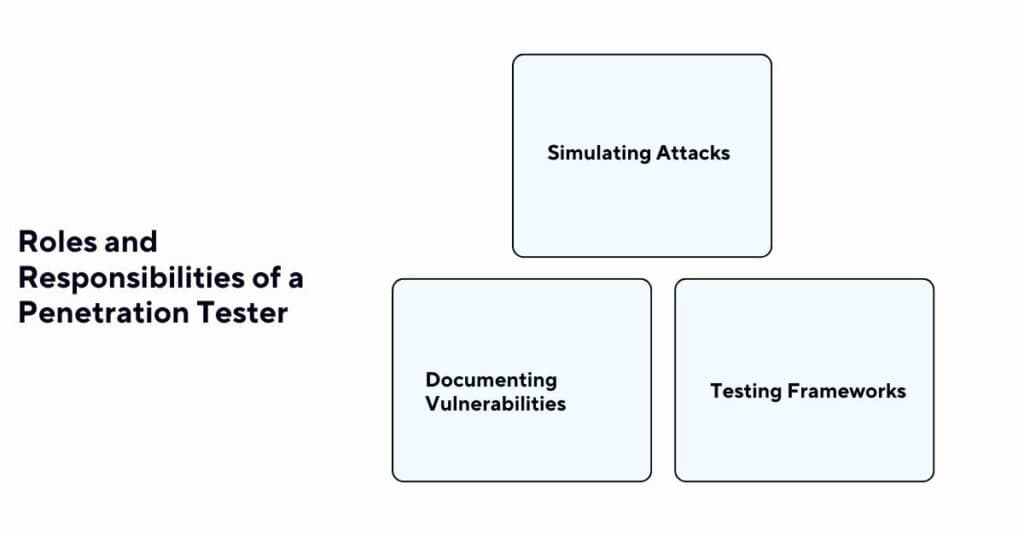
1. Simulating Attacks
Pen testers think like hackers but act like detectives. They don’t just break into systems; they leave a report detailing how they did it and how to fix the holes.
2. Documenting Vulnerabilities
Their job isn’t complete until they’ve listed every crack in the armour.
3. Testing Frameworks
They follow structured approaches, like the OWASP Testing Guide, ensuring nothing is left to chance.
Tools of the Trade
Penetration testers wield an impressive arsenal of tools:
- Burp Suite: For web vulnerability scanning.
- Nessus: To detect configuration issues and known vulnerabilities.
- Kali Linux: A one-stop shop for ethical hacking tools.
Key Differences Between a Hacker and a Penetration Tester
Comparing a hacker to a penetration tester is like comparing a burglar to a locksmith. Both can open doors, but their motives are worlds apart.
| Aspect | Hacker | Penetration Tester |
| Intent | Ranges from malicious to ambiguous. | Always ethical and protective. |
| Legal Boundaries | Often operates illegally or in grey areas | Fully legal and bound by contracts. |
| Framework | Unpredictable, unstructured. | Follows formal testing methodologies. |
| Accountability | Works in anonymity. | Reports to an employer or client. |
| Goal | Exploit systems for personal gain or exposure. | Identify vulnerabilities to improve security. |
Why Understanding the Difference Matters?
Imagine calling a locksmith and accidentally hiring a burglar. Awkward, right? Understanding the distinction between hackers and penetration testers ensures organisations know who they’re dealing with.
The Business Perspective
- Penetration Testers: A proactive approach to tighten defences.
- Hackers: A reactive nightmare if they breach your system.
Ethics and Legality
This is where the rubber meets the road. While hackers often dance in the grey zones of legality, penetration testers operate within the strict boundaries of law and ethics. They sign contracts, follow frameworks like GDPR, and always aim to protect.
Conclusion
To sum it up, hackers and penetration testers might share tools and skills, but their intentions couldn’t be more different. Hackers often exploit, while penetration testers protect. In the cybersecurity realm, knowing the difference between a hacker and a penetration tester is crucial for building robust defences against evolving threats.
FAQs: Difference Between Hacker and Penetration Tester
1. What’s the biggest difference between hackers and penetration testers?
Ans: Hackers can be malicious, while penetration testers are ethical professionals working to secure systems.
2. Can a hacker become a penetration tester?
Ans: Absolutely! Many skilled hackers turn to ethical hacking and pen testing for a legitimate career.
3. What tools do hackers and penetration testers share?
Ans: Tools like Nmap, Metasploit, and Wireshark are commonly used by both, but their usage depends on intent.
4. Is penetration testing considered hacking?
Ans: It’s ethical hacking—legal and authorised simulations of cyberattacks.
5. Do organisations always need penetration testers?
Ans: Yes, especially those handling sensitive data or operating in high-risk industries.
6. What certifications should a penetration tester have?
Ans: Common certifications include OSCP, CEH, and CISSP.
7. Why do hackers go undetected?
Ans: Hackers often use sophisticated tools to remain anonymous.
8. Is ethical hacking the same as penetration testing?
Ans: Ethical hacking is broader, while penetration testing focuses on specific tests.
9. What industries rely most on penetration testing?
Ans: Financial services, healthcare, and government agencies are top users.
10. How can businesses ensure they’re hiring ethical penetration testers?
Ans: By verifying certifications, experience, and legal agreements an businesses can ensure that they’re hiring ethical penetration testers
