
What is SOC Assurance?
Organizations are increasingly reliant on external service providers for various business functions, ranging from data storage and processing to customer service and IT support. With this growing trend, the need for assurance regarding the controls and practices of these service organizations has become paramount. This is where SOC (System and Organization Controls) assurance comes into play. In this article, we will explore what SOC assurance entails, its types, importance, and the process through which organizations can obtain it.
Understanding SOC Assurance
SOC assurance refers to an evaluation of the controls that service organizations implement to protect customer data and maintain operational integrity. It provides third-party assurance that the organization has effective controls in place to mitigate risks related to data security, privacy, and operational efficiency. This assurance is crucial for organizations that leverage outsourcing or cloud services, as they need to ensure that their service providers are managing their data securely.
Types of SOC Reports

There are three primary types of SOC reports, each serving a distinct purpose:
1. SOC 1
SOC 1 reports focus on internal controls over financial reporting (ICFR). They are relevant for service organizations that impact their clients’ financial reporting. For example, a payroll processing company may issue a SOC 1 report to assure clients that their financial data is managed correctly.
SOC 1 reports come in two types:
- Type I: Evaluates the design and implementation of controls at a specific point in time.
- Type II: Assesses the operating effectiveness of these controls over a specified period (usually ranging from six months to a year).
2. SOC 2
SOC 2 reports are tailored for service organizations that handle sensitive data. They focus on five “trust service criteria”: security, availability, processing integrity, confidentiality, and privacy. SOC 2 reports are particularly relevant to technology and cloud service providers.
Similar to SOC 1, SOC 2 reports can also be classified into two types:
- Type I: Examines the design of the system and controls at a specific date.
- Type II: Evaluates how effective those controls have been over a specific period.
3. SOC 3
SOC 3 reports are similar to SOC 2 reports but are intended for a broader audience and are less detailed. While SOC 2 reports contain information suitable for the eyes of clients with a vested interest in knowing about the controls in place, SOC 3 reports can be publicly shared as they outline the service organization’s commitment to the trust service criteria without revealing detailed control processes.
Importance of SOC Assurance
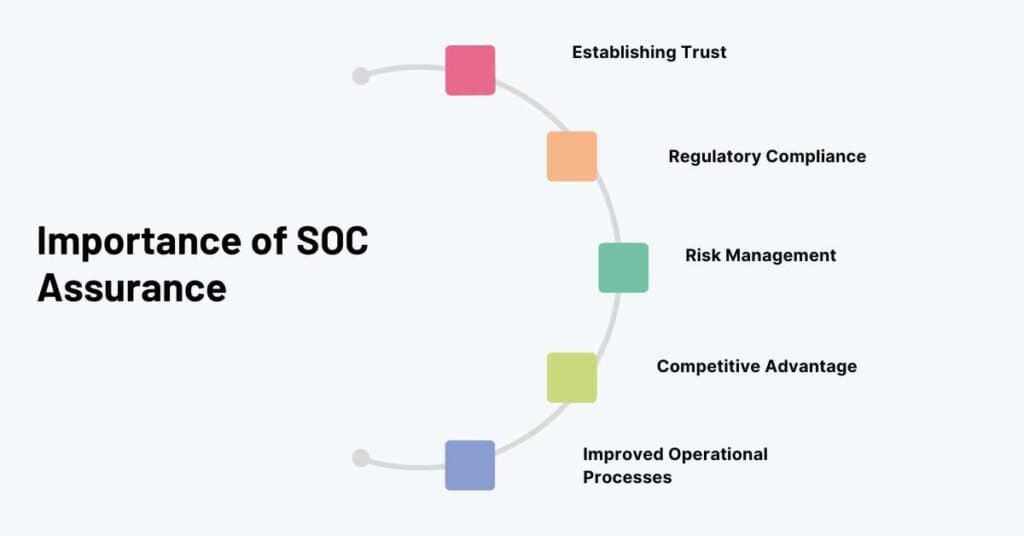
The importance of SOC assurance cannot be overstated, particularly in an era where data breaches and security incidents are increasingly common. Here are several key reasons why organizations pursue SOC assurance:
1. Establishing Trust
A SOC report provides third-party validation that a service organization’s controls and processes meet industry standards. It helps build trust between the service provider and its clients, demonstrating that the provider takes data security and privacy seriously.
2. Regulatory Compliance
Many industries are governed by strict regulations concerning data protection and privacy (e.g., GDPR, HIPAA). SOC reports can help organizations meet compliance requirements by demonstrating that they have the necessary controls in place.
3. Risk Management
Obtaining SOC assurance helps organizations identify and mitigate risks associated with their service providers. By reviewing the controls detailed in a SOC report, organizations can better understand potential vulnerabilities and address them proactively.
4. Competitive Advantage
Organizations with SOC assurance can differentiate themselves in the market. Having a SOC report can serve as a marketing tool, allowing a service provider to show potential clients that they adhere to high standards of operational excellence and data protection.
5. Improved Operational Processes
The SOC audit process often reveals areas for improvement in operational processes. Service providers can implement recommendations from auditors, leading to enhanced efficiency and effectiveness in their operations.
The SOC Assurance Audit Process

Engaging in the SOC assurance audit process typically involves several key steps. Here’s a holistic view of what organizations can expect:
1. Pre-Audit Preparation
Before the actual audit, organizations should conduct a self-assessment of their existing controls and processes. This involves understanding the scope of the SOC audit, identifying the key controls that need to be evaluated, and ensuring that documentation is in order. It may also be wise to engage internal teams and establish a cross-functional project team to support the process.
2. Selecting a Qualified Auditor
Choosing a qualified and reputable auditor is critical. Organizations should look for auditors with experience in SOC assessments and credentials such as being CPA (Certified Public Accountant) licensed. The chosen audit firm should understand the specific industry and regulatory requirements that the organization operates within.
3. Audit Execution
During the audit, the auditors will evaluate the design and effectiveness of the controls in place. Depending on whether the organization opts for a Type I or Type II report, the auditors will focus on either the design of controls at a specific point in time or how these controls operate over a defined period.
4. Reporting
Once the audit is completed, the auditors create a SOC report summarizing their findings. This report includes an opinion on whether the controls are suitably designed (Type I) or operating effectively (Type II), along with any observations or recommendations for improvements.
5. Addressing Findings
After receiving the SOC report, organizations should carefully review any findings or recommendations noted by the auditors. It’s imperative to address any weaknesses in controls identified during the audit to strengthen the overall control environment.
6. Ongoing Monitoring and Improvement
SOC assurance is not a one-time event; organizations should continuously monitor their controls and processes. This includes reassessing the effectiveness of their systems and undergoing periodic audits to ensure they adapt to changing risks and regulatory frameworks.
Challenges in SOC Assurance
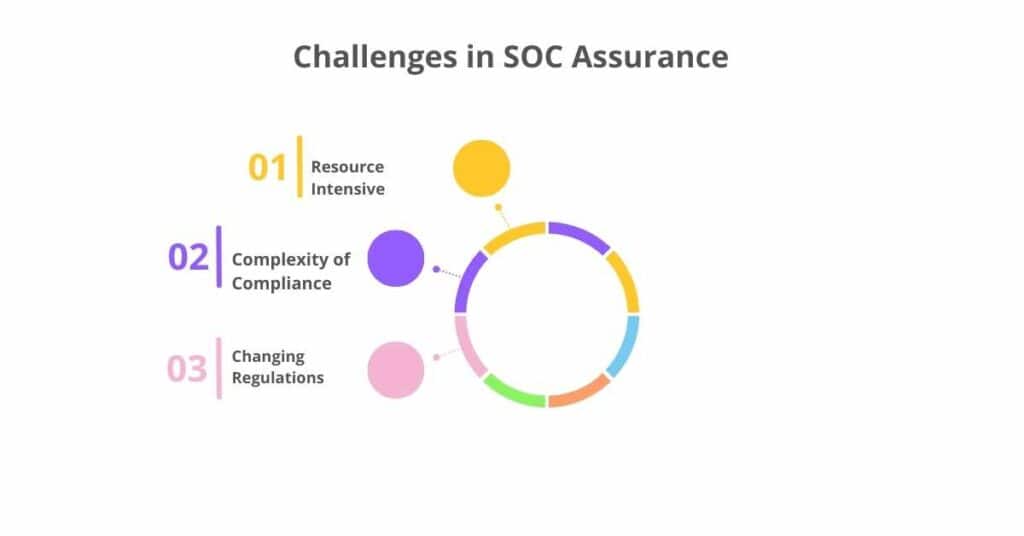
While SOC assurance provides numerous benefits, there are challenges that organizations may face:
1. Resource Intensive
Preparing for a SOC audit can require significant resources, both in terms of time and finances. Organizations may need to invest in developing or enhancing their control frameworks, training staff, and engaging external auditors.
2. Complexity of Compliance
Understanding the nuances of SOC standards and ensuring compliance can be complex, especially for organizations without prior experience in audits or regulatory compliance.
3. Changing Regulations
As regulations evolve, organizations must stay updated on the compliance landscape. Keeping SOC reports relevant and ensuring controls align with current legal and regulatory requirements can be challenging.
Conclusion
In a world where data security and operational integrity are of utmost importance, SOC assurance serves as a pivotal mechanism for organizations relying on third-party service providers. By obtaining a SOC report, service organizations can demonstrate their commitment to maintaining high standards for data protection and operational excellence, thereby building trust with clients and mitigating risks.
FAQs
1. What is SOC Assurance?
Answer: SOC Assurance refers to the evaluation and reporting of the controls and processes of service organizations that manage data on behalf of clients. It provides assurance to clients regarding the effectiveness of these controls in safeguarding data and ensuring operational integrity.
2. What types of SOC reports are available?
Answer: There are three main types of SOC reports: SOC 1, SOC 2, and SOC 3. SOC 1 focuses on internal controls over financial reporting, SOC 2 evaluates controls related to data security and privacy based on specified trust service criteria, and SOC 3 provides a summary report of SOC 2 without detailed technical information, intended for general audiences.
3. Who needs a SOC report?
Answer: Organizations that provide services affecting the data and financial reporting capabilities of their clients may need SOC reports. This includes cloud service providers, data centers, payroll processors, and other companies that handle sensitive data or provide critical services.
4. What are the benefits of obtaining SOC Assurance?
Answer: The benefits of SOC Assurance include establishing trust with clients, ensuring compliance with regulatory requirements, enhancing risk management, gaining a competitive edge in the market, and improving internal operational processes based on the audit findings.
5. How often should an organization undergo a SOC audit?
Answer: Typically, organizations should consider undergoing a SOC audit annually, especially if there are significant changes in operations, technology, or regulations. Regular audits help ensure continuous compliance and the effectiveness of controls.
