

Introduction to AWS Cloud Security: Challenges for Enterprises
Imagine this: Your company has just migrated to AWS, embracing the cloud for its scalability, flexibility, and cost-effectiveness. Everything seems perfect until a misconfigured setting exposes sensitive customer data to the public internet. Suddenly, your business is dealing with a security breach, compliance violations, and reputational damage. Sounds like a nightmare, right? Unfortunately, for many enterprises, this is a harsh reality.
As businesses rapidly adopt AWS, securing cloud environments has become more critical than ever. While AWS provides a robust security infrastructure, the responsibility of securing applications, data, and configurations falls on the enterprise. And here’s the tricky part: most breaches happen due to misconfigurations, human errors, and overlooked vulnerabilities.
In this blog, we’ll dive deep into the Introduction to AWS Cloud Security: Challenges for Enterprises and why a proactive security approach is essential.
Understanding the AWS Shared Responsibility Model
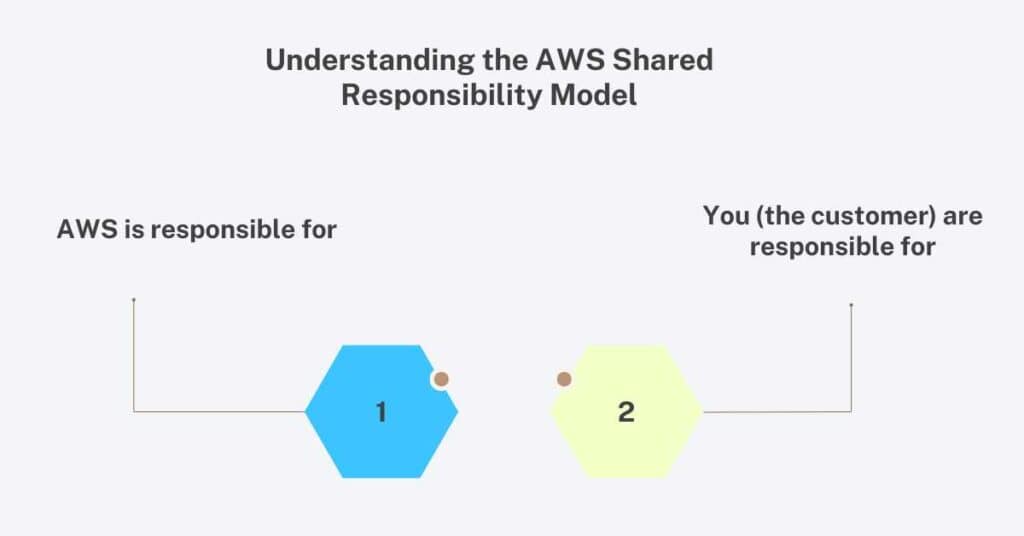
One of the biggest misconceptions about cloud security is assuming that AWS takes care of everything. While AWS provides strong security measures for its infrastructure, the responsibility of securing applications, data, and configurations falls on the customer.
1. AWS is responsible for
Securing the cloud infrastructure (physical servers, networking, and global data centers).
2. You (the customer) are responsible for
Configuring security correctly for your applications, data, access controls, and compliance.
Key AWS Cloud Security Challenges for Enterprises
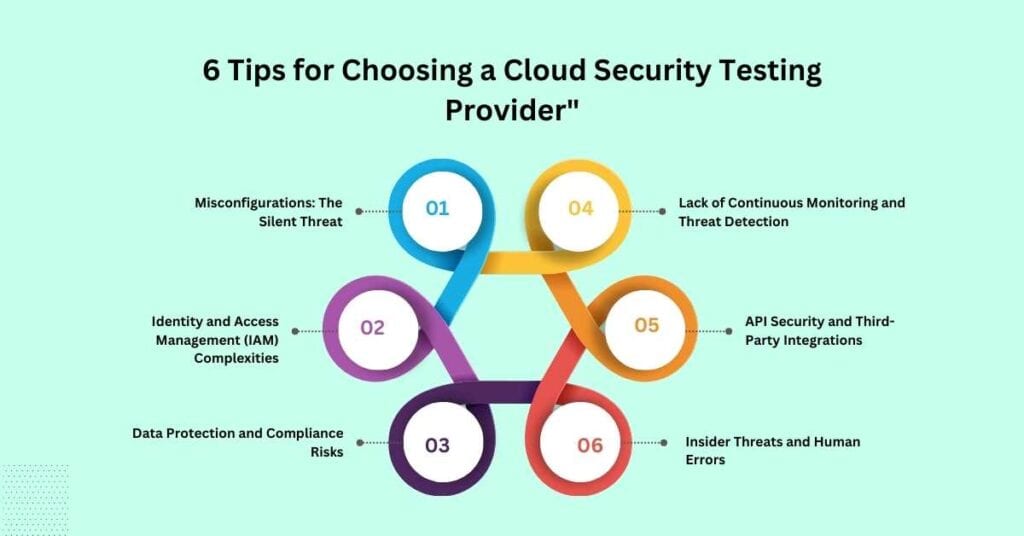
1. Misconfigurations: The Silent Threat
AWS provides flexible configurations, but this flexibility often results in security gaps if not managed properly. Some common misconfigurations include:
- Publicly accessible S3 buckets exposing sensitive data.
- Overly permissive IAM roles that give attackers excessive access.
- Unrestricted Security Groups allowing inbound traffic from any IP.
Real-world example: Capital One suffered a massive data breach in 2019 due to a misconfigured AWS S3 bucket, exposing over 100 million customer records.
Solution: Implement automated security scans, restrict access permissions, and use AWS Config to continuously monitor misconfiguration.
2. Identity and Access Management (IAM) Complexities
Managing user access in AWS can be complex, and many enterprises struggle with:
- Overly broad IAM permissions, leading to privilege escalation attacks.
- Poorly managed API keys and credentials stored in public repositories.
- Lack of multi-factor authentication (MFA) for critical accounts.
Real-world example: In 2021, attackers exploited leaked AWS access keys on GitHub, leading to unauthorized access to cloud environments.
Solution: Implement least privilege access, enforce MFA, and rotate access keys regularly.
3. Data Protection and Compliance Risks
With increasing data privacy laws like GDPR, CCPA, and HIPAA, enterprises must ensure their AWS environment meets strict compliance standards.
Challenges include:
- Encrypting data at rest and in transit.
- Monitoring data access and audit logs.
- Ensuring backup integrity and disaster recovery planning.
Solution: Use AWS KMS for encryption, enable AWS CloudTrail for logging, and implement compliance automation tools.
4. Lack of Continuous Monitoring and Threat Detection
AWS environments are dynamic, and new security threats emerge constantly. Without continuous monitoring, businesses are blind to:
- Suspicious login attempts.
- Unusual API activities.
- Malware and insider threats.
Solution: Implement AWS security services like Amazon Guard Duty, AWS Security Hub, and AWS CloudWatch to detect and respond to threats in real-time.
5. API Security and Third-Party Integrations
APIS are the backbone of cloud applications, but insecure API endpoints can be exploited by attackers. Common risks include:
- Exposed AWS API keys.
- Poorly secured third-party integrations.
- Insufficient rate limiting, leading to API abuse.
Solution: Use AWS IAM roles for API authentication, implement API Gateway security features, and regularly audit third-party integrations.
6. Insider Threats and Human Errors
Not all threats come from external hackers. Insider threats—whether intentional or accidental—are a major security risk.
Examples:
- Employees sharing sensitive credentials.
- Accidental deletion of critical cloud resources.
- Disgruntled employees are misusing privileged access.
Solution: Implement strict access controls, logging, and employee security training to minimise risks.
How Enterprises Can Strengthen AWS Cloud Security?
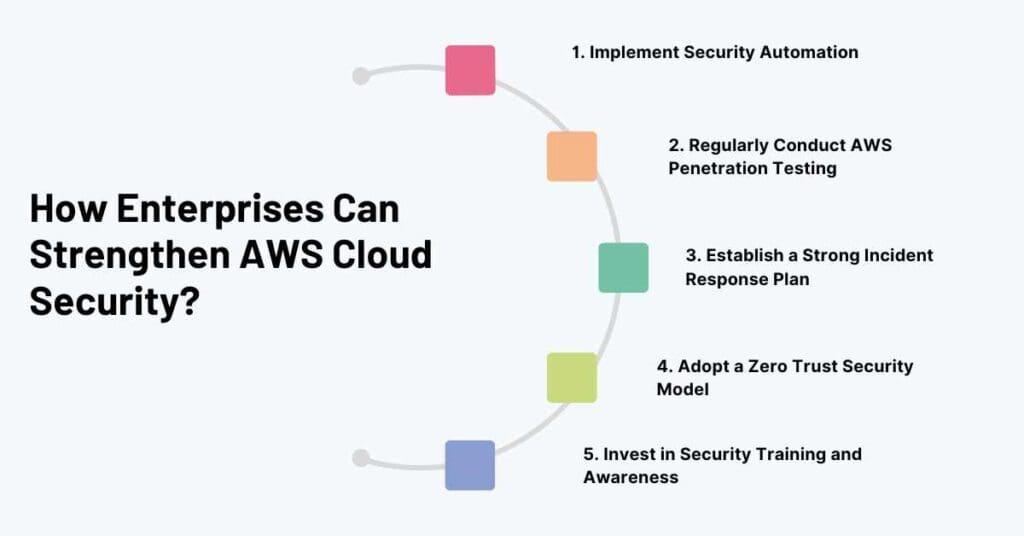
Security in AWS is not just about fixing vulnerabilities—it’s about adopting a proactive security mindset. Here’s how enterprises can enhance their AWS security posture:
1. Implement Security Automation
Use AWS security tools like AWS Config, AWS Shield, and AWS WAF to automate security policies and compliance checks.
2. Regularly Conduct AWS Penetration Testing
Simulate real-world attacks to find and fix vulnerabilities before attackers do. Ensure compliance with AWS’s pentesting policies.
3. Establish a Strong Incident Response Plan
Prepare for potential breaches with automated alerting and remediation using AWS Security Hub and AWS Lambda for auto-remediation.
4. Adopt a Zero Trust Security Model
Verify every request, limit user privileges, and enforce strict identity verification.
5. Invest in Security Training and Awareness
Empower your teams with AWS security best practices to prevent human errors.
Conclusion: Security is an Ongoing Process
AWS provides powerful security features, but enterprises must take an active role in securing their cloud environments. By addressing misconfigurations, managing IAM effectively, protecting data, and continuously monitoring threats, businesses can prevent costly breaches and maintain customer trust.
