
How EdTech Companies Use SOC2 to Win Contracts with Major Universities?
As universities increasingly rely on digital learning platforms, student information systems, and cloud-based collaboration tools, data security has become a critical factor in EdTech procurement decisions. Major universities handle vast amounts of sensitive data, including student records, personally identifiable information (PII), research data, and assessment materials, and they expect the same level of security maturity from their technology partners.
For EdTech companies, meeting these expectations is no longer optional. Universities now conduct rigorous vendor security reviews, and many explicitly require SOC2 reports as part of their contract and RFP processes. Without formal security assurance, even innovative EdTech platforms can face delayed approvals, extended security questionnaires, or outright rejection.
SOC2 has emerged as a trusted framework for demonstrating that an EdTech company has strong controls around security, availability, and data protection. It provides universities with independent assurance that an EdTech platform can safeguard sensitive academic and student data over time.
What Is SOC2 and Why Universities Trust It?
SOC2 (System and Organization Controls 2) is a widely accepted security and trust framework developed by the American Institute of Certified Public Accountants (AICPA). It evaluates whether an organization has effective controls in place to protect data and systems, making it highly relevant for universities assessing EdTech vendors.
What SOC2 Measures?
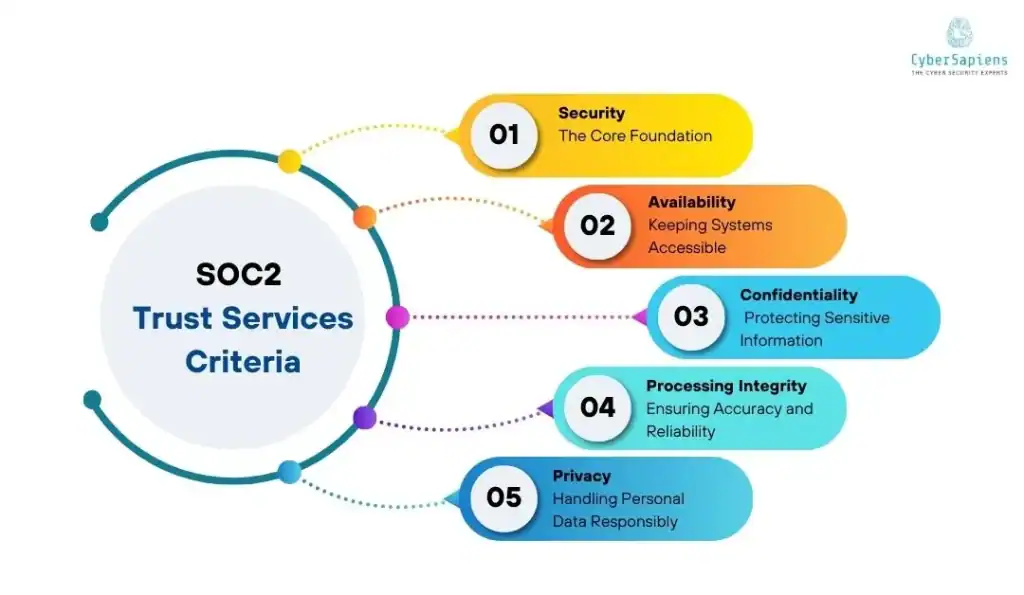
SOC2 audits are based on the Trust Services Criteria (TSC), which focus on:
- Security: Protection against unauthorized access (mandatory for all SOC2 reports).
- Availability: System uptime, reliability, and resilience.
- Confidentiality: Protection of sensitive institutional and academic data.
- Processing Integrity: Accuracy and reliability of system operations.
- Privacy: Proper handling of personal data (when applicable).
EdTech companies typically scope Security and Availability, with Confidentiality added when handling sensitive student or research data.
SOC2 Type I vs SOC2 Type II (What Universities Prefer)
- SOC2 Type I: Assesses whether controls are designed correctly at a specific point in time. Useful for early-stage EdTech companies but often insufficient on its own.
- SOC2 Type II: Assesses whether controls are designed and operating effectively over a period of time (6–12 months).
Why Universities Rely on SOC2?
Universities trust SOC2 because it:
- Is performed by an independent third-party auditor.
- Provides standardized, comparable assurance across vendors.
- Reduces the need for lengthy, custom security assessments.
- Demonstrates that controls work consistently over time.
- Aligns with university vendor risk management programs.
Instead of reviewing dozens of internal security documents, universities can rely on a SOC2 report to gain confidence in an EdTech provider’s security posture.
Understanding University Security Expectations
Universities operate in a highly regulated and risk-sensitive environment. They manage large volumes of sensitive data across students, faculty, researchers, and external partners, which makes vendor security assurance a mandatory part of procurement, especially for EdTech platforms.
Types of Data Universities Expect EdTech Platforms to Protect
- Student Personally Identifiable Information (PII): Names, contact details, enrollment data, grades, and identification numbers.
- Academic and Assessment Data: Exams, coursework submissions, grading systems, and learning analytics.
- Research and Intellectual Property: Unpublished research data, grant-related information, and collaborative academic work.
- Authentication and Access Data: Single sign-on (SSO), identity federation, and role-based access tied to campus systems.
Because this data is often subject to privacy laws and institutional policies, universities expect vendors to demonstrate strong, verifiable security controls.
How Universities Evaluate EdTech Vendors?
Universities typically assess vendors through:
- Vendor Risk Management (VRM) Programs: Formal security reviews are conducted by IT security, compliance, or procurement teams.
- RFP and Contract Security Requirements: SOC2 reports are increasingly listed as mandatory or strongly preferred requirements.
- Third-Party Risk Questionnaires: Detailed questions on access control, incident response, encryption, availability, and vendor management.
- Ongoing Assurance Expectations: Universities prefer assurance that controls operate over time, not just at onboarding.
Why SOC2 Is a Game-Changer for EdTech Companies?
For EdTech companies selling to major universities, security is no longer a secondary concern; it is a core buying criterion. SOC2 has become a game-changer because it directly addresses the trust, risk, and assurance requirements that universities prioritize during vendor selection.
- Builds Immediate Trust with Universities: A SOC2 Type II report provides independent assurance that security controls are not only well-designed but consistently followed. This builds credibility with university IT, security, and compliance teams early in the sales process.
- Reduces Procurement and Security Review Delays: Universities often require extensive security questionnaires and follow-up reviews. A SOC2 report significantly reduces these back-and-forth discussions, shortening approval timelines.
- Accelerates RFP and Contract Approvals: Many university RFPs list SOC2 as a mandatory or preferred requirement. EdTech companies with SOC2 are more likely to pass initial vendor screening without delays.
- Demonstrates Operational Maturity: SOC2 signals that an EdTech company has mature processes for access control, incident response, system availability, and data protection, key areas that universities evaluate.
- Supports Long-Term University Partnerships: SOC2 Type II demonstrates ongoing commitment to security over time, making universities more comfortable with multi-year contracts and deeper platform integrations.
How EdTech Companies Can Prepare for SOC 2 Successfully?
Preparing for SOC2 is not just about passing an audit—it’s about building a security program that meets the expectations of universities, protects student data, and scales with platform growth. For EdTech companies, success depends on aligning controls with academic data risks and maintaining consistency over time.
Key Steps for SOC2 Success in EdTech
- Understand Your Data and Risk Landscape: Identify the types of data your platform handles, student PII, assessment data, research content, or authentication data, and map security risks specific to education environments.
- Choose the Right Trust Services Criteria: Most EdTech companies scope Security (mandatory) and Availability, with Confidentiality added when handling sensitive academic or research data. Choosing the right scope avoids overcomplication.
- Embed Security Controls into Daily Operations: Controls such as access reviews, incident response, monitoring, and change management should be part of everyday workflows, not manual, one-time activities.
- Build Continuous Evidence Collection Processes: SOC2 Type II audits require proof that controls operated effectively over 6–12 months. Evidence like logs, approvals, reviews, and reports must be collected continuously.
- Strengthen Access Control and Identity Management: Implement role-based access, regular access reviews, strong authentication, and clear joiner, mover, and leaver processes, areas heavily scrutinized by auditors and universities.
- Implement Regular Vulnerability Management and Testing: Perform ongoing vulnerability assessments and penetration testing, track remediation, and maintain re-testing evidence to demonstrate proactive risk management.
- Prepare for Incident Response and Monitoring: Define and test incident response procedures. Universities expect prompt detection, escalation, and transparent handling of security incidents.
- Train Employees on Security Responsibilities: Conduct role-based security awareness training and maintain records. Human error remains a major risk in educational environments.
How CyberSapiens Helps EdTech Companies Achieve SOC2?
Achieving SOC2 in the education sector requires more than generic compliance; it demands controls tailored to student data, academic workflows, and university procurement expectations. CyberSapiens partners with EdTech companies to build a practical, audit-ready SOC2 program that operates consistently and supports long-term university relationships.
End-to-End SOC2 Support for EdTech Companies
1. SOC2 Readiness & Gap Assessment (EdTech-Focused)
Cybersecurity experts at CyberSapiens evaluate your current controls against SOC2 Trust Services Criteria with a focus on student PII, assessment data, research content, and platform availability. Gaps are prioritized, so teams fix the right issues first.
2. Right-Sized Scoping of Trust Services Criteria
Guidance on selecting the most relevant criteria typically includes Security and Availability, with Confidentiality when handling sensitive academic or research data, avoiding unnecessary scope creep.
3. Control Design Tailored to EdTech Platforms
Controls are designed around real EdTech operations: LMS integrations, SSO with campus identity providers, cloud hosting, APIs, and CI/CD pipelines, ensuring controls work in practice.
4. Operationalizing Controls (Not Just Policies)
CyberSapiens embeds controls into daily workflows such as access reviews, incident handling, monitoring, and change management so they operate consistently throughout the audit period.
5. Continuous Evidence Collection & Audit Traceability
Structured processes are set up to capture logs, approvals, screenshots, and reports across the full 6–12 month Type II period, eliminating last-minute evidence gaps.
6. Vulnerability Management & VAPT Integration
Regular vulnerability assessments and penetration testing are scheduled, tracked, remediated, and re-tested, with clear evidence mapped to SOC2 requirements.
7. Incident Response & Monitoring Readiness
Incident response plans are tested (tabletops), detection and escalation are validated, and incident logs are maintained, meeting university expectations for transparency and resilience.
8. Third-Party & Cloud Vendor Risk Management
Support for assessing critical vendors and cloud providers, collecting security assurances, and maintaining ongoing oversight evidence required by university VRM programs.
9. Training & Governance Support
Role-based security awareness training with records, plus management reviews and risk discussions to demonstrate leadership oversight and key auditor expectations.
10. Ongoing Support Through SOC2 Type II
Continuous check-ins and control health reviews ensure nothing slips during the audit window, keeping teams audit-ready without slowing product delivery.
By combining EdTech domain knowledge, SOC2 expertise, and continuous compliance execution, CyberSapiens helps EdTech companies achieve SOC2 confidently and use it to win and retain major university contracts.
Clients Served by CyberSapiens



Using SOC2 as a Trust Engine for University Growth
For EdTech companies, SOC2 is a critical trust signal that directly influences university procurement decisions. Institutions want assurance that student data, academic systems, and learning platforms are protected by controls that work consistently over time.
By preparing for SOC2 strategically and embedding security into everyday operations, EdTech companies can reduce procurement friction, shorten sales cycles, and position themselves as reliable long-term partners for universities. A strong SOC2 program demonstrates maturity, accountability, and readiness to support complex academic environments.
With its EdTech-focused SOC2 readiness, implementation, and continuous compliance services, CyberSapiens helps organizations turn SOC2 into a growth enabler. By aligning security with university expectations, CyberSapiens empowers EdTech companies to win major contracts while building a resilient, scalable security foundation.
FAQs: How EdTech Companies Use SOC2 to Win Contracts with Major Universities?
1. Do universities prefer SOC2 Type I or Type II?
Answer: Most universities prefer SOC2 Type II because it demonstrates that controls operate effectively over time, not just at a single point.
2. Which Trust Services Criteria should EdTech companies choose?
Answer: Most EdTech companies scope Security (mandatory) and Availability, with Confidentiality added when handling sensitive academic or research data.
3. How long does it take to achieve SOC2 for an EdTech company?
Answer: SOC2 Type I typically takes 2–3 months, while SOC2 Type II requires a 6–12 month audit period, depending on readiness.
4. What are the biggest SOC2 challenges for EdTech companies?
Answer: Common challenges include continuous evidence collection, access control management, incident response readiness, and keeping controls consistent during rapid platform changes.
