
Why Healthcare Organizations Are Prime Targets for Phishing Attacks in 2026?
Healthcare organizations have become one of the most attractive targets for cybercriminals, and by 2026, phishing attacks against the sector are expected to be more frequent, targeted, and damaging than ever before. As healthcare rapidly digitizes patient records, clinical workflows, and remote care services, attackers are shifting focus from technical vulnerabilities to the people who use these systems every day.
Phishing thrives in healthcare environments where time pressure is constant, communication volumes are high, and trust is essential for patient care. A single deceptive email can lead to credential theft, ransomware deployment, or exposure of sensitive patient data, disrupting operations and putting patient safety at risk.
In 2026, the combination of high-value medical data, expanding digital infrastructure, and evolving phishing techniques, many powered by AI, makes healthcare organizations prime targets.
The Rising Value of Healthcare Data
Healthcare data has become one of the most valuable assets in the cybercriminal economy. Unlike financial data, which can be quickly canceled or replaced, medical records contain permanent, highly sensitive information such as medical histories, insurance details, identification data, and contact information.
By 2026, the demand for this data will continue to grow because it can be exploited in multiple ways, such as identity fraud, insurance scams, prescription abuse, and even targeted blackmail. Stolen medical records often sell for significantly higher prices on underground markets due to their long-term usefulness and difficulty to remediate.
For attackers, phishing provides a low-effort, high-reward entry point into healthcare systems. Gaining access to a single staff account can open the door to electronic health records (EHRs), billing platforms, and internal systems, making healthcare organizations especially lucrative targets.
Why Healthcare Staff Are High-Value Targets?
Healthcare staff are frequently targeted by phishing attackers due to the nature of their work environment and daily responsibilities. Key reasons include:
- High-Pressure, Time-Critical Workflows: Clinicians and staff often act quickly to support patient care, leaving little time to scrutinize emails or verify requests.
- Large Volumes of Daily Communication: Constant emails related to lab results, prescriptions, scheduling, insurance, and referrals make phishing emails easier to disguise as legitimate messages.
- High Level of Trust in Internal and External Senders: Attackers exploit trusted relationships by impersonating doctors, IT teams, labs, vendors, and insurance providers.
- Access to Sensitive Systems and Data: Staff accounts often provide entry to EHR systems, billing platforms, and internal applications, making them valuable targets for attackers.
- Limited Time for Ongoing Security Training: Shift work and clinical priorities can make it challenging to maintain consistent security awareness across all staff.
- One Compromised Account, Wide Impact: A single successful phishing attack can lead to data exposure, ransomware deployment, and disruption to patient care.
These factors make healthcare employees one of the most attractive and effective entry points for phishing attacks in healthcare organizations.
Common Phishing Scenarios Targeting Healthcare in 2026
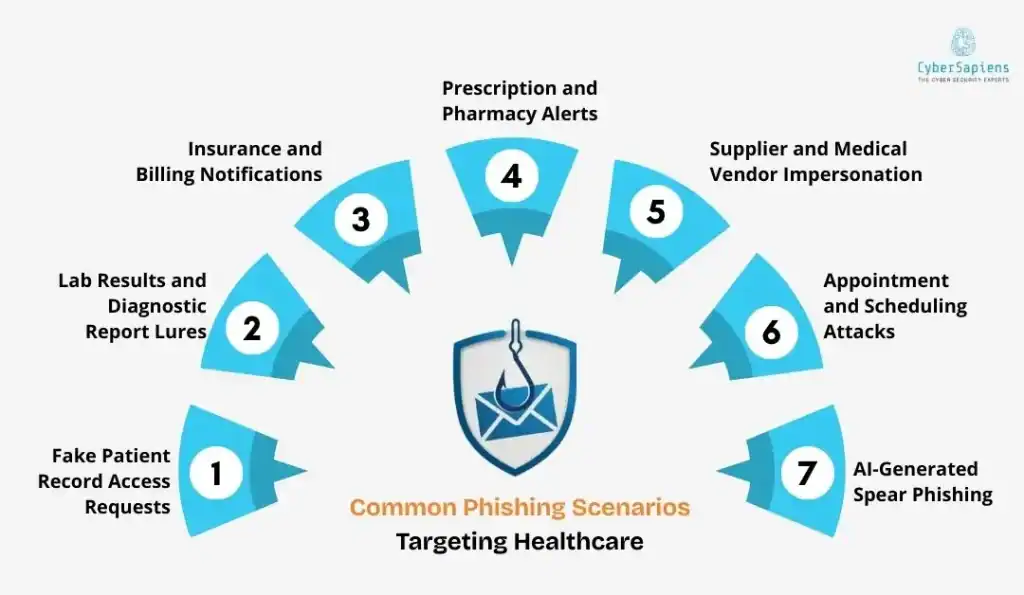
As phishing techniques continue to evolve, attackers are tailoring their lures specifically to healthcare workflows and communication patterns. In 2026, the most common phishing scenarios targeting healthcare organizations include:
- Fake Patient Record Access Requests: Emails claiming urgent access to patient records or EHR updates, often impersonating doctors, specialists, or IT support teams.
- Lab Results and Diagnostic Report Lures: Messages posing as laboratories or diagnostic centers prompting staff to open attachments or click links to view test results.
- Insurance and Billing Notifications: Phishing emails disguised as insurance claim updates, reimbursement notices, or payment issues designed to harvest credentials.
- Prescription and Pharmacy Alerts: Fraudulent messages related to prescription approvals, medication changes, or pharmacy system updates.
- Supplier and Medical Vendor Impersonation: Emails mimicking medical equipment suppliers or service providers requesting invoice reviews, contract updates, or credential verification.
- Appointment and Scheduling Attacks: Fake appointment confirmations or cancellations aimed at administrative and front-desk staff.
- AI-Generated Spear Phishing: Highly personalized emails created using AI to mimic writing styles, job roles, and internal communication patterns, making detection more difficult.
These targeted scenarios exploit urgency, trust, and routine healthcare communication, making phishing attacks increasingly effective and dangerous in 2026.
How Continuous Phishing Simulations Reduce Healthcare Risk?
Continuous phishing simulations help healthcare organizations reduce cyber risk by addressing the human factor in security through consistent, real-world training. Instead of relying on one-time awareness sessions, simulations expose staff to realistic phishing scenarios that reflect the exact tactics attackers use in healthcare environments.
- Train Staff Using Realistic Healthcare Scenarios: Simulations mirror common healthcare phishing lures such as lab reports, patient record access requests, insurance updates, and vendor communications.
- Reinforce Secure Behavior Through Repetition: Regular exposure helps clinicians and staff develop the habit of pausing, verifying, and reporting suspicious emails even under time pressure.
- Improve Early Threat Detection Through Reporting: Employees become more confident in reporting suspicious emails quickly, enabling faster response and reducing the chance of widespread impact.
- Reduce Click Rates and Credential Theft: Ongoing simulations consistently lower risky behaviors that often lead to ransomware and data breaches.
- Measure and Track Awareness Progress Over Time: Healthcare organizations gain visibility into behavior trends across departments and shifts, allowing targeted improvements.
- Support Compliance and Patient Safety: Continuous simulations strengthen security awareness programs required by healthcare regulations while reducing the risk of disruptions to patient care.
By turning everyday interactions into learning opportunities, continuous phishing simulations transform healthcare staff into an active line of defense against phishing-driven attacks.
How PhishCare Helps Healthcare Organizations Stay Protected?
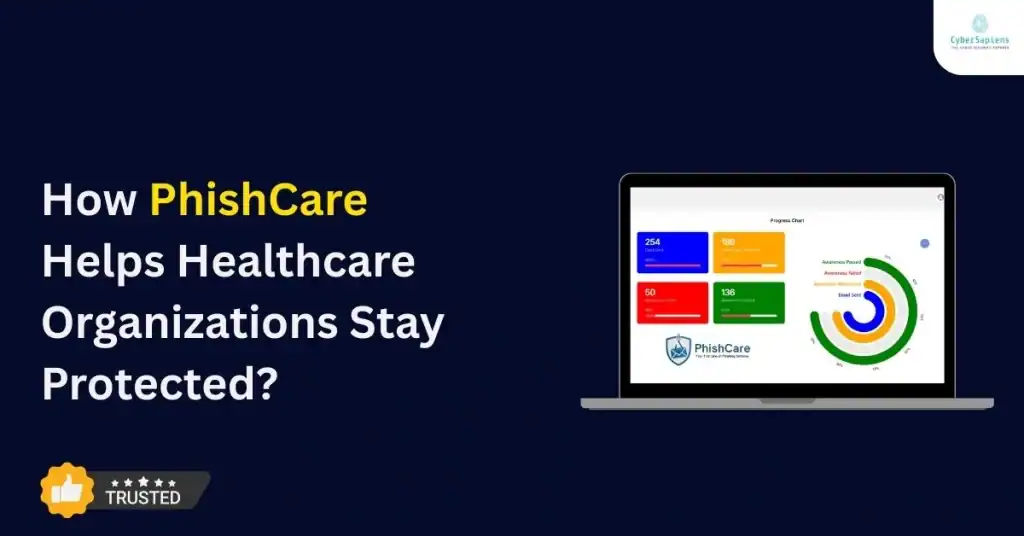
Phishing attacks in healthcare go far beyond IT disruptions; they directly impact patient safety, operational continuity, and regulatory compliance. PhishCare helps healthcare organizations reduce human-driven cyber risk by combining continuous phishing simulations with behavior-focused training and actionable analytics designed specifically for clinical environments.
Key Ways PhishCare Protects Healthcare Organizations
1. Healthcare-Specific Phishing Simulations
PhishCare runs realistic phishing simulations based on common healthcare attack scenarios, including fake lab results, patient record access requests, insurance and billing notifications, prescription alerts, and medical vendor impersonation. This ensures staff are trained against threats they are most likely to encounter.
2. Continuous, Real-World Training for Staff
Instead of one-time awareness sessions, PhishCare delivers ongoing simulations that reinforce secure behavior through repetition, helping clinicians and administrative staff stay alert even during high-pressure, time-sensitive workflows.
3. Role-Based and Contextual Training
Training is tailored to different roles such as clinicians, nurses, front-desk staff, and billing teams. Automated, just-in-time feedback is delivered when risky actions occur, accelerating learning without disrupting patient care.
4. Improved Reporting and Faster Detection
PhishCare encourages a strong reporting culture by making it easy for staff to report suspicious emails. Faster reporting helps security teams contain threats early and reduce the risk of ransomware or data exposure.
5. Clear Visibility Across Departments and Shifts
Centralized dashboards provide insight into awareness levels across departments, locations, and work shifts. This helps identify high-risk areas and focus training where it’s needed most.
6. Measurable Awareness Progress Over Time
PhishCare tracks key metrics such as click rates, reporting rates, and repeat behavior trends, allowing healthcare organizations to measure improvement and demonstrate reduced human risk.
7. Support for Compliance and Audit Readiness
Detailed reports and historical data support healthcare regulatory requirements and audits by providing documented evidence of continuous security awareness and training efforts.
By aligning security awareness with real healthcare workflows, PhishCare helps organizations strengthen defenses, protect patient trust, and maintain uninterrupted care in an increasingly phishing-driven threat landscape.
PhishCare Pricing Plans
PhishCare offers flexible pricing options that scale with the size and needs of healthcare organizations, from small clinics to large hospital networks:
| Quantity Range | Yearly | Bi-Annually | Quarterly | Monthly |
| 1-50 | $15.00 | $14.00 | $13.00 | $12.00 |
| 51-150 | $14.50 | $13.75 | $12.80 | $11.70 |
| 151-350 | $14.15 | $13.20 | $12.45 | $11.50 |
| 351-800 | $13.90 | $12.70 | $12.00 | $11.00 |
| 801-1500 | $13.30 | $12.00 | $11.65 | $10.60 |
| 1501-3000 | $13.00 | $11.75 | $11.30 | $10.20 |
| 3001-5000 | $12.60 | $11.40 | $11.00 | $9.80 |
| 5001-10000 | $12.30 | $11.00 | $10.60 | $9.50 |
Strengthening Healthcare Security Through Human Defense
As phishing attacks grow more targeted and sophisticated, healthcare organizations can no longer rely solely on technical controls to stay secure. The human element, clinicians, staff, and administrators, remains both the most targeted and the most powerful line of defense.
By adopting continuous phishing simulations and behavior-driven training, healthcare organizations can significantly reduce human-driven risk without disrupting patient care. Solutions like PhishCare enable healthcare teams to build lasting security awareness, improve reporting, and gain clear visibility into progress over time.
Ultimately, protecting healthcare environments from phishing is about more than preventing cyber incidents; it’s about safeguarding patient trust, ensuring uninterrupted care, and maintaining compliance in an increasingly complex threat landscape.
FAQs: Why Healthcare Organizations Are Prime Targets for Phishing Attacks in 2026?
1. What makes phishing especially dangerous for healthcare?
Answer: Phishing in healthcare can lead not just to data breaches, but to ransomware attacks that disrupt patient care, delay treatments, and compromise sensitive clinical systems—impacting both safety and business continuity.
2. How often should healthcare organizations conduct phishing simulations?
Answer: Continuous or at least monthly simulations are recommended. Regular testing reinforces secure behavior, keeps staff aware of evolving threats, and allows meaningful tracking of awareness progress over time.
3. Can phishing simulations disrupt clinical operations?
Answer: When implemented thoughtfully, simulations are designed to be non-disruptive. They mimic real-world attacks in a controlled way and include just-in-time training without interfering with critical workflows or patient care.
4. How does PhishCare help with compliance?
Answer: PhishCare provides detailed reporting and historical trends that support regulatory requirements (such as HIPAA, ISO 27001, and SOC 2) by demonstrating continuous, measurable security awareness efforts.
