
Phishing Simulation for Startups in 2026: How to Train Teams Without Slowing Growth
Startups in 2026 are building faster than ever, scaling teams, adopting new SaaS tools, and moving at a pace that leaves little room for security missteps. At the same time, phishing attacks have become more targeted, automated, and convincing, making startups an increasingly attractive target for cybercriminals.
With lean teams and a strong focus on growth, many startups struggle to balance security training with productivity. Traditional awareness programs are often time-consuming, disruptive, and difficult to scale. Yet a single phishing incident can lead to credential theft, data breaches, or ransomware, derailing growth and damaging investor and customer trust.
This is where phishing simulations designed for modern startups come in. By delivering lightweight, continuous, and behavior-driven training, startups can strengthen employee awareness without slowing innovation. In this blog, we explore how phishing simulations in 2026 help startups train teams effectively while keeping growth on track.
Why Startups Are Prime Targets for Phishing in 2026?
Startups have become especially attractive to phishing attackers because of how they operate and grow. In 2026, several factors make young and fast-growing companies easier to exploit than mature enterprises.
- Rapid Hiring and Onboarding: Frequent onboarding of new employees increases the likelihood of inconsistent security awareness and missed training.
- Heavy Dependence on SaaS and Cloud Tools: Startups rely on email, collaboration platforms, cloud infrastructure, and SaaS applications, prime targets for credential-harvesting phishing attacks.
- Limited Security Resources: Many startups operate without dedicated security teams, making it harder to detect and respond quickly to phishing incidents.
- High-Value Access With Minimal Controls: Early employees often have broad system access, meaning one compromised account can expose sensitive data, code repositories, or customer information.
- Trust-Based, Fast-Moving Culture: Startups prioritize speed and collaboration, which attackers exploit using urgency-driven and trust-based phishing messages.
These conditions make phishing one of the most effective and least costly attack methods against startups in 2026, highlighting the need for security training that scales without slowing growth.
Common Phishing Scenarios Targeting Startups
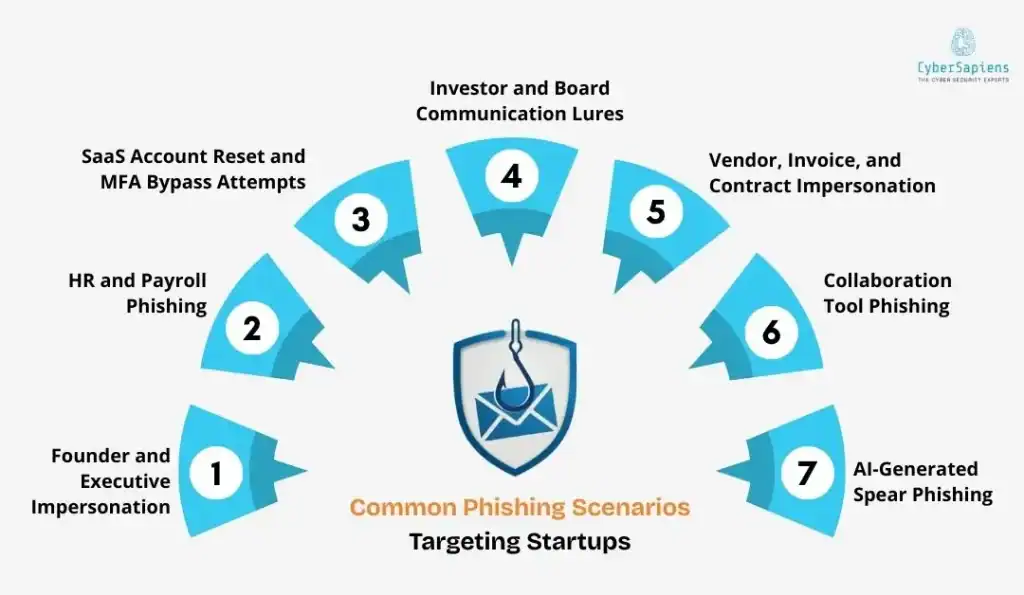
In 2026, phishing attacks against startups are highly targeted and designed to blend seamlessly into fast-moving business workflows. Common scenarios include:
- Founder and Executive Impersonation: Emails posing as founders or leadership requesting urgent actions such as password resets, document reviews, or wire transfers.
- HR and Payroll Phishing: Fake emails related to salary updates, tax forms, benefits enrollment, or new-joiner documentation aimed at employees and HR teams.
- SaaS Account Reset and MFA Bypass Attempts: Messages mimicking popular tools like email platforms, CRM systems, or cloud providers, prompting users to reset credentials or approve MFA requests.
- Investor and Board Communication Lures: Phishing emails disguised as investor updates, pitch deck reviews, or meeting requests targeting founders and finance teams.
- Vendor, Invoice, and Contract Impersonation: Fake supplier emails requesting invoice approval, payment changes, or contract signatures.
- Collaboration Tool Phishing: Malicious links disguised as shared documents, meeting invites, or chat notifications from tools used daily by startup teams.
- AI-Generated Spear Phishing: Highly personalized phishing messages created using AI, crafted from publicly available startup and employee information.
These scenarios exploit urgency, trust, and speed, making phishing one of the most effective threats facing startups as they scale.
Key Benefits of Phishing Simulations for Startups
Phishing simulations give startups a practical way to reduce cyber risk without slowing down growth. When implemented correctly, they deliver both security and business value.
- Reduce Credential Theft and Account Compromise: Simulations train employees to recognize fake login pages and SaaS impersonation emails, lowering the risk of stolen credentials.
- Prevent Costly Breaches Early: Early-stage prevention helps startups avoid incidents that can derail growth, damage reputation, or impact funding.
- Build a Strong Security Culture From Day One: Employees learn secure habits early, making security a natural part of daily workflows rather than an afterthought.
- Improve Threat Reporting and Faster Response: Trained teams are more likely to report suspicious emails quickly, enabling faster containment.
- Scale Security Training Without Extra Overhead: Automated simulations and training adapt as teams grow, without adding operational burden.
- Increase Trust With Customers and Investors: Demonstrating proactive phishing defense strengthens confidence among customers, partners, and investors.
- Support Compliance and Future Readiness: Phishing simulations help startups prepare early for frameworks like SOC 2 and ISO 27001 as they scale.
For startups in 2026, phishing simulations offer a lightweight, scalable way to secure teams while keeping innovation moving fast.
How PhishCare Supports Startup Security at Scale?
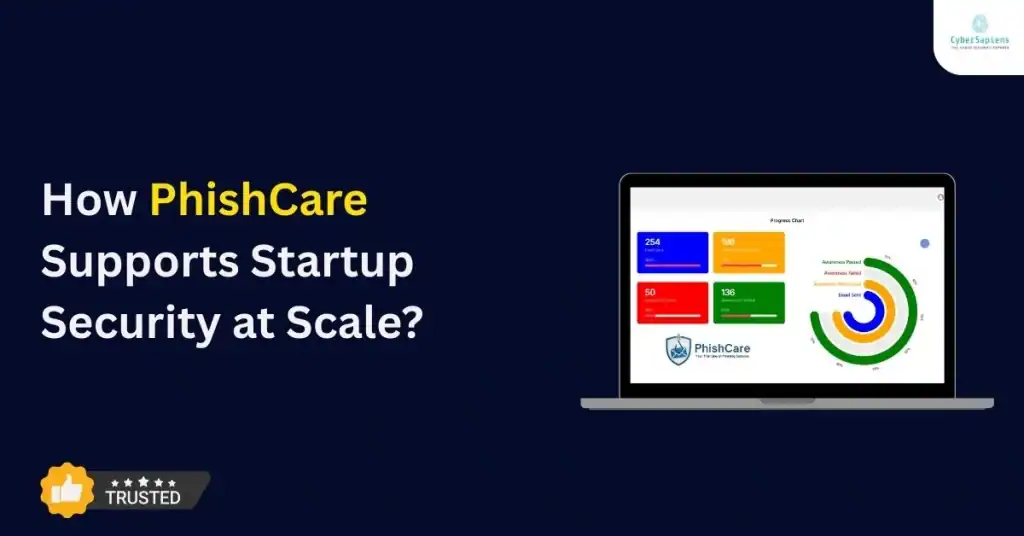
As startups grow, security programs must scale just as quickly, without adding complexity or slowing teams down. PhishCare is built with this exact challenge in mind, enabling startups to strengthen human defenses while maintaining speed and agility.
1. Startup-Friendly, Lightweight Deployment
PhishCare is designed for fast-moving startups that don’t have the time or resources for complex security rollouts. Deployment requires minimal configuration and can be implemented quickly without disrupting daily operations. This makes it ideal for lean teams and early-stage companies without dedicated security personnel.
2. Continuous Phishing Simulations That Scale With Growth
As startups hire rapidly and onboard new employees, PhishCare automatically includes new users in phishing simulations. Simulations adapt to changing team structures, roles, and workflows, ensuring security awareness scales seamlessly alongside business growth—without manual intervention.
3. Behavior-Based, Just-in-Time Training
Rather than forcing employees through lengthy training sessions, PhishCare delivers short, contextual training only when risky behavior is detected. This just-in-time approach reinforces learning at the moment it matters most, improving retention while keeping productivity and focus intact.
4. Role-Based Insights for Growing Teams
Different startup roles face different phishing risks. Founders may be targeted by investor impersonation, engineers by SaaS access attacks, and finance teams by invoice fraud. PhishCare provides role- and team-level insights, allowing organizations to focus training and simulations where risk is highest.
5. Clear Metrics and Executive Visibility
PhishCare’s dashboards translate security data into easy-to-understand metrics such as click rates, reporting behavior, and awareness trends over time. This gives founders and leadership teams clear visibility into human cyber risk, without requiring deep security expertise.
6. Compliance-Ready as Startups Scale
As startups prepare for SOC 2 and ISO 27001, PhishCare helps establish a strong foundation by providing documented proof of continuous security awareness and training. This reduces future compliance efforts and avoids last-minute security gaps during audits.
7. Minimal Admin Effort, Maximum Impact
PhishCare automates phishing campaigns, training delivery, and reporting, minimizing administrative workload. Startups can maintain an effective phishing defense program while staying focused on innovation, customer growth, and product development.
PhishCare Pricing Plans
Phishing defense shouldn’t slow your growth, and it shouldn’t break the budget either. PhishCare offers flexible pricing plans tailored to startups of all stages, from lean early teams to scaling organizations preparing for compliance and enterprise-grade security. Each plan includes continuous phishing simulations, automated training, and behavior insights that grow with your team.
| Quantity Range | Yearly | Bi-Annually | Quarterly | Monthly |
| 1-50 | $15.00 | $14.00 | $13.00 | $12.00 |
| 51-150 | $14.50 | $13.75 | $12.80 | $11.70 |
| 151-350 | $14.15 | $13.20 | $12.45 | $11.50 |
| 351-800 | $13.90 | $12.70 | $12.00 | $11.00 |
| 801-1500 | $13.30 | $12.00 | $11.65 | $10.60 |
| 1501-3000 | $13.00 | $11.75 | $11.30 | $10.20 |
| 3001-5000 | $12.60 | $11.40 | $11.00 | $9.80 |
| 5001-10000 | $12.30 | $11.00 | $10.60 | $9.50 |
Secure Growth Without Slowing Innovation
In 2026, startups can’t afford to treat phishing as a future problem. As teams grow, tools multiply, and access expands, human-driven cyber risk increases just as quickly. The challenge is building strong security awareness without slowing the speed and agility that define startup success.
Phishing simulations offer a practical, scalable solution, training teams through real-world scenarios, reinforcing secure behavior, and reducing risk without disrupting productivity. With solutions like PhishCare, startups can embed security early, gain visibility into human risk, and prepare confidently for growth, customers, and compliance.
Secure growth starts with people. By turning employees into an active line of defense, startups can protect innovation, trust, and momentum, no matter how fast they scale.
FAQs: Phishing Simulation for Startups in 2026:
1. How often should a startup run phishing simulations?
Answer: Continuous or monthly simulations are recommended for startups. Regular testing reinforces secure behavior and helps track improvements as teams scale.
2. Will phishing simulations slow down my team’s productivity?
Answer: No. Modern phishing simulations are lightweight and designed to run unobtrusively. With just-in-time, behavior-based training, employees get targeted learning without long training sessions.
3. Can startups without a dedicated security team use PhishCare?
Answer: Absolutely. PhishCare is built for lean teams and requires minimal setup, making it ideal for startups without dedicated security personnel.
4. How do I measure progress from phishing simulations?
Answer: Key metrics include click rates, reporting rates, time-to-report, and trends over time. These indicators help startups understand behavior change and risk reduction.
