
SOC 2 Compliance Checklist for SaaS Companies in Canada
Canada’s SaaS industry is expanding rapidly, with companies managing sensitive customer and business data through cloud platforms. As security expectations increase, customers and enterprise clients require SaaS providers to demonstrate strong data protection controls and transparent security practices. SOC 2 compliance has become a widely recognized framework that helps SaaS companies prove their commitment to protecting customer data and maintaining secure, reliable systems.
Following a structured SOC 2 Compliance Checklist for SaaS Companies in Canada helps organizations identify security gaps, implement necessary controls, and prepare for successful SOC 2 audits. It also strengthens customer trust, supports enterprise sales, and aligns with privacy regulations such as PIPEDA. With the right compliance strategy and expert support from CyberSapiens, SaaS companies can simplify the compliance process and build a strong foundation for long-term security and growth.
What is SOC 2 Compliance?
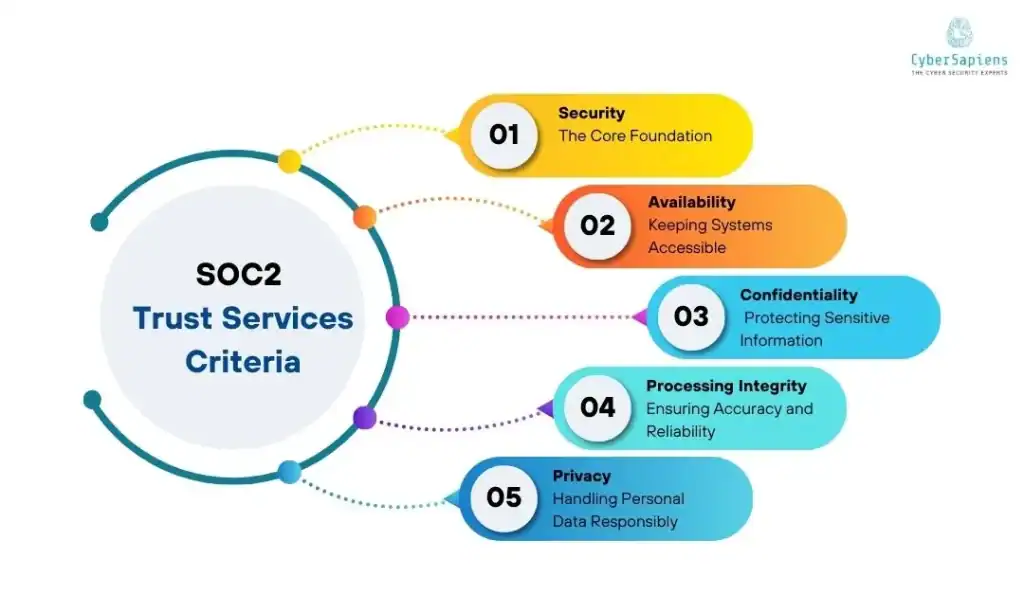
SOC 2 compliance is a security framework developed by the American Institute of Certified Public Accountants (AICPA) to evaluate how organizations protect customer data. It is specifically designed for cloud-based and SaaS companies that store, process, or manage sensitive information on behalf of their customers. SOC 2 focuses on the effectiveness of an organization’s internal controls based on the Trust Services Criteria, which include security, availability, processing integrity, confidentiality, and privacy.
These Trust Services Criteria form the foundation of SOC 2 compliance and define how organizations should secure their systems, ensure reliable service delivery, protect sensitive information, and handle personal data responsibly.
SOC 2 reports are divided into two types:
SOC 2 Type I: Evaluates whether security controls are properly designed and implemented at a specific point in time. This is typically the first step in the compliance journey.
SOC 2 Type II: Evaluates how effectively those controls operate over a defined period, usually between three and twelve months. This report provides stronger assurance to customers and partners, as it validates the operational effectiveness of controls aligned with the Trust Services Criteria.
For SaaS companies in Canada, SOC 2 compliance is not just about passing an audit—it is about building trust, strengthening internal security controls, aligning with the Trust Services Criteria, and meeting the expectations of enterprise clients who require verified security practices before sharing sensitive data.
Why SOC 2 Compliance is Important for SaaS Companies in Canada?
SOC 2 compliance plays a critical role in helping SaaS companies in Canada demonstrate their commitment to protecting customer data and maintaining secure, reliable services. As cloud adoption continues to grow, customers and enterprise clients expect SaaS providers to follow recognized security standards before trusting them with sensitive information. Following a structured SOC 2 Compliance Checklist for SaaS Companies in Canada helps organizations implement the necessary controls and meet these expectations.
1. Builds Customer Trust and Confidence: SOC 2 compliance assures customers that your organization has implemented strong security controls based on the Trust Services Criteria. This builds confidence that their data is protected from unauthorized access, breaches, and misuse.
2. Helps Win Enterprise and Global Customers: Many enterprise clients in Canada and internationally require SOC 2 compliance as a prerequisite before signing contracts with SaaS providers. Having a SOC 2 report demonstrates your security maturity and makes your company a trusted vendor.
3. Supports Compliance with Canadian Privacy Regulations: SOC 2 aligns with privacy and data protection requirements such as the Personal Information Protection and Electronic Documents Act (PIPEDA). It helps SaaS companies establish structured processes for handling personal and sensitive data securely.
4. Strengthens Overall Security Posture: Implementing SOC 2 controls helps organizations identify vulnerabilities, improve internal security practices, and reduce the risk of cyber threats, data breaches, and operational disruptions.
5. Creates Competitive Advantage in the Canadian SaaS Market: SOC 2 compliance differentiates your company from competitors who may not have verified security controls. It shows your commitment to security, reliability, and customer protection, which can accelerate business growth.
6. Improves Internal Processes and Risk Management: SOC 2 requires organizations to implement clear policies, access controls, monitoring systems, and incident response procedures. These improvements strengthen operational efficiency and reduce security risks.
7. Enables Faster Sales and Partnership Opportunities: SOC 2 compliance reduces security concerns during vendor evaluations and procurement processes. This helps SaaS companies close deals faster and expand into new markets.
SOC 2 Compliance Checklist for SaaS Companies in Canada
Achieving SOC 2 compliance requires SaaS companies to implement structured security controls aligned with the Trust Services Criteria. Following a comprehensive SOC 2 Compliance Checklist for SaaS Companies in Canada helps organizations prepare for audits, protect customer data, and demonstrate strong security practices to clients and partners.
Here is a practical checklist SaaS companies can follow:
1. Define Compliance Scope and Objectives
Start by clearly defining what systems, data, and services are included in the SOC 2 audit scope.
Key actions:
- Identify products, infrastructure, and environments in scope.
- Define applicable Trust Services Criteria (Security is mandatory).
- Identify data flows and storage locations.
- Assign internal compliance owners and stakeholders.
2. Implement Strong Access Controls
Access control ensures that only authorized users can access systems and sensitive data.
Key actions:
- Implement role-based access control (RBAC).
- Enable multi-factor authentication (MFA).
- Follow least privilege access principles.
- Establish user provisioning and deprovisioning procedures.
- Conduct periodic access reviews.
3. Establish Security Policies and Procedures
Documented policies are essential for SOC 2 compliance and audit readiness.
Key policies include:
- Information Security Policy.
- Access Control Policy.
- Incident Response Policy.
- Change Management Policy.
- Acceptable Use Policy.
- Data Protection and Encryption Policy.
4. Conduct Risk Assessments and Risk Management
Risk assessments help identify vulnerabilities and ensure appropriate controls are implemented.
Key actions:
- Perform regular risk assessments.
- Identify potential threats and vulnerabilities.
- Evaluate risk impact and likelihood.
- Implement mitigation strategies.
- Maintain risk registers and documentation.
5. Enable Continuous Monitoring and Logging
Monitoring ensures early detection of security incidents and unauthorized activities.
Key actions:
- Implement centralized log management.
- Monitor system activity and user behavior.
- Configure alerts for suspicious activities.
- Maintain log retention policies.
- Regularly review logs.
6. Implement Data Protection and Encryption
Protecting sensitive and personal data is a core SOC 2 requirement.
Key actions:
- Encrypt data at rest and in transit.
- Secure cloud storage and databases.
- Implement data classification procedures.
- Restrict access to sensitive information.
- Establish secure backup processes.
7. Vendor and Third-Party Risk Management
Third-party vendors can introduce security risks, so they must be properly evaluated.
Key actions:
- Maintain a vendor management program.
- Perform vendor risk assessments.
- Review vendor security certifications.
- Monitor third-party access to systems.
- Establish vendor agreements with security requirements.
8. Incident Response and Security Incident Management
SOC 2 requires organizations to respond quickly and effectively to security incidents.
Key actions:
- Develop an incident response plan.
- Define incident response roles and responsibilities.
- Establish incident detection and reporting procedures.
- Conduct incident response testing.
- Document and resolve incidents.
9. Change Management Controls
Change management ensures system changes do not introduce new vulnerabilities.
Key actions:
- Document change requests and approvals.
- Test changes before deployment.
- Maintain version control.
- Monitor system updates.
- Keep change records for audit evidence.
10. Business Continuity and Disaster Recovery
Ensure systems remain operational and recover quickly from disruptions.
Key actions:
- Implement backup procedures.
- Develop disaster recovery plans.
- Test recovery procedures regularly.
- Monitor system availability.
- Ensure redundancy for critical systems.
11. Employee Security Awareness and Training
Employees play a critical role in maintaining SOC 2 compliance.
Key actions:
- Conduct regular security awareness training.
- Educate employees on security policies.
- Provide phishing awareness training.
- Define employee security responsibilities.
- Implement background verification where required.
12. Maintain Documentation and Audit Evidence
Proper documentation is essential for SOC 2 audit readiness.
Key actions:
- Maintain policy and procedure documentation.
- Collect and store audit evidence.
- Document implemented controls.
- Track compliance activities.
- Prepare for SOC 2 audit reviews.
How CyberSapiens Helps SaaS Companies in Canada Achieve SOC 2 Compliance?
Achieving SOC 2 compliance can be complex for SaaS companies, especially when managing security controls, documentation, and audit requirements. CyberSapiens simplifies this process by providing expert guidance, automated compliance tools, and continuous support aligned with the SOC 2 Compliance Checklist for SaaS Companies in Canada.
1. SOC 2 Readiness Assessment and Gap Analysis
CyberSapiens begins with a detailed readiness assessment to evaluate your current security posture against SOC 2 Trust Services Criteria. This helps identify gaps, prioritize actions, and create a clear roadmap toward SOC 2 compliance.
2. Automated Compliance Platform
CyberSapiens provides an automated compliance platform that streamlines the entire SOC 2 process. The platform helps SaaS companies:
- Track compliance requirements in one centralized dashboard.
- Automate evidence collection and control monitoring.
- Maintain audit-ready documentation.
- Reduce manual effort and compliance complexity.
This automation makes it easier for Canadian SaaS companies to manage compliance efficiently as they scale.
3. Policy Development and Documentation Support
SOC 2 requires well-defined security policies and procedures. CyberSapiens provides pre-built policy templates and expert guidance to help organizations implement essential policies such as access control, incident response, risk management, and data protection.
4. Control Implementation and Compliance Guidance
CyberSapiens works closely with SaaS teams to implement the necessary technical and administrative controls aligned with SOC 2 Trust Services Criteria. This ensures proper security practices are in place to protect customer data and meet audit requirements.
5. Continuous Monitoring and Compliance Management
SOC 2 compliance is not a one-time activity. CyberSapiens enables continuous monitoring of security controls to ensure ongoing compliance. This helps organizations detect risks early, maintain control effectiveness, and remain audit-ready at all times.
6. Audit Preparation and Auditor Coordination
CyberSapiens helps SaaS companies prepare for SOC 2 audits by organizing documentation, validating controls, and ensuring audit readiness. The team also assists in coordinating with auditors to make the audit process smoother and more efficient.
7. Scalable and Tailored Compliance Approach
CyberSapiens provides customized SOC 2 compliance solutions based on the size, infrastructure, and complexity of your SaaS business. The approach ensures that companies in Canada can achieve compliance efficiently while supporting long-term security and growth.
With CyberSapiens, SaaS companies in Canada can simplify the SOC 2 journey, reduce compliance overhead, and confidently meet customer and enterprise security expectations while strengthening their overall security posture.
Clients Served by CyberSapiens



Strengthening SaaS Security and Trust with SOC 2 Compliance
SOC 2 compliance helps SaaS companies in Canada protect customer data, strengthen security controls, and build trust with clients and partners. By following a structured SOC 2 Compliance Checklist for SaaS Companies in Canada, organizations can implement the necessary safeguards aligned with the Trust Services Criteria and prepare for successful audits.
Beyond compliance, SOC 2 improves overall security posture, supports enterprise sales, and enhances credibility in competitive markets. With expert guidance and automated compliance support from CyberSapiens, SaaS companies can simplify the compliance process, maintain continuous readiness, and focus on delivering secure and reliable services.
FAQs
1. What is included in the SOC 2 Compliance Checklist for SaaS Companies in Canada?
Answer: The checklist includes access controls, security policies, risk assessments, monitoring, data protection, vendor management, incident response, and audit documentation.
2. What is the difference between SOC 2 Type I and Type II?
Answer: SOC 2 Type I evaluates controls at a specific point in time, while Type II evaluates how effectively those controls operate over a defined period.
3. How can CyberSapiens help SaaS companies achieve SOC 2 compliance?
Answer: CyberSapiens provides readiness assessments, automated compliance tools, policy support, continuous monitoring, and audit preparation to help SaaS companies achieve and maintain SOC 2 compliance efficiently.
4. How long does SOC 2 compliance take?
Answer: The timeline depends on the company’s size, existing security controls, infrastructure complexity, and readiness level.
