
A Step-by-Step SOC 2 Compliance Guide for SaaS Platforms in Canada
As SaaS platforms in Canada continue to grow and serve customers across industries and global markets, protecting sensitive customer and business data has become a top priority. Enterprise clients, partners, and regulators increasingly expect SaaS providers to demonstrate strong security controls and responsible data handling practices. SOC 2 compliance has emerged as one of the most trusted frameworks for validating the security, availability, and confidentiality of cloud-based services.
This step-by-step SOC 2 compliance guide for SaaS platforms in Canada explains how organizations can implement the necessary controls, prepare for SOC 2 audits, and align with the Trust Services Criteria. By following a structured approach and leveraging expert support from CyberSapiens, SaaS companies can simplify the compliance process, strengthen their security posture, and build long-term trust with customers.
What is SOC 2 Compliance?
SOC 2 compliance is a security framework developed by the American Institute of Certified Public Accountants (AICPA) to evaluate how service organizations protect customer data and ensure secure system operations. It is specifically designed for SaaS platforms and cloud service providers that store, process, or manage sensitive customer and business information.
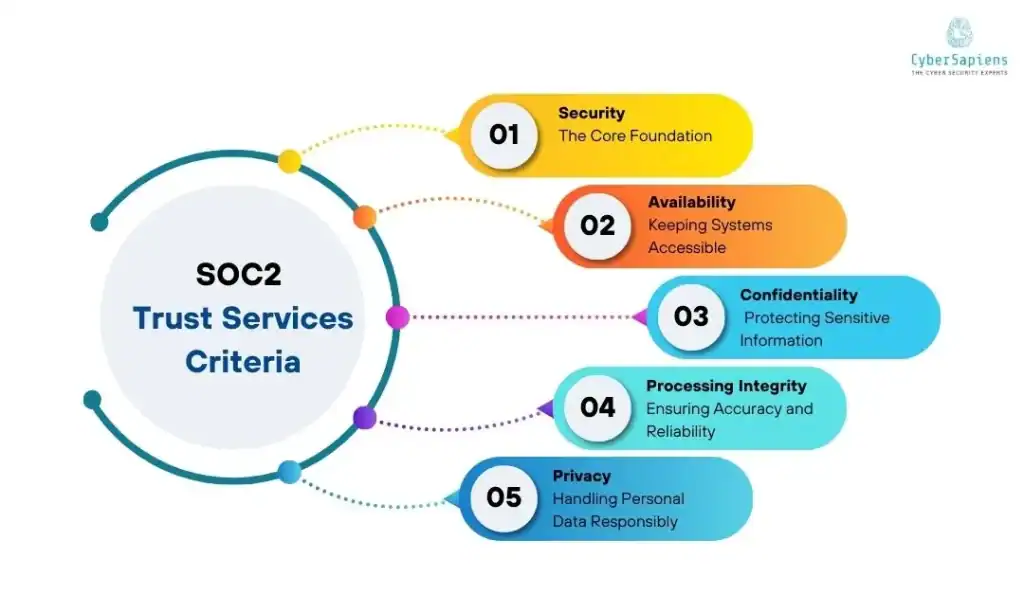
SOC 2 is based on the Trust Services Criteria, which include:
- Security: Protecting systems and data from unauthorized access.
- Availability: Ensuring systems remain operational and accessible.
- Confidentiality: Protecting sensitive business information.
- Processing Integrity: Ensuring accurate and reliable data processing.
- Privacy: Safeguarding personal information and ensuring proper data handling
Security is mandatory for all SOC 2 audits, while the other criteria apply depending on the nature of the SaaS platform and the services provided.
SOC 2 reports are divided into two types
SOC 2 Type I: Evaluates whether security controls are properly designed and implemented at a specific point in time. It confirms that the necessary controls are in place.
SOC 2 Type II: Evaluates how effectively those controls operate over a defined period, typically several months. This provides stronger assurance to customers and demonstrates ongoing compliance.
For SaaS platforms in Canada, SOC 2 compliance helps establish trust, strengthen internal security practices, and meet the expectations of enterprise customers and global partners. By following a step-by-step SOC 2 compliance guide and implementing the required controls, SaaS companies can improve their security posture and achieve audit readiness efficiently.
Why SOC 2 Compliance Matters for SaaS Platforms in Canada?
SOC 2 compliance is essential for SaaS platforms in Canada that want to demonstrate strong security practices and build trust with customers, partners, and enterprise clients. As SaaS companies handle sensitive business and personal data, implementing SOC 2 controls helps ensure that information is protected and managed responsibly.
1. Builds Trust with Customers and Enterprise Clients: SOC 2 compliance shows that your SaaS platform follows recognized security standards and has implemented controls aligned with the Trust Services Criteria. This assurance helps customers feel confident that their data is secure.
2. Supports Compliance with Canadian Privacy Regulations: SOC 2 aligns with Canadian privacy laws such as the Personal Information Protection and Electronic Documents Act (PIPEDA). It helps SaaS platforms implement proper data protection, access control, and privacy management practices.
3. Enables Enterprise Sales and Business Growth: Many enterprise organizations require SOC 2 compliance before partnering with SaaS providers. Having a SOC 2 report can accelerate vendor approval processes and help close deals faster.
4. Strengthens Overall Security Posture: SOC 2 compliance requires organizations to implement strong access controls, monitoring systems, and risk management processes. These controls help reduce the risk of cyber threats, data breaches, and service disruptions.
5. Provides Competitive Advantage: SOC 2 compliance differentiates your SaaS platform from competitors by demonstrating your commitment to security and data protection. It enhances your credibility in both Canadian and international markets.
6. Improves Internal Processes and Risk Management: Following a step-by-step SOC 2 compliance guide helps SaaS companies establish clear policies, improve operational efficiency, and maintain continuous security and compliance readiness.
Step-by-Step SOC 2 Compliance Guide for SaaS Platforms
Achieving SOC 2 compliance requires a structured approach that aligns your security controls, policies, and operational processes with the Trust Services Criteria. This step-by-step SOC 2 compliance guide for SaaS platforms in Canada will help you prepare for audit readiness and maintain ongoing compliance.
Step 1: Define Scope and Identify Applicable Systems
The first step is to determine which systems, services, and data are included in the SOC 2 audit scope.
Key actions:
- Identify cloud infrastructure, applications, and environments.
- Define data flows and storage locations.
- Identify sensitive customer and business data.
- Determine which Trust Services Criteria apply to your SaaS platform.
This step ensures your compliance efforts focus on critical systems and assets.
Step 2: Conduct a SOC 2 Readiness Assessment
A readiness assessment helps evaluate your current security posture and identify gaps in existing controls.
Key actions:
- Review existing policies, procedures, and controls.
- Identify missing or weak security controls.
- Conduct risk assessments.
- Create a remediation plan.
Step 3: Implement Access Controls and Security Measures
Access control is a core SOC 2 requirement to prevent unauthorized access to systems and data.
Key actions:
- Implement role-based access control (RBAC).
- Enable multi-factor authentication (MFA).
- Apply least privilege access principles.
- Secure endpoints, networks, and cloud infrastructure.
Step 4: Develop and Document Security Policies
SOC 2 requires documented policies that define how your organization manages security and protects data.
Key policies include:
- Information Security Policy.
- Access Control Policy.
- Incident Response Policy.
- Change Management Policy.
- Vendor Management Policy.
- Data Protection Policy.
Step 5: Implement Monitoring and Logging Controls
Continuous monitoring helps detect security threats and ensures system integrity.
Key actions:
- Enable system and user activity logging.
- Implement centralized log management.
- Monitor infrastructure and applications.
- Configure alerts for suspicious activities.
Step 6: Establish Vendor and Third-Party Risk Management
Third-party vendors must also meet security requirements to ensure overall compliance.
Key actions:
- Identify all third-party service providers.
- Conduct vendor risk assessments.
- Review vendor security certifications.
- Maintain vendor agreements and documentation.
Step 7: Implement Incident Response and Risk Management
Organizations must be prepared to detect, respond to, and resolve security incidents.
Key actions:
- Develop an incident response plan.
- Define roles and responsibilities.
- Train employees on incident response procedures.
- Document and track security incidents.
Step 8: Implement Business Continuity and Disaster Recovery
SOC 2 requires organizations to ensure system availability and resilience.
Key actions:
- Establish data backup procedures.
- Develop disaster recovery plans.
- Test recovery procedures regularly.
- Ensure system redundancy and availability.
Step 9: Collect Evidence and Maintain Documentation
Proper documentation is essential to demonstrate compliance during audits.
Key actions:
- Collect evidence of implemented controls.
- Maintain compliance records.
- Track risk assessments and policy updates.
- Ensure audit-ready documentation.
Step 10: Undergo SOC 2 Audit and Maintain Continuous Compliance
The final step is to complete the SOC 2 audit and maintain ongoing compliance.
Key actions:
- Engage a licensed SOC 2 auditor.
- Complete SOC 2 Type I audit.
- Prepare for SOC 2 Type II audit.
- Continuously monitor and improve controls.
How CyberSapiens Helps SaaS Platforms in Canada Achieve SOC 2 Compliance?
CyberSapiens helps SaaS platforms in Canada simplify and accelerate their SOC 2 compliance journey through expert guidance, automated tools, and continuous compliance support. By aligning with the Trust Services Criteria and following a structured, step-by-step approach, CyberSapiens ensures organizations are fully prepared for SOC 2 audits and ongoing compliance.
1. SOC 2 Readiness Assessment and Gap Analysis
CyberSapiens conducts a comprehensive readiness assessment to evaluate your current security controls and identify gaps. This helps SaaS platforms understand what is required and creates a clear roadmap to achieve SOC 2 compliance efficiently.
2. Automated Compliance Platform
CyberSapiens provides an automated compliance platform that simplifies SOC 2 implementation by:
- Automating evidence collection.
- Tracking compliance controls in a centralized dashboard.
- Maintaining audit-ready documentation.
- Reducing manual effort and operational complexity.
This enables SaaS companies to manage compliance more efficiently as they scale.
3. Policy Development and Implementation Support
CyberSapiens helps develop and implement essential security policies required for SOC 2, including access control, risk management, incident response, and data protection policies. This ensures your organization meets SOC 2 documentation requirements.
4. Control Implementation and Compliance Guidance
CyberSapiens provides expert guidance to help SaaS platforms implement technical and administrative controls aligned with the SOC 2 Trust Services Criteria, ensuring proper protection of systems and customer data.
5. Continuous Monitoring and Compliance Management
SOC 2 compliance requires ongoing monitoring and maintenance. CyberSapiens helps organizations continuously monitor controls, identify risks, and maintain compliance readiness for future audits.
6. Audit Preparation and Auditor Coordination
CyberSapiens supports SaaS platforms throughout the audit process by organizing documentation, validating controls, and assisting with auditor coordination. This helps ensure a smooth and successful SOC 2 audit.
7. Scalable and Tailored Compliance Solutions
CyberSapiens provides customized compliance support based on the size, infrastructure, and complexity of your SaaS platform. This flexible approach ensures efficient compliance implementation while supporting long-term growth.
With CyberSapiens, SaaS platforms in Canada can streamline their SOC 2 compliance journey, strengthen their security posture, and confidently meet customer and enterprise security expectations.
Clients Served by CyberSapiens



Simplifying SOC 2 Compliance for SaaS Platforms in Canada
SOC 2 compliance is essential for SaaS platforms in Canada to demonstrate strong security practices, protect customer data, and meet enterprise customer expectations. By implementing controls aligned with the Trust Services Criteria, organizations can ensure their systems are secure, reliable, and compliant with industry standards.
Following a structured, step-by-step approach helps simplify the compliance process, from readiness assessment and policy development to control implementation and audit preparation. SOC 2 compliance not only strengthens security posture but also builds customer trust, accelerates sales cycles, and enhances credibility in competitive markets.
With expert support, automated compliance tools, and continuous monitoring from CyberSapiens, SaaS platforms in Canada can streamline their SOC 2 journey, maintain audit readiness, and focus on delivering secure and scalable cloud services.
FAQs
1. What is the difference between SOC 2 Type I and SOC 2 Type II?
Answer: SOC 2 Type I evaluates whether security controls are properly designed at a specific point in time, while SOC 2 Type II evaluates how effectively those controls operate over a defined period.
2. How long does it take for SaaS platforms in Canada to achieve SOC 2 compliance?
Answer: The timeline depends on factors such as the organization’s size, infrastructure complexity, existing security controls, and readiness level.
3. What are the key requirements for SOC 2 compliance?
Answer: Key requirements include implementing access controls, security policies, risk management processes, monitoring systems, incident response procedures, vendor management, and proper documentation.
4. Why do enterprise customers require SOC 2 compliance?
Answer: Enterprise customers require SOC 2 compliance to ensure that SaaS platforms have strong security controls in place to protect sensitive data and maintain secure operations.
