
VAPT Services Checklist for Startups and SaaS Companies
Startups and SaaS companies heavily depend on digital platforms, cloud technologies, and web applications to provide services to customers. However, this has also led to the increased risk of cybersecurity attacks and threats. The fast pace of innovation and the rapid release of updates and patches in software applications sometimes result in security vulnerabilities in the systems and applications, which are then exploited by hackers and cybercriminals.
Security breaches in startups and SaaS businesses can result in financial and reputational damage. Hence, security testing and Vulnerability Assessment and Penetration Testing (VAPT) are very important for startups and SaaS businesses. VAPT is a security testing service that helps identify security vulnerabilities in systems and applications before they are exploited by hackers and cybercriminals.
A well-defined checklist for VAPT services can be very effective in ensuring the security and security testing of critical aspects and elements of the systems and applications of startups and SaaS businesses. A well-defined security testing checklist helps ensure the security and security testing of systems and applications, and provides a robust and secure digital platform for startups and SaaS businesses.
What is VAPT?
Vulnerability Assessment and Penetration Testing is the combination of two critical security practices. In the Vulnerability Assessment practice, the focus is on identifying security vulnerabilities in systems and applications. Penetration Testing is the second part of the VAPT security practice. In Penetration Testing, the focus is on simulating real-world cyber attacks on systems and applications in order to understand the potential security vulnerabilities in the systems and the potential impacts they could have on the organization.
Vulnerability Assessment and Penetration Testing provides businesses and organizations with the opportunity to gain valuable insights into the security vulnerabilities in the systems and applications they use. It provides businesses and organizations with the opportunity to identify security vulnerabilities in the systems and applications they use and address them before they are exploited by hackers and cybercriminals.
VAPT Services Checklist for Startups and SaaS Companies
Startups and SaaS companies heavily depend on web applications, APIs, and cloud technologies to provide their services. However, this has also increased the risk of cybersecurity attacks and threats. Frequent updates and deployments in such companies increase the risk of security attacks and threats. A well-defined checklist for Vulnerability Assessment and Penetration Testing (VAPT) helps startups and SaaS companies maintain the highest level of cybersecurity.
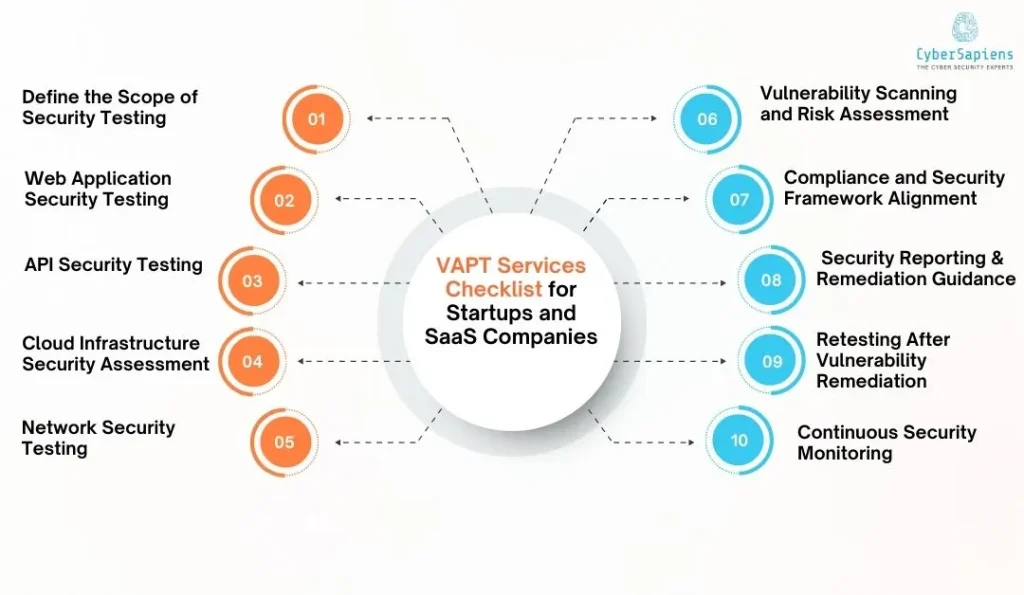
1. Define the Scope of Security Testing
The first step in the checklist for VAPT services is to identify the systems and assets that need security testing. Startups need to understand the need for security testing in web applications, mobile applications, APIs, cloud technologies, and internal networks. A well-defined scope in this step helps startups ensure the inclusion of all the necessary systems in the security testing.
2. Web Application Security Testing
Most SaaS businesses operate through web-based platforms. Therefore, web applications are a key target for cyber threats. Web application security testing helps identify vulnerabilities such as injection attacks, authentication issues, misconfigurations, and data handling issues. Through this testing, we can ensure that our web applications remain secure despite the addition of new features.
3. API Security Testing
APIs are vital in SaaS businesses because they help in communication between services and applications. However, if API security is poor, we can be on the receiving end in terms of exposure of critical information and unauthorized access.
4. Cloud Infrastructure Security Assessment
Startups and SaaS businesses use different cloud platforms such as AWS, Azure, or Google Cloud to host their platforms. Cloud security assessment is performed to detect any issues in access control or any possible risk in storage services or identity management systems. Cloud infrastructure security is vital to avoid any unauthorized access.
5. Network Security Testing
Network security testing is performed to ensure the security of internal as well as external networks by detecting any vulnerabilities that may be exploited by attackers to access systems in an unauthorized manner.
6. Vulnerability Scanning and Risk Assessment
Regular vulnerability scanning helps identify known security weaknesses across systems and applications. Risk assessments then prioritize these vulnerabilities based on their potential impact on the organization. This allows security teams to focus on fixing the most critical issues first.
7. Compliance and Security Framework Alignment
Many startups and SaaS companies must comply with security standards and regulations to build trust with customers and partners. Security testing aligned with frameworks such as SOC 2, ISO 27001, or data protection regulations helps organizations demonstrate strong security practices and meet compliance requirements.
8. Detailed Security Reporting and Remediation Guidance
A key part of the VAPT process is receiving a detailed security report that explains identified vulnerabilities and provides recommendations for fixing them. The report should include risk severity levels, proof of concept for vulnerabilities, and clear remediation steps that development teams can follow.
9. Retesting After Vulnerability Remediation
Once vulnerabilities have been addressed, retesting ensures that the fixes have been properly implemented. Retesting helps confirm that security gaps are fully resolved and prevents previously identified vulnerabilities from being reintroduced.
10. Continuous Security Monitoring
Startups and SaaS companies often release new updates and features frequently. Continuous security monitoring ensures that new vulnerabilities are detected quickly and addressed before they can be exploited. Regular testing and monitoring help maintain long-term security resilience.
Strengthening Security for Startups and SaaS Platforms With CyberSapiens
Startups and SaaS businesses are active in dynamic digital environments where applications, APIs, and cloud platforms are constantly evolving. Sometimes, rapid development and rapid deployment may lead to security vulnerabilities, making it critical for startups to adopt effective cybersecurity practices. By integrating structured security testing and risk management approaches, startups are able to safeguard their sensitive data, ensure platform reliability, and earn their customers’ trust.
CyberSapiens assists startups and SaaS businesses in enhancing their cybersecurity posture by providing the following services:
- Vulnerability Assessment and Penetration Testing (VAPT): Involves discovering vulnerabilities in applications, networks, and systems through automated scans or simulated cyberattacks on these systems.
- Web Application Security Testing: Involves testing SaaS applications and web applications for potential vulnerabilities such as injection attacks, authentication issues, etc.
- API Security Testing: Involves checking for security risks in API applications related to authentication, authorization, etc., for secure communication.
- Cloud Security Testing: Involves checking cloud infrastructure for potential security risks in access controls and cloud storage for preventing unauthorized access.
- Network Security Assessments: Involves checking internal and external infrastructure for potential vulnerabilities in the organization’s network infrastructure to gain unauthorized access.
- Security Risk Assessments and Gap Analysis: Involves checking for weaknesses in current security measures and making recommendations for enhancing overall security in the organization.
- SOC 2 Compliance Support: Helps startups comply with SOC 2 trust service criteria by implementing security controls.
- ISO 27001 Implementation: Helps organizations implement an Information Security Management System (ISMS) to ensure effective management of information security risks.
- Continuous Security Monitoring: Helps in continuous security monitoring, enabling the identification of new vulnerabilities.
With these services, CyberSapiens is able to assist startups and SaaS businesses in ensuring their security by identifying vulnerabilities and implementing security controls to ensure the development of secure and reliable systems.
Building a Strong Security Foundation for Startups and SaaS Platforms
For startups and SaaS organizations, security is an essential component that must be included in the overall development and growth strategy. As the digital platform evolves and new features are being rolled out, the risk of security flaws is also rising. A structured VAPT services checklist is essential in helping organizations identify security flaws and protect sensitive information, as well as maintain the reliability and integrity of the digital platform.
Conducting security tests and risk assessments is essential in helping startups fix security flaws before they can be exploited by attackers. This not only improves the security posture of the organization but also boosts customer and investor confidence in the digital platform.
FAQs
1. How does VAPT help startups build customer trust?
Answer: By regularly conducting VAPT assessments, startups can demonstrate that they take security seriously and are committed to protecting customer data. Strong cybersecurity practices help build trust with users, partners, and investors.
2. Can VAPT help startups meet compliance requirements?
Answer: Yes, VAPT plays an important role in supporting compliance with frameworks such as SOC 2, ISO 27001, and other data protection regulations. Security testing helps organizations identify and fix vulnerabilities while demonstrating that proper security controls are in place.
3. Is VAPT necessary for early-stage startups?
Answer: Yes, even early-stage startups should prioritize security testing. As startups begin handling user data and scaling their platforms, vulnerabilities can emerge. Conducting VAPT early helps establish strong security practices and prevents costly security incidents later.
4. How long does a typical VAPT assessment take?
Answer: The duration of a VAPT assessment depends on the scope and complexity of the systems being tested. For startups and SaaS platforms, assessments may take anywhere from a few days to a few weeks, depending on the number of applications, APIs, and infrastructure components involved.
