
Why Vulnerability Assessment and Penetration Testing is Important for SOC 2 Compliance?
As businesses are moving towards cloud computing, SaaS, and online services, it has become more important than ever that they have adequate cybersecurity measures in place. This is where an organization’s SOC 2 compliance comes into play, where they have to ensure that they have adequate security measures in place so that they can meet strict security and data protection standards.
SOC 2 compliance has become an accepted standard that has to be met by organizations that have customer information that they store, process, and manage. It has become an accepted standard that organizations have adequate security measures in place so that they can protect customer data in accordance with the Trust Service Criteria, including security, availability, processing integrity, and so on.
One of the most powerful methods for identifying areas of weakness in an organization’s security posture is through a Vulnerability Assessment and Penetration Testing (VAPT) exercise. VAPT enables organizations to identify potential areas of weakness in their application, network, and infrastructure layers that could compromise sensitive information. Performing a VAPT exercise for an organization will enable it to strengthen its overall cybersecurity posture and assist with the attainment of SOC 2 compliance.
Understanding SOC 2 Compliance
SOC 2 compliance is a security standard created by the AICPA (American Institute of Certified Public Accountants) aimed at ensuring organizations are able to safeguard their customers’ data in a secure manner. It is a popular compliance standard among SaaS companies, cloud service providers, and technology organizations.
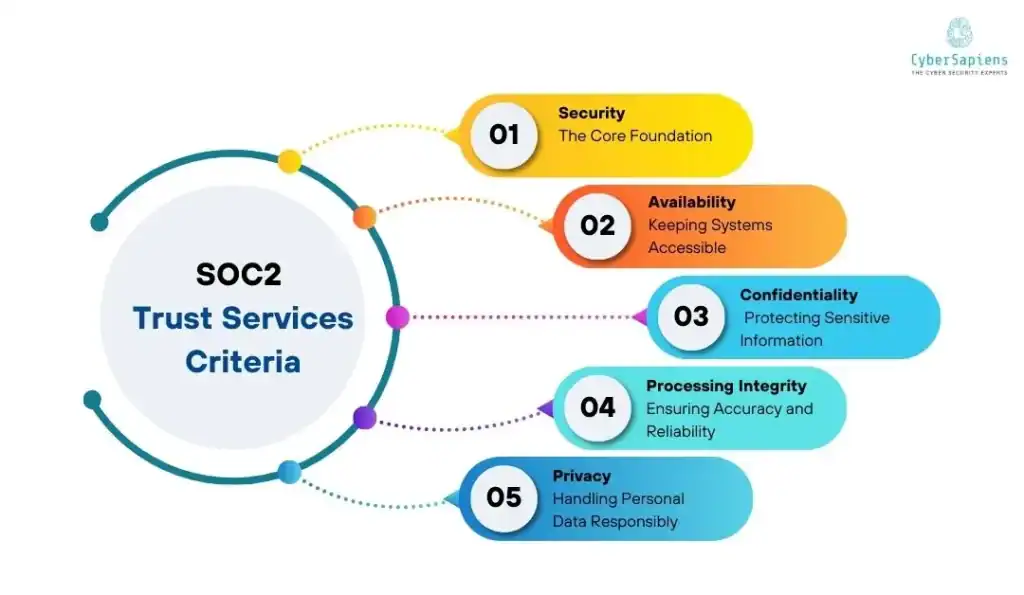
The process of ensuring an organization meets the SOC 2 compliance standard entails an assessment of the organization’s implementation of the Trust Service Criteria, which include:
- Security: Ensuring the organization protects its systems and data from unauthorized use.
- Availability: Ensuring the organization’s systems are available and accessible.
- Processing Integrity: Ensuring the organization processes data accurately.
- Confidentiality: Ensuring the organization protects sensitive business information.
- Privacy: Ensuring the organization protects personal data.
To meet the SOC 2 compliance standard, organizations need to continually monitor and test their systems to ensure the effectiveness of their security controls. Continuous security testing of an organization’s systems using Vulnerability Assessment and Penetration Testing (VAPT) helps organizations identify potential risks.
What is VAPT?
Vulnerability Assessment and Penetration Testing, abbreviated as VAPT, is a testing method that helps identify and fix the vulnerabilities that exist in an organization’s application, network, and infrastructure systems. VAPT is a testing method that helps organizations identify potential security risks that could be exploited by hackers.
Vulnerability Assessment is a testing method that is focused on identifying security risks, such as outdated systems, configuration, and security settings. The results of a Vulnerability Assessment are a list of identified vulnerabilities and their corresponding severity levels.
Penetration Testing is a testing method that takes a step further by simulating real-world attacks that could be performed by hackers, thereby identifying the risks that could be exploited by hackers. This helps organizations understand the risks that are associated with identified security risks.
VAPT is a combination of both Vulnerability Assessment and Penetration Testing, which gives a better view of the overall security posture of an organization. For any organization that is trying to attain SOC 2 compliance, VAPT is a testing method that can be very useful for identifying risks and thereby strengthening the overall security posture of the organization.
Why VAPT is Important for SOC 2 Compliance?
When an organization seeks SOC 2 compliance, it has to ensure that it has adequate security controls in place that can protect customer data and ensure system integrity. While having security controls in place is important, it is equally important that these security controls are periodically tested and validated against cyber threats. This is where Vulnerability Assessment and Penetration Testing (VAPT) can play an important role in helping an organization achieve SOC 2 compliance.
1. Identifies Security Vulnerabilities: VAPT can help an organization identify security vulnerabilities in its applications, networks, and infrastructure that can potentially put customer data at risk. Identifying these security vulnerabilities can help an organization fix these issues before they are exploited by cyber attackers.
2. Validates Security Controls: When an organization seeks SOC 2 compliance, it has to ensure that it has adequate security controls in place that can protect customer data and ensure system integrity. VAPT can play an important role in validating these security controls and testing how effectively these controls can protect against cyber threats.
3. Supports Risk Management: Risk management is a key requirement for SOC 2 compliance. VAPT offers insights into potential security risks and helps organizations prioritize their remediation activities according to the severity of identified vulnerabilities.
4. Helps Prevent Data Breaches: Data breaches are a major problem for organizations dealing with sensitive customer data. VAPT helps prevent data breaches by identifying vulnerabilities that could allow unauthorized access to data.
5. Demonstrates Security Best Practices: Regular VAPT assessments by organizations demonstrate to auditors as well as customers that the organization is taking proactive steps to enhance its security posture.
How CyberSapiens Helps Organizations Achieve SOC 2 Compliance?
To become SOC 2 compliant, an organization must develop robust security measures, manage risk, and continuously monitor the system for possible security breaches. CyberSapiens helps organizations enhance their security measures through specialized security services that assist the organization in achieving SOC 2 compliance.
1. Comprehensive VAPT Services
CyberSapiens provides Vulnerability Assessment and Penetration Testing services to the organization. These services help the organization identify security vulnerabilities in the system. This helps the organization avoid security breaches by cyberattacks.
2. Security Risk Identification
CyberSapiens helps the organization identify security risks that may affect the security of the customers’ data. This helps the organization in managing the risk, which is an essential requirement for SOC 2 compliance.
3. Security Gap Analysis
CyberSapiensprovides security assessments to the organization. These security assessments help the organization identify the gaps between the security measures currently in place and the security measures required by SOC 2. This helps the organization develop a better understanding of what is required to enhance the security measures.
4. Detailed Reports and Remediation Guidance
Once the security assessment is complete, CyberSapiens provides its clients with comprehensive reports on the identified vulnerabilities and their respective severity levels. This helps the organization address the security challenges in an efficient manner.
5. Continuous Security Support
Organizations need continuous support to maintain their SOC 2 compliance status. CyberSapienshelps its clients in this regard by offering continuous security testing and support to enhance the security of their systems.
With the VAPT and security expertise provided by CyberSapiens, an organization is able to enhance its security levels and successfully attain SOC 2 compliance status.
Strengthening SOC 2 Compliance with VAPT
SOC 2 compliance is critical for organizations dealing with high customer data risk and is interested in ensuring high standards of security and data privacy. However, obtaining SOC 2 compliance is not just about putting in place policies and controls; it is about continuous monitoring, testing, and improvement of security systems to ensure high standards are met.
Vulnerability Assessment and Penetration Testing (VAPT) is critical in ensuring SOC 2 compliance by helping organizations identify security weaknesses and improve controls to address any possible security threats before they are exploited. With VAPT, organizations are able to improve their security systems to ensure critical data is secure from possible security threats.
VAPT is critical in helping organizations improve SOC 2 compliance by ensuring that organizations are better prepared to pass SOC 2 audits and are able to improve customer confidence in their systems and processes.
FAQs: Why Vulnerability Assessment and Penetration Testing is Important for SOC 2 Compliance
1. How often should organizations conduct VAPT for SOC 2 compliance?
Answer: Organizations typically perform VAPT at least once a year or whenever there are major changes to applications, infrastructure, or systems handling sensitive data.
2. What systems should be included in a VAPT assessment for SOC 2?
Answer: VAPT assessments can include web applications, mobile applications, APIs, internal and external networks, cloud infrastructure, and servers to identify potential security vulnerabilities.
3. How does VAPT help during a SOC 2 audit?
Answer: VAPT reports provide documented evidence that an organization regularly tests its systems for vulnerabilities and takes proactive steps to strengthen its security controls.
4. Can VAPT help prevent data breaches in SOC 2 environments?
Answer: Yes, VAPT helps identify vulnerabilities that attackers could exploit. By addressing these weaknesses early, organizations can reduce the risk of cyberattacks and protect sensitive customer data.
