
Addressing Advanced Persistent Threats (APTs) with SOC Expertise
In the rapidly evolving digital landscape, cybersecurity threats are becoming more sophisticated. Among these, Advanced Persistent Threats (APTs) stand out as one of the most insidious and damaging forms of attack. Unlike common cyberattacks, APTs are stealthy, methodical, and relentless.
They are often launched by highly skilled adversaries—sometimes even state-sponsored groups—with the intent to infiltrate, remain undetected, and exfiltrate valuable data or disrupt operations over an extended period.
For businesses, especially in sectors like finance, healthcare, and critical infrastructure, the stakes couldn’t be higher. Addressing APTs requires more than traditional security tools; it demands the proactive, round-the-clock expertise of a Security Operations Center (SOC).
Here in this article we are going to discuss about the Addressing Advanced Persistent Threats (APTs) with SOC Expertise
What Makes APTs So Dangerous?
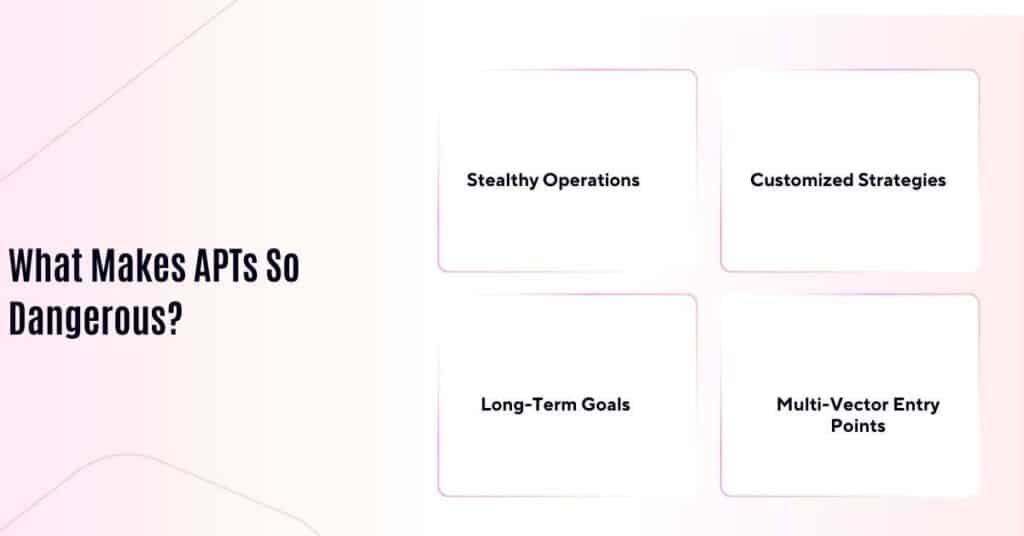
Unlike typical cyberattacks, which are often quick and opportunistic, APTs are characterized by their persistence and sophistication. Here’s what sets them apart:
1. Stealthy Operations
APTs often go undetected for months or even years. Attackers use techniques like fileless malware or encrypted communication to avoid detection.
2. Customized Strategies
These attacks are tailored to exploit specific vulnerabilities in a target’s infrastructure.
3. Long-Term Goals
APTs are designed to achieve strategic objectives, such as stealing intellectual property, compromising supply chains, or disrupting critical systems.
4. Multi-Vector Entry Points
APTs often begin with social engineering, phishing, or third-party vendor exploitation before moving laterally within the network.
For example, the Operation Aurora attack targeted major tech companies by exploiting vulnerabilities in web browsers, and the Stuxnet worm disrupted critical infrastructure by targeting industrial control systems.
How SOCs Combat APTs?
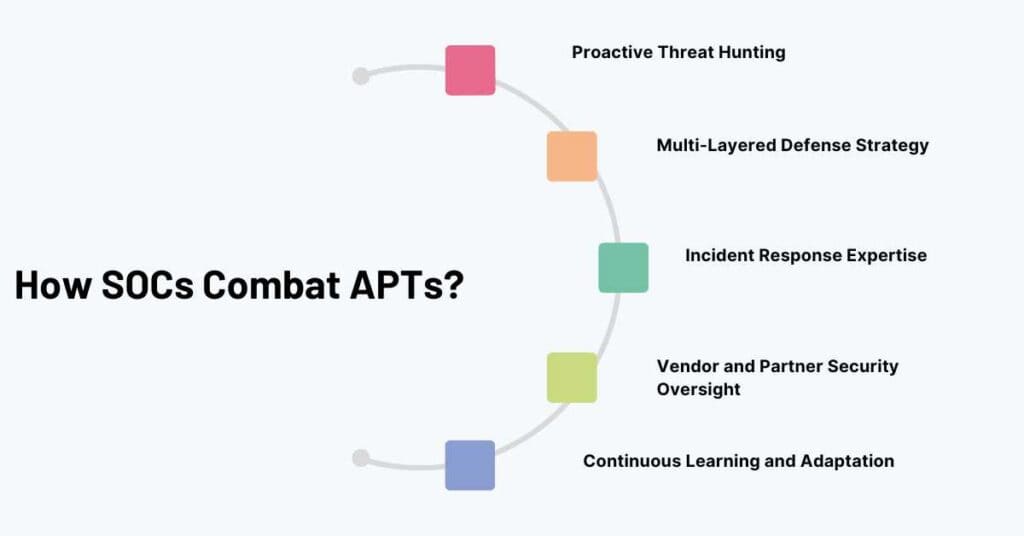
The advanced nature of APTs means businesses need more than basic antivirus software or firewalls. A SOC provides the expertise, tools, and strategies required to detect, respond to, and mitigate these threats effectively. Here’s how SOCs rise to the challenge:
1. Proactive Threat Hunting
SOCs go beyond waiting for alerts; they actively hunt for signs of potential compromise within your environment. By leveraging:
- Behavioral Analytics: Detecting unusual activity patterns indicative of APTs.
- Threat Intelligence Feeds: Monitoring global trends and incorporating insights about known APT groups and their tactics.
- Advanced Tools: Using solutions like EDR (Endpoint Detection and Response) and XDR (Extended Detection and Response) to identify anomalies.
For instance, if an attacker uses a compromised vendor account to access sensitive data, the SOC team’s continuous monitoring and anomaly detection would flag this behavior for immediate investigation.
2. Multi-Layered Defense Strategy
SOCs implement a defense-in-depth approach, ensuring that multiple layers of security are in place to block APTs at every stage of their lifecycle:
- Perimeter Security: Firewalls and intrusion prevention systems to block initial access.
- Endpoint Security: Protecting individual devices from malware or unauthorized access.
- Network Segmentation: Limiting lateral movement within the network.
- Zero Trust Architecture: Ensuring every access request is verified before being granted.
3. Incident Response Expertise
When dealing with APTs, time is of the essence. SOCs are equipped with incident response playbooks designed specifically for advanced threats. These include:
- Containment: Isolating compromised systems to prevent further spread.
- Eradication: Removing malicious software and closing exploited vulnerabilities.
- Recovery: Restoring systems and strengthening defenses to prevent recurrence.
4. Vendor and Partner Security Oversight
Many APTs exploit third-party relationships to gain access to target organizations. SOCs help mitigate this risk by:
- Conducting vendor risk assessments to ensure that third parties meet security standards.
- Monitoring third-party activity within your network for suspicious behavior.
- Collaborating with vendors to establish robust incident response protocols.
5. Continuous Learning and Adaptation
APTs evolve rapidly, with attackers constantly refining their tactics to bypass defenses. SOC teams stay ahead by:
- Participating in cybersecurity drills and simulations.
- Keeping up-to-date with the latest threat intelligence.
- Collaborating with industry peers to share insights and best practices.
The Role of AI and Automation in Combating APTs
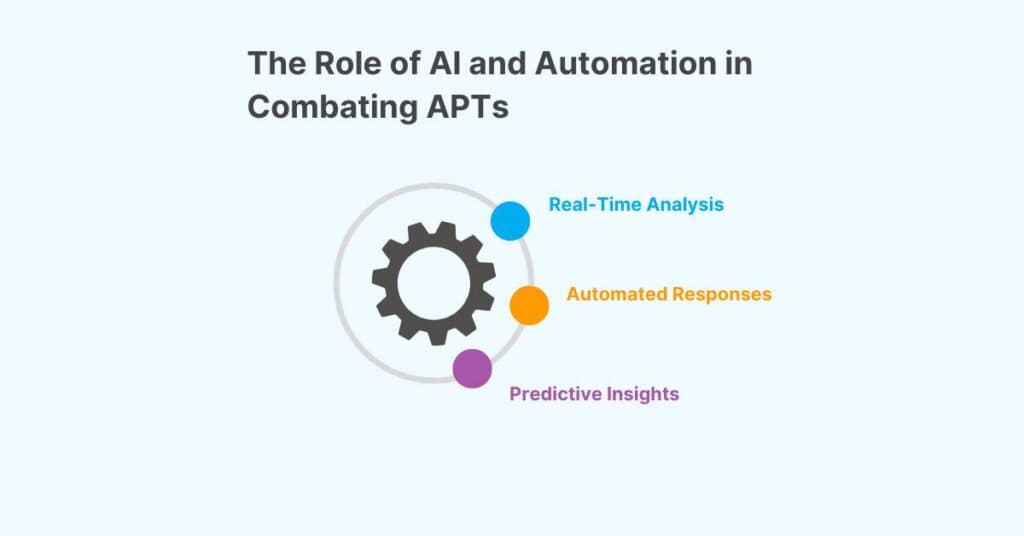
Modern SOCs leverage advanced technologies like artificial intelligence (AI) and automation to counteract APTs more effectively. These tools enable:
1. Real-Time Analysis
AI-driven systems can analyze massive amounts of data instantly, identifying threats that might go unnoticed by human analysts.
2. Automated Responses
Automation can handle repetitive tasks like isolating infected devices, freeing up analysts to focus on strategic decision-making.
3. Predictive Insights
AI can predict potential attack vectors based on historical data and emerging trends.
Why Every Business Needs SOC Expertise for APTs?
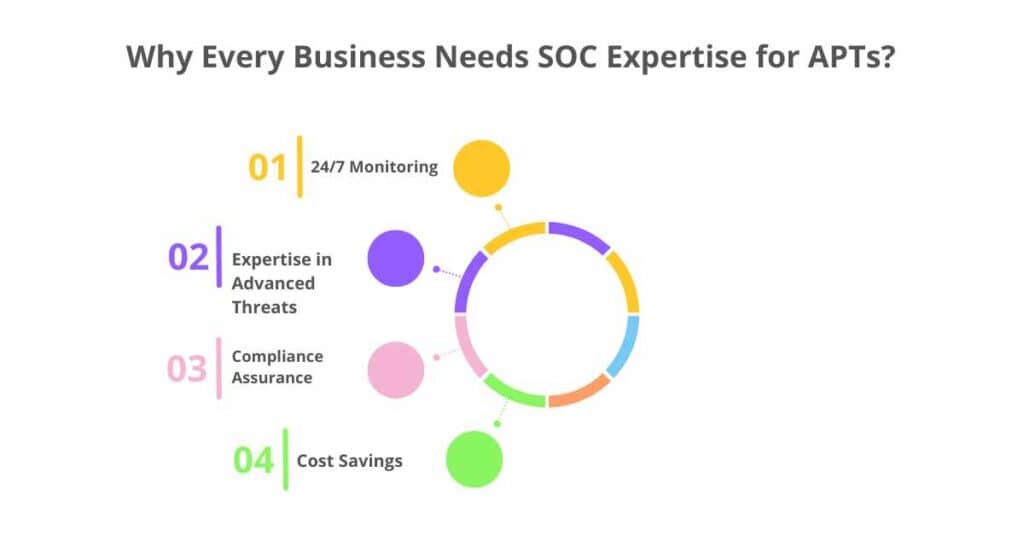
Addressing APTs isn’t just a technical challenge; it’s a business-critical necessity. Here’s why a SOC is indispensable:
1. 24/7 Monitoring
APTs can strike at any time. SOCs ensure your business is always protected.
2. Expertise in Advanced Threats
SOC teams specialize in identifying and countering the latest attack techniques.
3. Compliance Assurance
Many regulations, such as GDPR and HIPAA, require robust cybersecurity measures to address threats like APTs.
4. Cost Savings
Detecting and mitigating an APT early can save your business millions in potential damages.
Real-World Success Stories: SOCs in Action
Imagine a healthcare organization targeted by an APT aiming to steal patient records. The attackers exploit a third-party vendor’s credentials to gain access. Without a SOC, the breach might go undetected for months, exposing sensitive data and incurring massive fines.
With a SOC in place:
- The unusual vendor activity is flagged immediately.
- Analysts investigate and contain the breach within hours.
- The organization’s incident response plan is executed, minimizing downtime and data loss.
This proactive approach saves the business from reputational damage, regulatory penalties, and financial loss.
Conclusion: Strengthening Your Defense with SOC Expertise
Advanced Persistent Threats are a harsh reality of today’s cybersecurity landscape, but they don’t have to define your business’s fate. With a SOC, you gain the expertise, tools, and strategies needed to counter these sophisticated attacks effectively.
By investing in a SOC, you’re not just protecting your business—you’re safeguarding your customers, partners, and reputation. It’s time to take control of your cybersecurity journey and face the challenge of APTs head-on with the support of a trusted SOC partner.
In the battle against APTs, preparation is everything. Let a SOC be your shield.
