
How to Choose the Right VAPT Service Provider for Your Business?
As cyber threats are becoming increasingly advanced and common, it is imperative for businesses to take steps to ensure that any vulnerabilities are identified and addressed before they are exploited by cyber attackers. One of the best ways to ensure this is by conducting Vulnerability Assessment and Penetration Testing, or VAPT for short. VAPT is an efficient tool for businesses to ensure that their applications, networks, and systems are secure from any cyber attacks.
However, it is also very important to ensure that the VAPT service provided to businesses is of high quality and meets their requirements. Since there are numerous cybersecurity providers in the market that are capable of providing VAPT services to businesses, it is very challenging for businesses to select the right VAPT partner for their requirements.
How to Choose the Right VAPT Service Provider for Your Business?
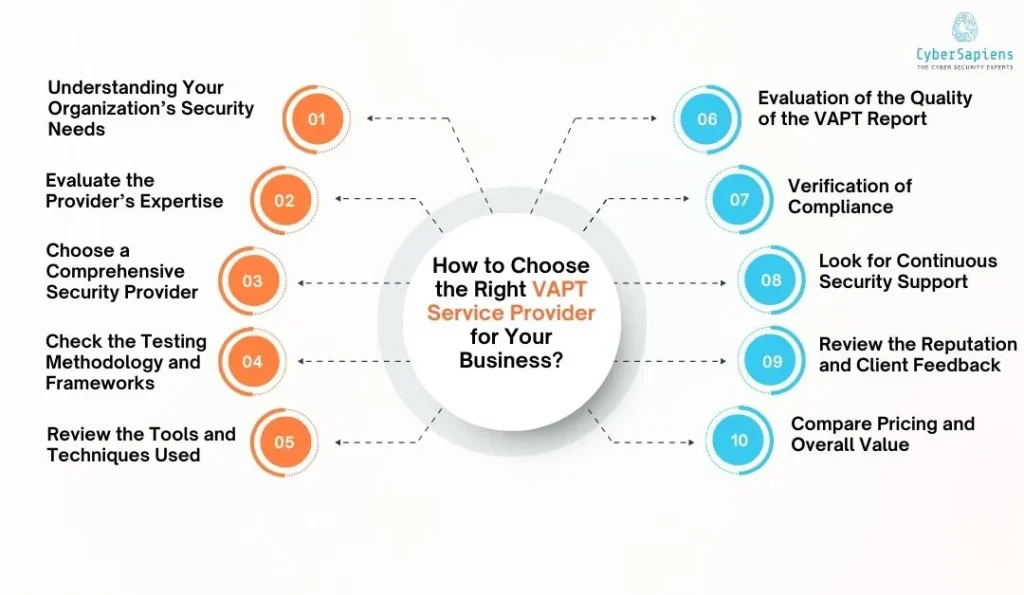
Selecting the right Vulnerability Assessment and Penetration Testing service provider is a vital part of keeping your business safe from online attacks. Vulnerability Assessment and Penetration Testing are vital tools for businesses to detect vulnerabilities in their applications, networks, and systems before attackers use these vulnerabilities to breach their systems. However, it is vital to understand that the success of Vulnerability Assessment and Penetration Testing greatly depends on the skill and approach of the Vulnerability Assessment and Penetration Testing service providers carrying out these tests for your business. There are several key areas to consider when selecting the right Vulnerability Assessment and Penetration Testing service providers for your business.
1. Understanding Your Organization’s Security Needs
Before choosing the Vulnerability Assessment and Penetration Testing providers to carry out Vulnerability Assessment and Penetration Testing for your business, it is vital to understand your organization’s security requirements and which systems to be tested. Vulnerability Assessment and Penetration Testing may be required for web applications, mobile applications, cloud environments, networks, or APIs. Additionally, businesses may need to comply with security requirements such as SOC 2, ISO 27001, or GDPR.
2. Evaluate the Provider’s Expertise and Experience
For cybersecurity testing, a provider needs to be an expert enough in the field of cybersecurity, as cybersecurity testing involves a lot of expertise. While choosing a provider, a company needs to evaluate the expertise of the security experts who are going to perform the cybersecurity testing. A provider with expert security experts who are experienced in cybersecurity testing is more likely to perform a better test, as they are more likely to identify complex security vulnerabilities, as well as simulate real-world attacks.
3. Choose a Comprehensive Security Provider
A good provider of VAPT services needs to offer comprehensive security services to ensure the complete security of a company’s systems, as different parts of a company’s systems require different types of security testing. A provider offering comprehensive security services allows companies to test all the systems of a company, ensuring the complete security of the company’s systems. For example, CyberSapiens provides a variety of security testing services, including vulnerability assessment, penetration testing, web application security testing, network security, cloud security, and security risk assessment, to ensure the complete security of a company’s systems.
4. Check the Testing Methodology and Frameworks Used
Professional VAPT service providers utilize security testing methodologies and frameworks that guide them in the security assessment process. This is essential because it ensures that the security testers evaluate the security posture of the targeted infrastructure through systematic testing and identification of security flaws that could be exploited by attackers.
5. Review the Tools and Techniques Used
For an accurate and reliable security assessment, it is crucial that the service providers utilize various tools and techniques that can help in the evaluation and identification of security flaws and vulnerabilities in the targeted infrastructure. The tools and techniques that can be used include automated scanning tools and manual penetration tests that can be carried out by security professionals with the required expertise and knowledge in security testing and evaluation.
6. Evaluation of the Quality of the VAPT Report
The final VAPT report is one of the key deliverables of the security audit process. An effective VAPT report should be able to present the identified vulnerabilities and their potential impacts in a clear and effective manner. It should be able to provide a clear understanding of the steps that can be taken to resolve the identified issues.
7. Verification of Compliance and Regulatory Expertise
There are several organizations that have to maintain compliance with industry regulations and security standards. It is essential to select a VAPT service provider that has the required expertise in compliance and regulatory requirements. This will help organizations improve their security while maintaining compliance.
8. Look for Continuous Security Support
It is essential to note that cybersecurity is not a one-time process; rather, it is an ongoing process that involves constant security checks and tests to ensure that the security level is not compromised by new emerging security threats and vulnerabilities.
9. Review the Reputation and Client Feedback
Businesses can also consider reviewing the reputation and client feedback prior to selecting the best VAPT service providers. This is because the cybersecurity industry is competitive, and it is crucial to consider the reputation and reliability of the service providers prior to selecting the best service providers to deliver security tests and checks to businesses and organizations.
10. Compare Pricing and Overall Value
While cost is an essential consideration in choosing a VAPT vendor, businesses should look for overall value provided by the services rather than just choosing the vendor with the lowest price. Other factors, such as the comprehensiveness of the assessment, depth of analysis, reporting quality, and level of support provided after the assessment, are also very important in determining the effectiveness of the VAPT engagement for any business organization. It is also essential to avoid costly cyber attacks in the future by investing in a security assessment.
Comprehensive Vulnerability and Penetration Testing Services By CyberSapiens
However, a good VAPT service should be able to provide comprehensive security testing services to cater to the different aspects of the organization’s IT infrastructure. This is because cyber threats can affect different layers of the company’s digital environment. Therefore, it is essential to ensure that the service provider can provide comprehensive security testing to cater to the different aspects of the company’s security.
Comprehensive security testing through VAPT can help organizations identify security vulnerabilities and determine the best remedial measures to be taken. This can help organizations prevent cybercrime from taking hold in the company.
CyberSapiens offers a variety of services related to cybersecurity, which can help organizations improve their cybersecurity standards in the following ways:
1. Vulnerability Assessment and Penetration Testing (VAPT)
Vulnerability Assessment and Penetration Testing (VAPT) helps organizations identify and address security weaknesses in their digital infrastructure before attackers can exploit them. Vulnerability assessments use automated tools to detect known vulnerabilities in systems, applications, and networks, while penetration testing simulates real-world cyberattacks to evaluate how those vulnerabilities could be exploited. Together, these approaches provide a comprehensive view of an organization’s security posture and help prioritize remediation efforts to reduce cyber risks.
2. Web Application Security Testing
Web applications are a common target for cyberattacks because they directly interact with users and handle sensitive data. Web application security testing identifies vulnerabilities such as SQL injection, cross-site scripting (XSS), broken authentication, and security misconfigurations. By testing the security of web applications, organizations can ensure that user data is protected, access controls are properly implemented, and the application is resilient against common cyber threats.
3. Network Security Assessments
Network security assessments evaluate the security of an organization’s internal and external network infrastructure. This process identifies vulnerabilities such as open ports, weak network configurations, outdated software, and insecure network protocols that attackers could exploit to gain unauthorized access. By regularly assessing network security, organizations can strengthen their defenses, prevent unauthorized access, and reduce the risk of data breaches.
4. Cloud Security Testing
As more businesses adopt cloud platforms for scalability and efficiency, ensuring the security of cloud infrastructure becomes essential. Cloud security testing focuses on identifying misconfigurations, weak access controls, exposed storage services, and other vulnerabilities that could lead to unauthorized access or data exposure. This testing helps organizations maintain secure cloud environments and ensures that cloud resources are properly configured and protected against evolving cyber threats.
5. Security Risk Assessment and Gap Analysis
Security risk assessment and gap analysis help organizations evaluate their current cybersecurity posture and identify areas that require improvement. This process involves reviewing existing security controls, policies, and procedures to detect gaps that may expose the organization to cyber threats. By understanding these gaps, businesses can implement targeted security improvements and strengthen their overall risk management strategy.
6. SOC 2 Compliance
SOC 2 compliance focuses on ensuring that organizations have appropriate controls in place to protect customer data and maintain system security. It is particularly important for service providers and SaaS companies that manage sensitive client information. SOC 2 implementation involves establishing and maintaining controls aligned with the Trust Services Criteria, including security, availability, confidentiality, processing integrity, and privacy. This helps organizations demonstrate their commitment to data protection and build trust with customers and partners.
7. ISO 27001 Implementation
ISO 27001 is an internationally recognized standard for establishing and maintaining an Information Security Management System (ISMS). Implementing ISO 27001 helps organizations systematically manage sensitive information and ensure that appropriate security controls are in place. The process includes risk assessments, policy development, security control implementation, and ongoing monitoring to maintain strong information security practices.
8. Security Policy Development
Strong security policies are essential for guiding employees and teams on how to manage information security risks effectively. Security policy development involves creating clear guidelines and procedures for data protection, access control, incident response, and secure system usage. Well-defined policies help organizations maintain consistency in security practices and ensure that employees understand their roles in protecting sensitive information.
9. Continuous Compliance and Security Monitoring
Cybersecurity threats and regulatory requirements are constantly evolving. Continuous compliance and security monitoring help organizations maintain their security posture over time by regularly reviewing systems, security controls, and compliance status. Ongoing monitoring enables organizations to quickly detect vulnerabilities, respond to emerging threats, and ensure that they remain compliant with industry standards and regulatory requirements.
With the above services, CyberSapiens helps organizations strengthen their security posture, identify potential threats, and develop a resilient cybersecurity framework.
Strengthening Your Cybersecurity with the Right VAPT Partner
The process of choosing the right VAPT service provider is an essential factor in ensuring your business is secured against the changing cyber threat landscape. An effective VAPT provider is one with the right blend of technical expertise, structured approaches to testing, and extensive security services, which can help identify weaknesses and provide recommendations for your business. This way, you can make informed decisions based on your business’s security evaluation.
Using the services of an expert in the field of cybersecurity can assist your business in proactively detecting weaknesses in your security system and reducing the risks of cybercrimes.
FAQs
1. What should a good VAPT report include?
Answer: A comprehensive VAPT report should include detailed descriptions of vulnerabilities, risk severity levels, proof of concept for identified issues, and step-by-step remediation recommendations. Clear reporting helps organizations understand security risks and prioritize mitigation efforts.
2. How can a reliable VAPT provider help improve cybersecurity?
Answer: A reliable VAPT provider helps organizations identify security gaps, assess potential attack vectors, and implement effective remediation strategies.
3. Does VAPT help with compliance requirements?
Answer: Yes, VAPT can support compliance with security frameworks and regulatory standards such as SOC 2, ISO 27001, PCI DSS, and other data protection regulations. Security testing helps organizations demonstrate that appropriate controls are in place to protect sensitive information.
4. What factors should businesses consider when choosing a VAPT service provider?
Answer: Businesses should consider factors such as the provider’s expertise, testing methodologies, service scope, reporting quality, compliance knowledge, and reputation. Choosing an experienced provider ensures that security assessments are thorough and provide actionable insights.
