
How to Prepare Your Engineering Team for a SOC 2 Audit in Canada?
As cybersecurity risks are increasing and data protection regulations are getting tighter, Canadian businesses are under pressure to prove that they have robust security measures in place. For SaaS businesses, cloud businesses, fintech businesses, and technology businesses in Canada, obtaining SOC 2 compliance has become a necessity to gain trust with clients and stakeholders.
The SOC 2 audit process examines how well an organization safeguards sensitive customer information according to the Trust Service Criteria, including security, availability, processing integrity, confidentiality, and privacy. Although obtaining SOC 2 compliance involves numerous groups within an organization, the engineering group plays one of the most important roles in ensuring that the technical requirements are implemented adequately.
These teams are responsible for a significant part of an organization’s fundamental systems and processes, which are audited during a SOC 2 audit. Be it infrastructure security and access, logging and monitoring, or secure software development practices, these teams play a critical role in helping an organization pass a SOC 2 audit.
Preparing for a SOC 2 audit can be a daunting task for engineering teams that are primarily focused on product development and maintenance. Without proper processes, documentation, and constant monitoring, it can become a challenge to pass a SOC 2 audit.
What is SOC 2 Compliance?
SOC 2 is a well-known compliance standard developed by the American Institute of Certified Public Accountants (AICPA) to test the level of protection provided to customer data by organizations. It is of utmost importance to SaaS companies, cloud service providers, fintech companies, and tech companies that handle sensitive customer information.
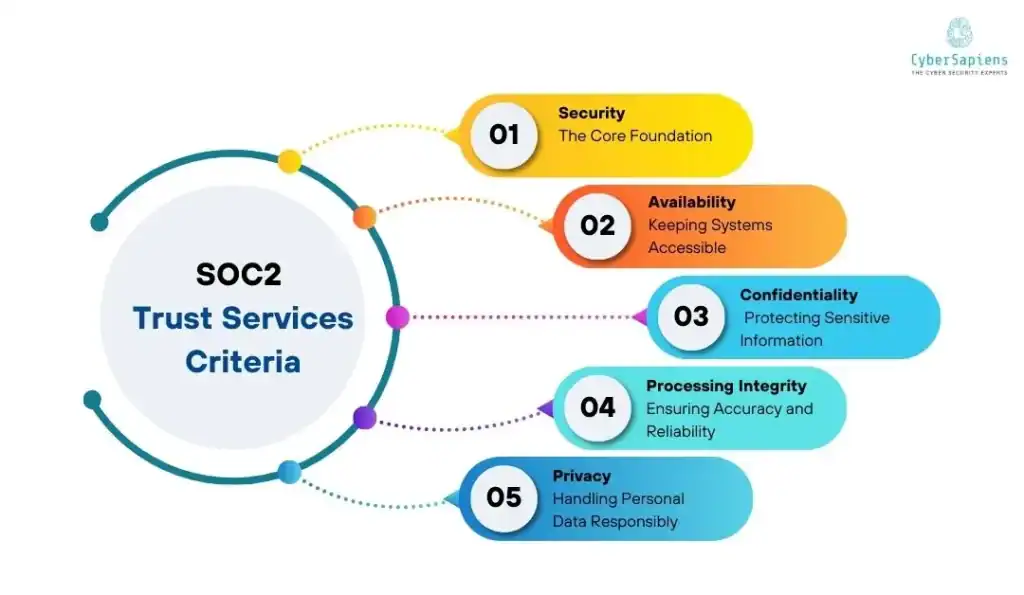
The SOC 2 audit is performed according to the Trust Services Criteria (TSC) that outline the security guidelines that need to be followed by organizations to deliver robust security to the data handled by them.
The five criteria of the Trust Services Criteria are:
- Security: The protection of systems and data against unauthorized access, breaches, and vulnerabilities.
- Availability: The accessibility of systems as agreed with customers.
- Processing Integrity: The proper processing of data.
- Confidentiality: The protection of data such as intellectual properties and financial data.
- Privacy: The protection of personal data, including data handling practices.
For most organizations, Security is mandatory, while the other requirements depend on the nature of the business.
Key Responsibilities of Engineering Teams in a SOC 2 Audit
Engineering groups have an integral function in SOC 2 compliance, given that the SOC 2 framework has numerous requirements that touch on technical controls, infrastructure security, and systems operation. In the SOC 2 audit process, the auditors will examine whether the organization’s systems have been designed and operated in a manner that safeguards sensitive information pertaining to the customers while ensuring the availability of the systems for the purpose of service delivery.
This implies that the engineering groups not only have the responsibility of ensuring the systems’ security but also have the onus of ensuring that the systems’ controls are documented and operating effectively.
Some of the key areas where the engineering groups have contributed directly to SOC 2 compliance are highlighted below.
1. Infrastructure Security
Engineering groups are responsible for ensuring that the organization’s infrastructure, whether on cloud-based infrastructure or on-premise infrastructure, is secure.
Some of the key aspects include:
- Implementation of secure network configurations
- Management of firewalls and security groups
- Implementation of regular system updates
- Vulnerability assessments
- Secure management of cloud configurations
Having a secure infrastructure is essential for protecting the organization’s infrastructure against unauthorized access, cyber attacks, and system disruptions.
2. Access Control Management
Access control management is another key factor that should be implemented by the organization, as it is one of the key requirements of the SOC 2 compliance standard.
Some of the key aspects of access control management include:
- Implementation of role-based access control
- Implementation of MFA
- Implementation of the least privileged access
- Monitoring of access control
- Support for secure onboarding
- Support for secure offboarding
Proper access control management can help reduce the risks of internal misuse of the organization’s infrastructure as well as security breaches on the organization’s infrastructure.
3. Secure Software Development Lifecycle (SDLC)
Engineering teams must incorporate security into the SDLC to ensure that applications are created and maintained in a secure manner.
Key practices include:
- Adhering to secure coding best practices.
- Carrying out code reviews prior to deployment.
- Making use of automated vulnerability scanners.
- Managing dependencies and libraries in a secure manner.
- Documenting the application and deployment workflow.
Incorporating a secure SDLC is significant in avoiding vulnerabilities in the production environment.
4. Monitoring and Logging
SOC 2 compliance requires that the organization has a clear view of the activities taking place in the systems and is able to identify potential security threats in a timely manner.
Engineering teams contribute to this in the following ways:
- Facilitating a centralized logging mechanism.
- Monitoring infrastructure and application performance.
- Tracking security-related activities and anomalies.
- Setting up alerts for suspicious activities.
- Retention of logs for audit and analysis.
Proper monitoring is significant in that security-related issues are easily identified and addressed accordingly.
5. Incident Response Readiness
Organizations must be able to respond effectively and quickly to security incidents. Engineering teams play a role in this by providing support for incident response.
Their role includes:
- Supporting incident detection and investigation.
- Providing technical expertise during security incidents.
- Supporting incident response tools and systems.
- Assisting with root cause analysis and remediation.
- Supporting documentation after incidents.
Well-prepared engineering teams can greatly reduce the impact of security incidents.
6. Data Protection and Encryption
Customer data is a critical aspect that must be protected by organizations. This is a fundamental SOC 2 requirement. Engineering teams must ensure that data is properly encrypted.
This can be achieved by:
- Encrypting data at rest and during transmission.
- Protecting database and storage systems.
- Implementing key management practices.
- Protecting backups and sensitive information.
- Supporting secure data handling across applications.
The role of an engineering team in SOC 2 compliance is more than just maintenance. It is a guarantee that an organization’s technical infrastructure is secure and reliable and can meet the high standards required by SOC 2.
How CyberSapiens Helps Engineering Teams Achieve SOC 2 Compliance?
Preparing for a SOC 2 audit can be a daunting task for engineering teams, especially when they have to keep track of product development, infrastructure, and performance. However, this can be overwhelming, especially when there is a need to track and collect evidence for the audit. This is where CyberSapiens can help companies in simplifying and streamlining the entire process of compliance.
CyberSapiens offers a compliance automation platform to help companies in implementing, monitoring, and maintaining SOC 2 controls, along with reducing the operational burden of the audit process.
1. Automated Compliance Workflows
CyberSapiens helps in automating the tedious and repetitive work of SOC 2 preparation. Instead of manually tracking the process of compliance, the engineering teams can track and manage their controls in one place.
2. Key Benefits of CyberSapiens
The key benefits of using the services of CyberSapiens for SOC 2 preparation and compliance tracking for the company’s engineering teams will be:
- Pre-mapped SOC 2 control frameworks.
- Automated compliance tracking.
- Simplified policy and control management.
- Reduced manual compliance workload.
3. Continuous Monitoring of Security Controls
For SOC 2 Type II audits, it is necessary for organizations to prove that the security controls in place are working effectively in the long run. CyberSapiens helps engineering teams to monitor the security controls in real time.
The features include:
- Real-time monitoring of the organization’s security controls.
- Alerts regarding the organization’s compliance.
- Real-time evaluation of the organization’s infrastructure security.
- Real-time tracking of the organization’s compliance status.
This helps the organization to detect possible problems before the actual audit occurs.
4. Automated Evidence Collection
The collection of evidence for the auditors is one of the most time-consuming processes in the SOC 2 audit. The automated evidence collection tool of the software helps to ease the collection of evidence by the auditors.
The engineering teams can easily provide the auditors with the necessary evidence in the form of:
- Access logs
- Infrastructure configuration
- Security monitoring
- Change management
- Policies
The automated evidence collection tool of the software helps the engineering teams to be ready for the audit at all times.
5. Integration with Engineering and Cloud Tools
CyberSapiens integrates with various engineering tools and cloud platforms. This makes it possible for organizations to easily monitor their systems and gather their compliance data.
Some of the tools that CyberSapiens integrates include:
- Cloud Infrastructure Platforms.
- Identity and Access Management Platforms.
- Version Control and Development Platforms.
- Monitoring and Logging Platforms.
These integrations ensure that organizations can conduct their compliance checks in their engineering tools.
6. Centralized Risk and Compliance Management
CyberSapiens also provides a centralized platform where organizations can conduct their risk and compliance management. With CyberSapiens, engineering teams can easily collaborate with their compliance teams in managing their security risks and ensuring that their organization is in compliance.
7. Faster and More Efficient SOC 2 Audit Preparation
CyberSapiens helps reduce the time and effort required to prepare for SOC 2 audits by automating monitoring, documentation, and compliance activities.
What this means for engineering teams:
- Less manual work.
- Greater visibility of their compliance status.
- Faster readiness for audits.
- Stronger security posture.
With the right processes and tools in place, engineering teams can support SOC 2 compliance efforts and continue to deliver secure and reliable products. CyberSapiens helps organizations turn a complex and often daunting process into a streamlined and manageable one.
Clients Served by CyberSapiens



Building a Strong Foundation for SOC 2 Success
Preparing your engineering team for a SOC 2 audit is not just about clearing the audit; it is about creating a culture that is secure and has systems in place that are secure and consistent in protecting customer data. Since the engineering teams are responsible for infrastructure, application development, monitoring, and access, it is a critical part in implementing the technical controls that are required in a SOC 2 audit.
For Canadian organizations, attaining SOC 2 compliance can increase customer trust, improve operational security, and provide access to enterprise-level clients who require robust data security standards to be met.
With the assistance of organisations like CyberSapiens, organizations can streamline their compliance efforts, monitor their security controls, and keep their documentation up to date. This enables their engineering teams to concentrate on building robust and secure products, knowing their organization is ready for SOC 2 audits and security requirements.
FAQs : How to Prepare Your Engineering Team for a SOC 2 Audit in Canada?
1. Why is SOC 2 important for Canadian SaaS and technology companies?
Answer: SOC 2 helps organizations demonstrate strong security practices and responsible data management. Many enterprise clients and partners require SOC 2 compliance before working with SaaS or cloud service providers, making it a key factor for business growth and trust.
2. How can compliance automation help engineering teams prepare for SOC 2?
Answer: Compliance automation platforms simplify SOC 2 preparation by automating evidence collection, monitoring security controls, and tracking compliance requirements. This reduces manual work for engineering teams and helps organizations stay continuously audit-ready.
3. Do engineering teams need to document their development processes for SOC 2?
Answer: Yes. SOC 2 audits require organizations to document their development and operational processes. Engineering teams should maintain documentation for code reviews, deployment workflows, change management procedures, and security testing activities to demonstrate that secure development practices are followed.
4. Can startups and small engineering teams achieve SOC 2 compliance?
Answer: Yes. Startups and smaller teams can achieve SOC 2 compliance by implementing essential security controls, documenting processes, and using compliance automation platforms that simplify monitoring and evidence collection. With the right approach, even lean engineering teams can successfully prepare for a SOC 2 audit.
