

Incident Response for Enterprises: SOC Playbook in Action
In today’s hyper-connected world, where cyber threats evolve daily, businesses must ask themselves one critical question: How prepared are we to respond to a cyber incident? The reality is, a single breach can disrupt operations, tarnish reputations, and result in significant financial losses. This is where incident response comes in—and at the heart of it, Security Operations Center (SOC) playbooks act as the cornerstone of an effective strategy.
This blog dives into how SOCs enhance enterprise operations by streamlining incident response and why their playbooks are essential for modern businesses.
The Role of SOCs in Enterprise Security
Think of a SOC as your company’s digital defence team. It doesn’t just sit and wait for threats; it actively detects, investigates, and mitigates them before they can wreak havoc. However, the real magic happens during an incident.
A well-structured SOC is like a fire department—always ready to spring into action when a cyber “fire” breaks out. And just as firefighters rely on protocols to tackle different scenarios, SOCs depend on incident response playbooks. These playbooks provide step-by-step instructions for managing specific threats, ensuring a swift and coordinated response.
Why Incident Response is Crucial for Enterprises?
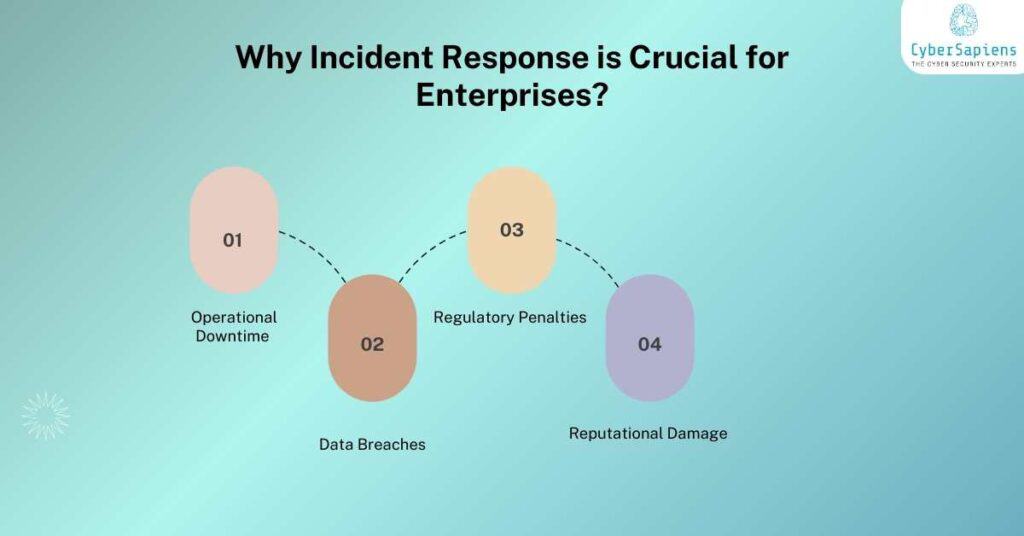
Cyber incidents are no longer rare occurrences—they’re inevitable. Whether it’s a phishing attack, ransomware, or insider threats, businesses face countless challenges that demand immediate action. The consequences of a poor or delayed response include:
1. Operational Downtime
Disruptions to critical business functions.
2. Data Breaches
Loss or theft of sensitive customer or business data.
3. Regulatory Penalties
Non-compliance with data protection laws like GDPR or CCPA.
4. Reputational Damage
Loss of trust among customers and stakeholders.
An effective incident response plan minimizes these risks, ensuring that businesses recover quickly and efficiently.
SOC Playbooks: The Blueprint for Action
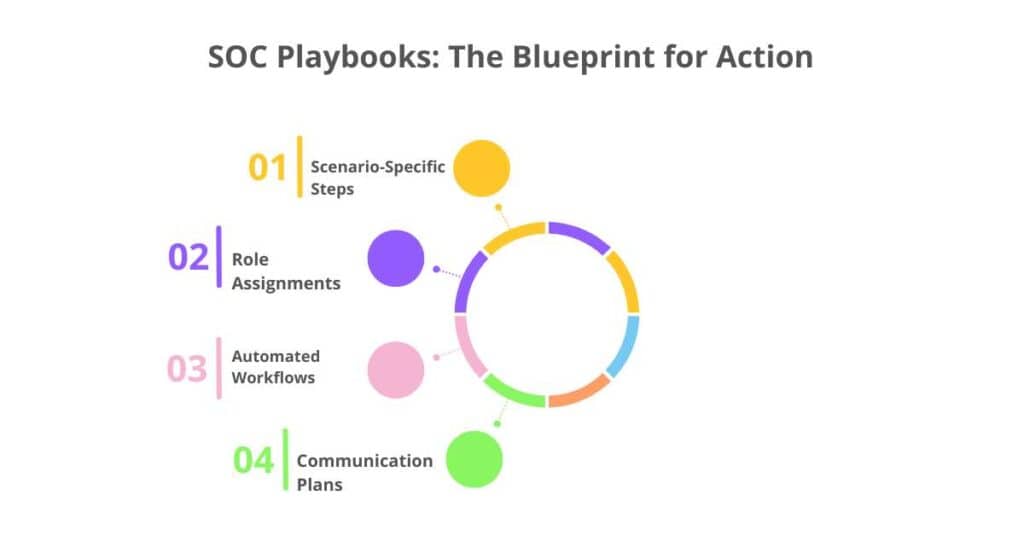
SOC playbooks are pre-defined, actionable guides tailored to specific types of incidents. They are the backbone of an enterprise’s incident response strategy, enabling SOC teams to act decisively and consistently under pressure. Key Features of a SOC Playbook
1. Scenario-Specific Steps
Customized actions for various threats like malware infections, phishing attempts, or DDoS attacks.
2. Role Assignments
Clearly defined responsibilities for SOC analysts, IT teams, and decision-makers.
3. Automated Workflows
Integration with tools like SIEM (Security Information and Event Management) for faster responses.
4. Communication Plans
Guidelines for notifying stakeholders, customers, and regulatory bodies.
SOC Playbooks in Action: Real-Life Scenarios
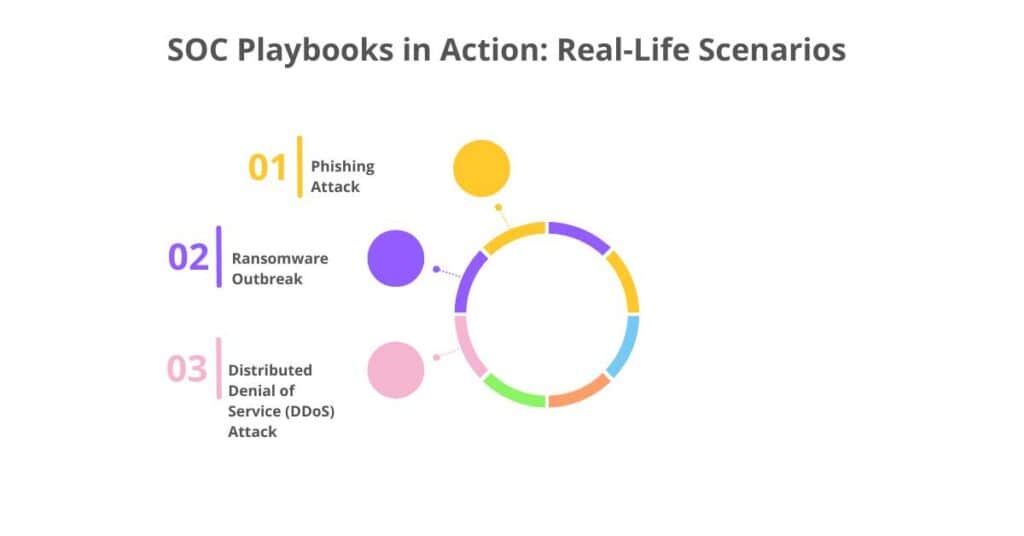
Let’s take a closer look at how SOC playbooks come to life during common enterprise incidents:
1. Phishing Attack
Scenario: A suspicious email is reported by an employee, containing a malicious link.
SOC Playbook Response
Step 2: Analyze the email headers and attachment for signs of malicious activity using sandbox environments or email security tools.
- Step 3: Cross-check the suspicious link or attachment with known threat intelligence databases.
- Step 4: Notify the employee and provide guidance to avoid future incidents.
- Step 5: Hunt for similar phishing emails in the organization’s email system and quarantine them.
- Step 6: Update the organization’s email filters to block similar threats in the future.
- Outcome: Threat neutralized with minimal impact, and employees are better prepared for future phishing attempts.
2. Ransomware Outbreak
Scenario: Systems start locking up, with attackers demanding payment to release encrypted data.
SOC Playbook Response:
- Step 1: Immediately disconnect affected systems from the network to prevent further spread.
- Step 2: Analyze logs and forensic data to identify the attack vector (e.g., phishing email, unpatched vulnerability).
- Step 3: Deploy backups to restore affected systems and validate the integrity of restored data.
- Step 4: Engage with legal and regulatory teams to determine reporting obligations.
- Step 5: Notify key stakeholders, including management, employees, and customers (if necessary).
- Outcome: Systems are restored quickly without paying the ransom, and future vulnerabilities are patched.
3. Distributed Denial of Service (DDoS) Attack
Scenario: A surge in malicious traffic overwhelms your website, making it unavailable to customers.
SOC Playbook Response:
- Step 1: Identify the source and scale of the attack using network monitoring tools.
- Step 2: Divert malicious traffic using web application firewalls (WAF) or content delivery networks (CDNs).
- Step 3: Contact your Internet Service Provider (ISP) or cloud provider for additional mitigation support.
- Step 4: Communicate with affected customers and provide updates on service restoration timelines.
- Step 5: Conduct a post-incident review to strengthen DDoS protection mechanisms.
- Outcome: Downtime is minimized, and customer trust is maintained through proactive communication.
How SOCs Enhance Enterprise Operations Through Incident Response?

SOC playbooks don’t just stop at resolving incidents—they actively improve enterprise operations. Here’s how:
1. Proactive Threat Hunting
SOC teams analyze patterns and trends from past incidents to identify potential vulnerabilities before they’re exploited.
2. Reduced Downtime
Playbooks ensure a fast and coordinated response, minimizing the time critical systems are offline.
3. Strengthened Security Posture
Lessons learned from incident response are fed back into security policies, tools, and training.
4. Regulatory Compliance
By documenting every step of the incident response process, SOCs help enterprises meet audit and reporting requirements.
The Importance of Tailored SOC Playbooks
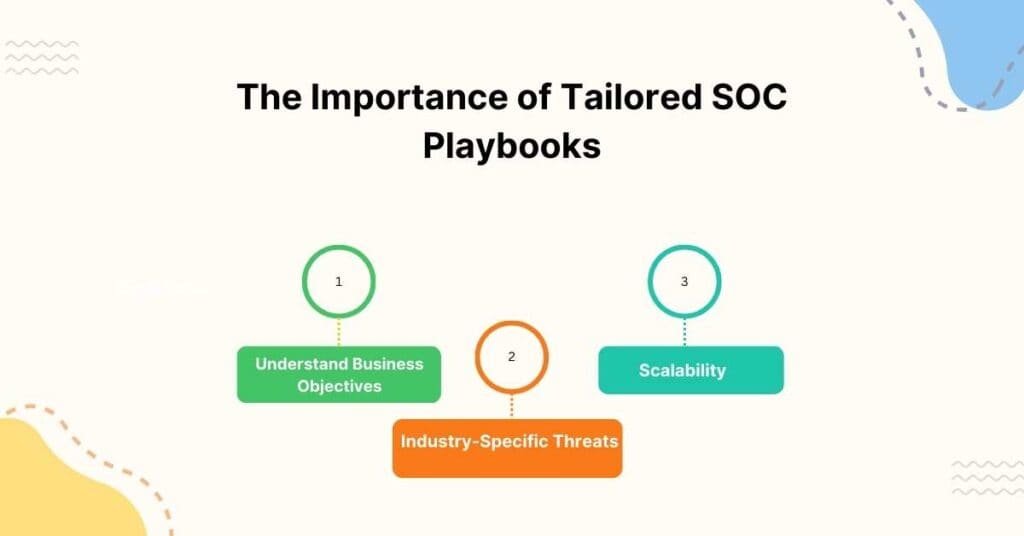
Not all businesses are the same, and neither are their security needs. A healthcare provider, for example, must prioritize protecting patient data, while a financial institution focuses on preventing fraud. SOC playbooks must reflect these unique priorities.Customizing Playbooks for Enterprises
1. Understand Business Objectives
Align security actions with operational goals to avoid unnecessary disruptions.
2. Industry-Specific Threats
Tailor responses to threats commonly faced in your sector (e.g., ransomware for healthcare, insider threats for finance).
3. Scalability
Design playbooks that adapt to your organization’s size and complexity as it grows.
Preparing for the Inevitable: A Unified Incident Response Plan
Incorporating SOC playbooks into an enterprise’s incident response plan isn’t just about mitigating threats—it’s about building a resilient, proactive security culture. Every team member, from the SOC analyst to the CEO, has a role to play in responding to incidents effectively.
Here’s a checklist for enterprises:
- Conduct regular simulations to test SOC playbooks.
- Train employees on recognizing and reporting security threats.
- Partner with SOC providers who offer flexible, industry-specific playbooks.
- Continuously update playbooks to account for new threats and technologies.
Conclusion: SOC Playbooks in Action—A Business Imperative
Cyber incidents aren’t a matter of “if” but “when.” The difference between a minor disruption and a full-blown crisis lies in how prepared your business is to respond. SOC playbooks bring structure, clarity, and speed to incident response, transforming chaos into control.
For enterprises, the message is clear: Invest in a SOC, tailor your playbooks, and turn cybersecurity into your competitive advantage.
Whether you’re building an in-house SOC or leveraging SOC-as-a-Service, make sure your incident response playbooks are designed to protect what matters most—your operations, your data, and your reputation. Because in the fight against cyber threats, preparation isn’t optional—it’s essential.
