
Insider Threats: How SOCs Uncover and Prevent Internal Security Breaches
When we think about cybersecurity threats, it’s easy to picture a faceless hacker operating from a remote location, trying to break through firewalls. But sometimes, the danger lies much closer—within the organization itself. Insider threats, whether malicious or negligent, are among the most difficult challenges for a Security Operations Centre (SOC) to detect and manage.
Here in this article we are going to discuss about the Insider Threats: How SOCs Uncover and Prevent Internal Security Breaches
What is an Insider Threat?
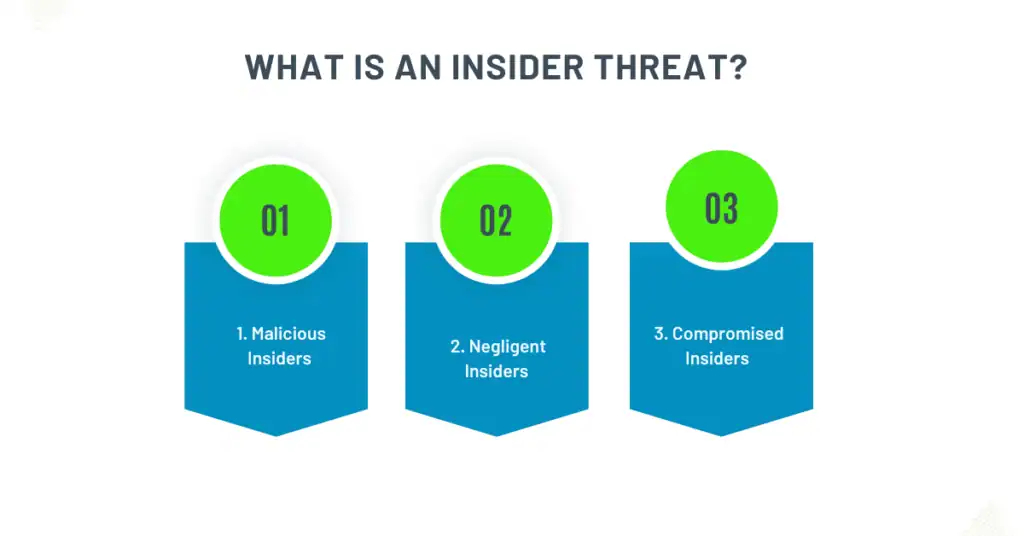
An insider threat involves any individual with legitimate access to an organization’s systems and data who misuses that access intentionally or unintentionally resulting in harm to the organization.
There are generally three types of insiders:
1. Malicious Insiders
Employees or contractors who deliberately cause harm, steal data, or sabotage systems.
2. Negligent Insiders
Well-meaning staff who unknowingly compromise security through poor practices (e.g., weak passwords or misconfigured access).
3. Compromised Insiders
Individuals whose accounts or credentials have been stolen and used by attackers.
Why Insider Threats are So Dangerous?
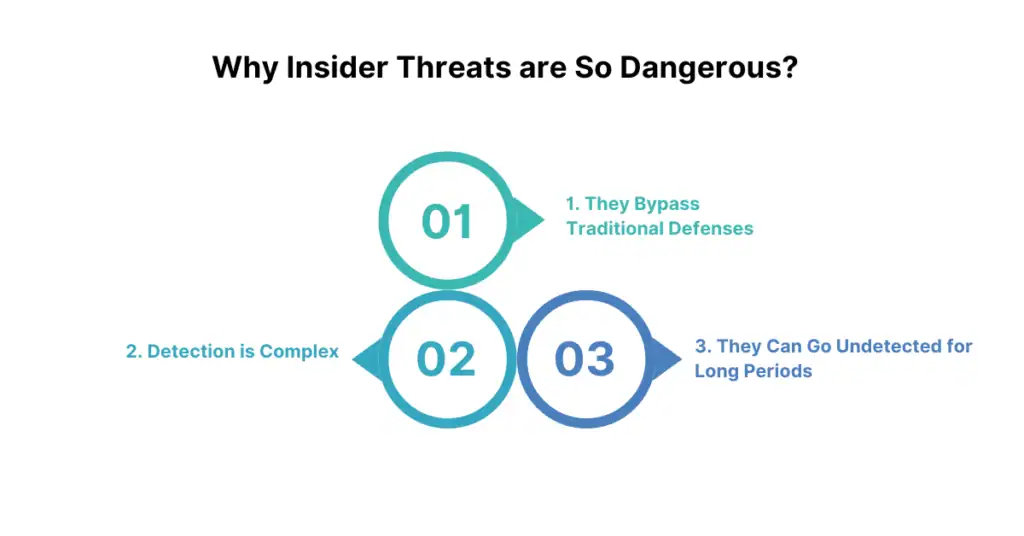
1. They Bypass Traditional Defenses
Since insiders already have access, perimeter security tools like firewalls and IDS often don’t catch them.
2. Detection is Complex
Malicious actions can appear as regular user behavior—reading files, sending emails, or accessing internal applications.
3. They Can Go Undetected for Long Periods
Unlike external attacks that trigger alarms, insiders can operate quietly and cause extensive damage before being discovered.
How SOCs Detect and Prevent Insider Threats?
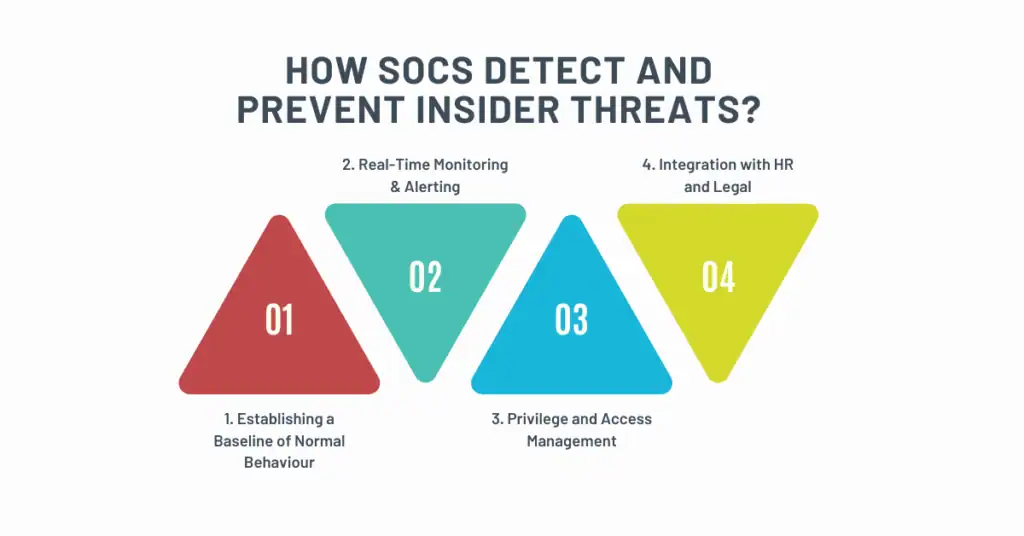
Modern SOCs rely on a mix of technology, human expertise, and internal collaboration to handle insider threats. Here’s a breakdown of their approach:
1. Establishing a Baseline of Normal Behaviour
SOCs deploy tools like User and Entity Behaviour Analytics (UEBA) and SIEM platforms to establish a behavioural baseline for every user—what they access, when, and how often.
Example: If a marketing employee suddenly starts downloading files from the finance server at 3 AM, the behavior deviates from the baseline and triggers an alert.
2. Real-Time Monitoring & Alerting
Continuous monitoring of:
- File access logs
- Email traffic
- Privileged user activities
- Cloud storage access
- Remote login patterns
Use Case: An intern plugged in a USB and transferred several gigabytes of customer data. The SOC detected this via DLP alerts, locked the device, and escalated the issue before data exfiltration.
3. Privilege and Access Management
SOCs work with IAM teams to enforce:
- Least privilege access: Users only get access to the systems they need.
- Time-bound access: Temporary access for certain tasks.
- Access reviews: Regular audits of who has access to what.
This reduces the chance of insider abuse.
4. Integration with HR and Legal
SOCs coordinate with HR to flag red flags like:
- Employees serving notice
- Sudden performance issues
- Disciplinary action
- Unusual travel or remote login activity
This fusion of IT and human behavioural signals often helps SOCs catch disgruntled or departing employees who might attempt data theft.
Conclusion
Insider threats are not just a technical issue—they’re a human one. They require a blend of analytics, psychology, policy enforcement, and real-time monitoring. SOCs are the nerve centers that bring all of these together to detect, investigate, and neutralize internal threats before they cause irreparable damage.
As organizations grow and adopt hybrid and remote work models, insider threat management must evolve alongside them. By staying proactive and fostering a culture of security awareness, enterprises can ensure that their greatest asset—people—don’t unintentionally become their greatest vulnerability.
