



Blogs

ISO 27001 And Penetration Testing Companies in Australia

Organizations across Australia are facing increasing threats ranging from ransomware attacks to data breaches that can cripple business operations and damage customer trust. To counter these risks, two powerful pillars of defense have emerged: ISO 27001 certification and penetration testing.

Together, these practices form the foundation for compliance, cyber resilience, and long-term trust. While ISO 27001 certification companies help organizations establish robust information security frameworks, penetration testing firms ensure that those controls actually work against real-world threats.

CyberSapiens, a leading cybersecurity and compliance consulting firm, empowers Australian businesses to strengthen both their cybersecurity and compliance. The company offers comprehensive ISO 27001 consulting, certification support, and advanced penetration testing services, combining compliance with real-world security validation. By integrating risk assessments, vulnerability management, and continuous monitoring, CyberSapiens helps organizations detect faster, respond smarter, and recover stronger, ensuring true resilience in an ever-evolving threat landscape.

Table of Contents

What Is ISO 27001 Certification?

ISO 27001 certification is an internationally recognized standard that defines how organizations should manage and protect their sensitive information through an Information Security Management System (ISMS). It provides a structured, risk-based approach to safeguarding data confidentiality, integrity, and availability — the core pillars of cybersecurity.

Achieving ISO 27001 certification demonstrates that an organization not only values data protection but has also implemented robust security policies, technical controls, and risk management processes that meet global best practices.

Overview of the ISO 27001:2022 Framework

The ISO 27001:2022 framework is the latest version of the standard, released to address modern-day cybersecurity challenges such as cloud security, remote work, and evolving data privacy laws. It emphasizes a risk-based approach to security, where organizations identify potential risks, apply relevant controls, and continuously monitor their effectiveness.

Key updates in the 2022 version include:

  • Integration of cloud security and privacy-related controls.
  • Simplified structure aligning with other ISO management standards.
  • Focus on continuous improvement and resilience rather than static compliance.

This version makes ISO 27001 more adaptable and practical for organizations of all sizes and sectors.

Key ISO 27001 Controls

The ISO 27001 standard includes 93 controls (updated from 114 in the 2013 version), organized into four main themes:

  • Organizational Controls – Policies, roles, risk assessments, supplier management.
  • People Controls – Security awareness training, access management, and user responsibilities.
  • Technological Controls – Encryption, backups, malware protection, secure configurations.
  • Physical Controls – Access restrictions, surveillance, and equipment security.

These ISO 27001 controls work together to build a strong security foundation that protects information assets from both internal and external threats.

Role of an ISO 27001 Consultant

An ISO 27001 consultant plays a crucial role in helping organizations navigate the complex certification journey. They:

  • Conduct a gap analysis to identify missing policies or security measures.
  • Guide documentation and implementation of the ISO 27001 framework.
  • Help design internal audits and prepare for the final certification audit.
  • Provide ongoing support to maintain compliance and adapt to emerging risks.

Partnering with experienced ISO 27001 certification companies or consultants ensures faster certification, better cost efficiency, and stronger long-term compliance.

ISO 27001 and Penetration Testing

While ISO 27001 focuses on implementing and maintaining an effective ISMS, penetration testing provides real-world validation of how secure those controls truly are.
Professional penetration testing companies or cybersecurity penetration testing service providers simulate real attacks to uncover vulnerabilities in systems, networks, and applications that standard compliance checks might miss.

In fact, penetration testing supports several ISO 27001 controls, such as:

  • A.12.6.1 – Technical Vulnerability Management
  • A.18.2.3 – Technical Compliance Review

By combining ISO 27001 certification with regular penetration testing, organizations ensure both compliance and resilience — meeting regulatory standards while defending against evolving cyber threats.

ISO 27001 Certification in Australia

Achieving ISO 27001 certification in Australia is a strategic step toward building trust, demonstrating compliance, and strengthening information security. The certification process follows a systematic approach based on ISO 27001:2022, ensuring your organization’s data protection measures align with international best practices.

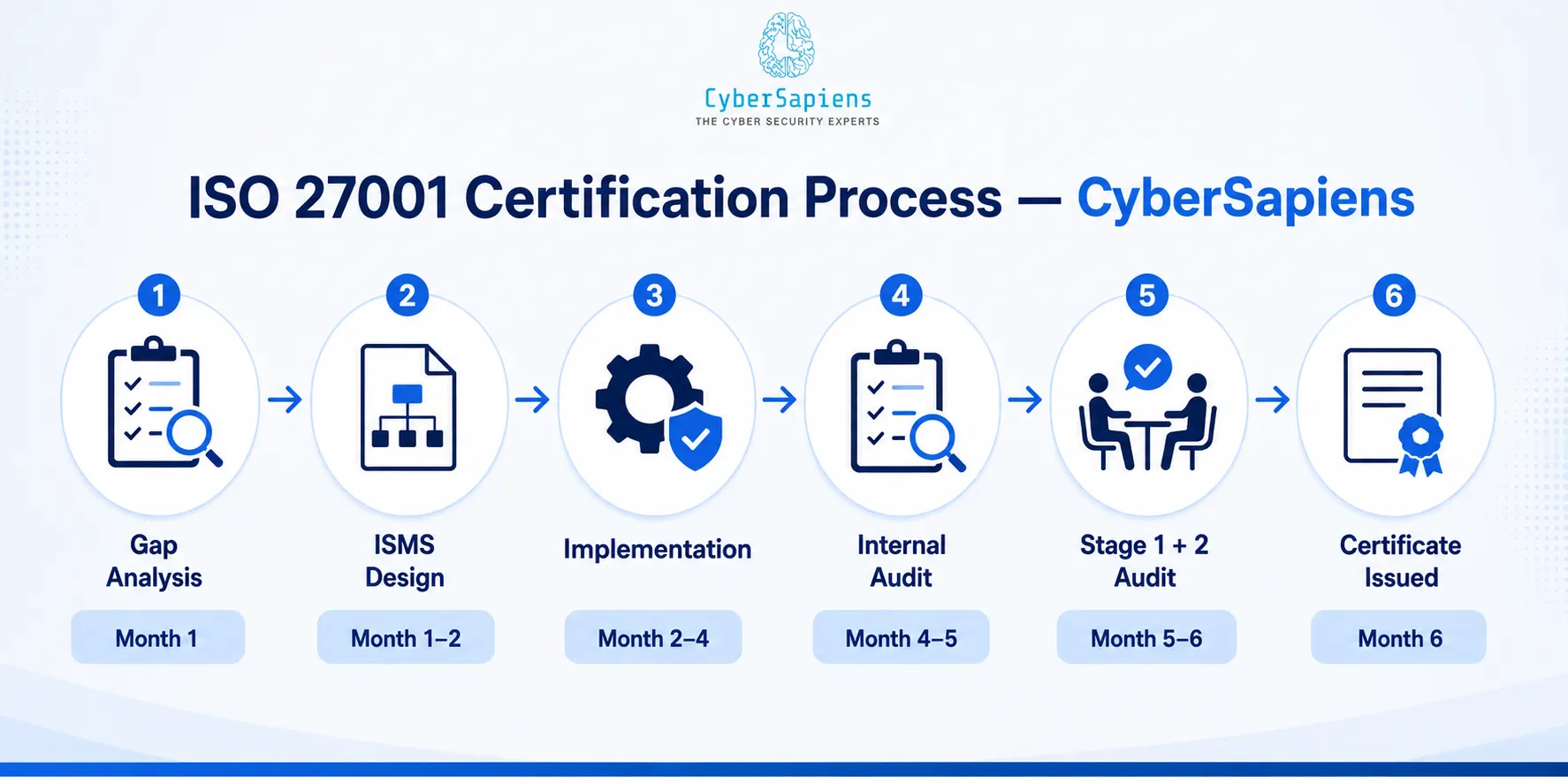
Here’s a simplified breakdown of the process 

1. Scoping and Planning

Define the scope of the Information Security Management System (ISMS), which departments, systems, or operations the certification will cover. Engage an experienced ISO 27001 consultant or ISO 27001 certification company to guide planning and risk identification.

2. Gap Analysis

Conduct a gap analysis to evaluate your current security posture against ISO 27001 requirements. This step highlights missing controls, outdated policies, or risks that need to be addressed before implementation.

3. Implementing ISO 27001 Controls

Apply the necessary ISO 27001 controls, including access management, data encryption, risk assessments, and incident response. This is where guidance from an ISO 27001 consultant ensures alignment with the ISO 27001:2022 framework and smooth documentation.

4. Internal Audit and Review

Carry out an internal audit to test how well your ISMS operates. Management reviews results and takes corrective actions to fix gaps before the external audit.

5. Certification Audit

An accredited body conducts a two-stage audit:

  • Stage 1: Review of policies, risk documents, and ISMS structure.
  • Stage 2: Verification of control implementation and effectiveness.

After successful completion, the organization earns the ISO 27001 certification.

6. Continuous Monitoring and Improvement

ISO 27001 requires continuous monitoring, periodic audits, and updates to maintain compliance and respond to new security threats.

7. Integrating Penetration Testing for Ongoing Security

To validate your ISO 27001 implementation, regular penetration testing by certified penetration testing firms or cybersecurity penetration testing companies is essential. These tests ensure your ISO 27001 controls are effective against evolving cyber threats, bridging the gap between compliance and real-world security.

Why Is Penetration Testing Important for ISO 27001?

ISO 27001 and Penetration Testing

Penetration testing plays a crucial role in supporting ISO 27001 compliance by validating the real-world effectiveness of the controls implemented within an organization’s Information Security Management System (ISMS). While ISO 27001 provides the framework for managing information security risks, penetration testing delivers practical verification proving that your controls are not just documented but also resilient against actual cyber threats.

Here’s why penetration testing is vital for ISO 27001-certified (or certification-seeking) organizations:

1. Validates the Effectiveness of ISO 27001 Controls

ISO 27001 defines technical and operational controls (e.g., A.12.6.1 – Technical Vulnerability Management and A.18.2.3 – Technical Compliance Review).
Penetration testing ensures these controls work as intended by simulating real-world attacks on your networks, systems, and applications. It helps identify weaknesses that compliance audits alone might overlook.

2. Demonstrates a Risk-Based Approach

ISO 27001 is built on risk management. Penetration testing aligns perfectly with this principle by identifying exploitable vulnerabilities and assessing their business impact. This allows organizations to prioritize remediation based on actual risk rather than assumptions.

3. Bridges the Gap Between Policy and Practice

While ISO 27001 documentation establishes governance and procedures, penetration testing verifies operational readiness. It answers the question: “Do our defenses actually hold up against a real attack?”
This bridges the gap between theoretical compliance and practical security assurance.

4. Supports Continuous Improvement

ISO 27001 emphasizes continuous improvement of the ISMS. Regular penetration testing provides valuable input for this process, revealing new vulnerabilities, validating control updates, and confirming that previous risks have been mitigated effectively.

5. Strengthens Audit Readiness and Stakeholder Confidence

During ISO 27001 surveillance or recertification audits, evidence of penetration testing shows proactive security validation. It demonstrates to auditors, customers, and regulators that your organization takes security seriously and continuously tests its defenses.

 6. Keeps Pace with Evolving Threats

Cyber threats evolve faster than compliance standards. Penetration testing helps ISO 27001-certified organizations stay ahead by uncovering new vulnerabilities introduced through system upgrades, cloud migrations, or emerging attack methods.

Top 5 ISO 27001 and Penetration Testing Companies in Australia

Top 5 ISO 27001 and Penetration Testing Companies in Australia

1. CyberSapiens: ISO 27001 and Penetration Testing Company in Australia

CyberSapiens is a leading cybersecurity and penetration testing company in Australia, offering advanced Vulnerability Assessment and Penetration Testing (VAPT) for web, mobile, network, and cloud environments. The company also provides ISO 27001 consulting, SOC 2 compliance, and risk assessments, helping organizations strengthen both their technical security and governance. Its hybrid approach, combining manual testing, automated tools, and compliance expertise, ensures businesses detect vulnerabilities early and achieve long-term resilience.

 Key Services Offered by CyberSapiens

ISO 27001 Certification and Implementation

  • End-to-end consulting for ISO 27001:2022 certification and implementation.
  • Conducts gap analysis, risk assessment, policy creation, and control implementation.
  • Assists in ISMS documentation, audit readiness, and certification coordination.
  • Focuses on establishing a robust Information Security Management System (ISMS) aligned with global standards.
  • Ensures continuous improvement and compliance with international data security regulations.

Vulnerability Assessment and Penetration Testing (VAPT)

Vulnerability Assessment and Penetration Testing (VAPT) is a comprehensive approach to evaluating and strengthening an organization’s digital security posture.

 It combines automated vulnerability scanning with manual ethical hacking techniques to identify, exploit, and remediate potential security weaknesses before attackers can.

At CyberSapiens, VAPT services cover diverse environments from web and mobile applications to APIs, cloud platforms, IoT devices, and enterprise infrastructure

Web Application VAPT
  • In-depth vulnerability assessment and penetration testing for web applications.
  • Detects OWASP Top 10 risks such as injection flaws, broken authentication, and access control issues.
  • Combines manual and automated testing for comprehensive coverage.
  • Provides detailed risk reports and mitigation strategies aligned with ISO 27001 and SOC 2 requirements.
Mobile Application VAPT
  • Comprehensive security testing for Android and iOS applications.
  • Identifies vulnerabilities in APIs, encryption, session management, and data storage.
  • Evaluates app permissions, insecure communication, and reverse engineering risks.
  • Ensures compliance with OWASP Mobile Top 10 standards and mobile security best practices.
Cloud VAPT
  • Penetration testing for multi-cloud environments, including AWS, Azure, and GCP.
  • Identifies misconfigurations, identity flaws, and privilege escalation risks.
  • Validates cloud-native security controls, APIs, and identity management systems.
  • Enhances cloud security posture through risk-based remediation and continuous monitoring.
AWS Penetration Testing
  • Specialized testing for Amazon Web Services (AWS) environments.
  • Detects IAM misconfigurations, privilege escalations, and S3 bucket exposures.
  • Evaluates EC2 instances, security groups, and virtual networks.
  • Provides compliance-aligned reports mapped to AWS Well-Architected Framework and ISO controls.
Azure Penetration Testing
  • Targeted testing for Microsoft Azure infrastructure and workloads.
  • Reviews Active Directory configurations, role-based access control (RBAC), and cloud networking setups.
  • Identifies vulnerabilities in virtual machines, databases, and storage accounts.
  • Aligns results with NIST and ISO 27001 frameworks for measurable compliance.
GCP Penetration Testing
  • Comprehensive testing for Google Cloud Platform (GCP) environments.
  • Detects insecure IAM roles, exposed APIs, and misconfigured resources.
  • Assesses workloads, storage, and container security within GCP projects.
  • Helps organizations meet ISO 27001, SOC 2, and GDPR compliance obligations.
IoT Device VAPT
  • Security evaluation for IoT ecosystems and connected devices.
  • Identifies firmware flaws, insecure communications, and hardware vulnerabilities.
  • Test authentication, encryption, and data transfer mechanisms.
  • Strengthens device integrity and ensures secure IoT deployment.
Infrastructure VAPT
  • End-to-end testing of servers, firewalls, routers, and enterprise systems.
  • Simulates both internal and external attacks to assess real-world defenses.
  • Detects configuration errors, outdated software, and privilege escalation risks.
  • Delivers in-depth reports with remediation aligned to ISO 27001 and NIST standards.
API VAPT
  • Comprehensive testing for Application Programming Interfaces (APIs).
  • Identifies security flaws such as broken authentication, injection, and data exposure.
  • Performs manual and automated testing on RESTful and SOAP APIs.
  • Strengthens API resilience and safeguards integration security.
Network VAPT
  • Internal and external network penetration testing to uncover vulnerabilities.
  • Evaluates firewalls, routers, VPNs, switches, and wireless security.
  • Simulates realistic attack vectors to assess network resilience.
  • Supports compliance with ISO 27001, SOC 2, and PCI DSS frameworks.
Thick Client and Thin Client VAPT
  • Testing for desktop-based (thick client) and web-dependent (thin client) applications.
  • Identifies flaws in data storage, code execution, and communication channels.
  • Evaluates authentication logic, insecure API interactions, and input validation.
  • Provides remediation guidance aligned with OWASP and ISO security controls.

Clients Served by CyberSapiens

2. CyberCX

CyberCX is one of Australia’s largest cybersecurity providers with a wide range of penetration testing and security assurance services. Their certified experts conduct realistic attack simulations to identify system weaknesses and compliance gaps. CyberCX is trusted by major enterprises, government agencies, and financial institutions for end-to-end security testing and managed defense.

3.  Tesserent

Tesserent offers comprehensive penetration testing services across Melbourne, Sydney, and Brisbane. Their offerings include internal, external, web, and mobile testing, red teaming, and compliance-driven testing for ISO 27001, PCI DSS, and NIST frameworks. Tesserent is CREST-accredited and known for strong reporting and tailored solutions for medium to large enterprises.

4. Qualysec

Qualysec is a fast-growing penetration testing vendor recognized among the top service providers in Australia. They specialize in web, API, cloud, and IoT penetration testing, serving startups and large-scale organizations alike. Qualysec focuses on actionable results and post-assessment remediation support, making it ideal for companies seeking both speed and depth in testing.

5.  The Missing Link

The Missing Link is one of Australia’s CREST-certified cybersecurity penetration testing companies, offering a strong suite of offensive security services. Their team conducts application, infrastructure, and cloud penetration testing, supported by real-world attack simulations. Known for precision and reliability, The Missing Link is a trusted choice for enterprises requiring high-assurance testing.

ISO 27001 Penetration Testing with CyberSapiens

CyberSapiens integrates ISO 27001 penetration testing into its cybersecurity and compliance services to help organizations go beyond certification — achieving real-world resilience. While ISO 27001 establishes a structured Information Security Management System (ISMS) with defined policies and controls, penetration testing ensures those controls are effective in practice.

Here’s how CyberSapiens aligns penetration testing with the ISO 27001 framework

1. Validating ISO 27001 Controls

CyberSapiens conducts targeted penetration tests that directly evaluate the effectiveness of ISO 27001 controls, such as:

  • A.12.6.1 – Technical Vulnerability Management
  • A.18.2.3 – Technical Compliance Review
     

These assessments reveal real-world vulnerabilities that traditional audits or documentation reviews might miss.

2. Bridging Compliance and Security

Many organizations achieve ISO 27001 certification but struggle to maintain security assurance over time. CyberSapiens fills this gap by performing periodic penetration testing that validates compliance efforts, ensuring the ISMS remains secure, updated, and threat-ready under the latest ISO 27001:2022 framework.

3. Customized Penetration Testing Approach

CyberSapiens uses a hybrid testing methodology that combines manual ethical hacking and automated vulnerability scanning. Their team of certified experts performs:

  • Web & API Penetration Testing
  • Mobile Application Security Testing
  • Cloud Infrastructure Testing
  • Network & Internal System Testing

Each engagement results in detailed remediation guidance mapped directly to ISO 27001 controls, ensuring compliance and continuous improvement.

4. Supporting ISO 27001 Certification Readiness

As a recognized ISO 27001 consultant and penetration testing company in Australia, CyberSapiens helps organizations prepare for certification by:

  • Conducting gap analyses and risk assessments
  • Implementing relevant ISO 27001 controls
  • Validating through real-world penetration testing exercises
  • Assisting with documentation and audit readiness

5. Ensuring Continuous Improvement

CyberSapiens promotes ongoing monitoring and re-testing, aligning perfectly with ISO 27001’s continuous improvement cycle. This ensures that after certification, your security posture remains strong and adaptable to new threats.

Building a Secure and Compliant Future

Achieving ISO 27001 certification and performing regular penetration testing are essential steps toward a secure, compliant, and resilient business environment. Together, they form the core of cyber resilience—protecting critical data, meeting compliance standards, and maintaining customer trust.

CyberSapiens bridges the gap between governance and real-world security through its integrated ISO 27001 and VAPT approach, ensuring that controls are not only implemented but validated against evolving cyber threats.

FAQs

1. How does penetration testing support ISO 27001 compliance?

Answer: Penetration testing validates the effectiveness of the ISO 27001 controls by simulating real-world cyberattacks. It helps identify vulnerabilities that may not surface during documentation or audits, ensuring that your security measures are both compliant and practical.

2. How often should penetration testing be conducted?

Answer: Experts recommend performing penetration testing at least once or twice a year, or whenever major system changes occur. Regular testing ensures that new vulnerabilities are identified promptly and that your ISO 27001 framework remains effective and compliant.

3. Why is ISO 27001:2022 important for modern businesses?

Answer: The ISO 27001:2022 update addresses evolving cybersecurity challenges such as cloud adoption, remote work, and advanced threats. It ensures your ISMS aligns with modern risk management practices and integrates smoothly with other security standards.

4. How long does it take to get ISO 27001 certified?

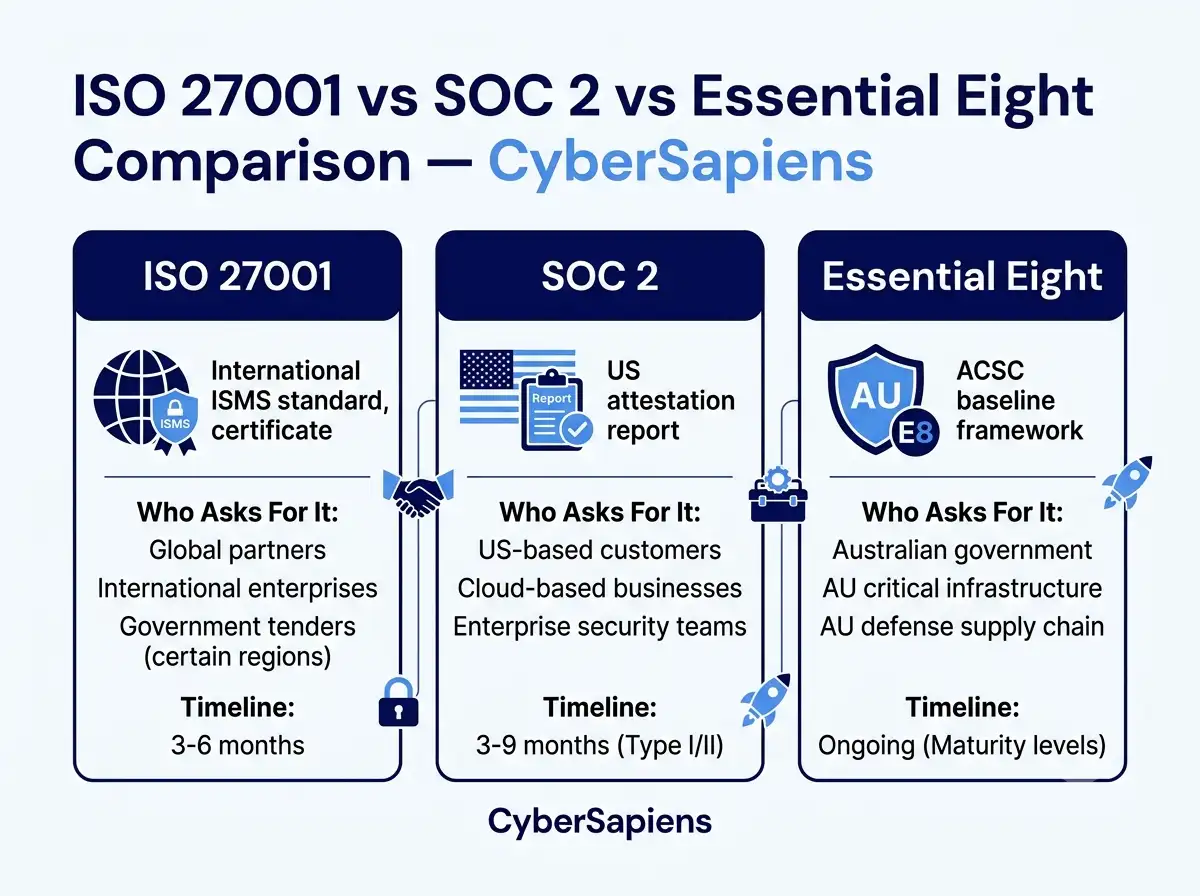
Answer: The timeline for ISO 27001 certification depends on an organization’s size, complexity, and current security maturity. On average, it takes 3 to 6 months to complete the entire process from initial gap analysis and control implementation to audit and certification.

5. Can penetration testing reduce the cost of ISO 27001 certification?

Answer: Yes, effective penetration testing helps identify vulnerabilities early, reducing the risk of non-compliance or failed audits. This proactive approach can lower the overall ISO 27001 certification cost by minimizing rework and ensuring readiness before the external audit.

Table of Contents