


Blogs

ISO 27001 and Penetration Testing Companies in New Zealand

Organizations across New Zealand are increasingly exposed to cybersecurity threats from ransomware and phishing campaigns to serious data breaches that can disrupt operations and erode customer trust. To thwart these risks, two essential pillars of defence have emerged: ISO IEC 27001 certification and professional penetration testing. Together, these practices form the foundation for compliance, cyber-resilience, and stakeholder confidence. While ISO 27001 certification specialists help organisations establish structured information-security frameworks, penetration-testing firms validate whether those controls hold up under real-world cyberattacks.

CyberSapiens, a leading cybersecurity and compliance consulting firm, plays a pivotal role in this landscape by helping New Zealand organisations strengthen both governance and technical security. The firm provides ISO 27001 consulting, certification readiness, and advanced penetration testing services, combining compliance expertise with real-world threat validation. Through integrated risk assessments, vulnerability management, and continuous monitoring, CyberSapiens enables businesses to detect faster, respond smarter, and recover stronger — achieving true resilience in New Zealand’s fast-evolving digital environment.

What Is ISO 27001 Certification?

ISO 27001 is an internationally recognised standard for an Information Security Management System (ISMS). It offers a risk-based approach to protecting the confidentiality, integrity and availability of information assets via documented policies, defined control measures and continual improvement. Achieving ISO 27001 certification signals that an organisation values data protection and has implemented measures aligned with global best practices.

Overview of the ISO 27001:2022 Framework

The 2022 revision of ISO 27001 addresses modern-day cybersecurity realities—including cloud deployments, remote working, and evolving privacy laws in markets like New Zealand. Key updates include:

  • Better integration of cloud security and privacy controls
  • A simplified structure aligned with other ISO management standards
  • Stronger emphasis on continuous improvement and resilience rather than one-time compliance

These changes make ISO 27001:2022 adaptable for organisations of all sizes and sectors in New Zealand.

Key ISO 27001 Controls

The standard groups broadly into these domains:

  • Organisational Controls: Policies, risk management, supplier/third-party oversight.
  • People Controls: Access management, training and awareness, and user responsibilities.
  • Technological Controls: Encryption, patching, malware protection, secure configurations.
  • Physical Controls: Facility access, surveillance, hardware security

Together, these categories ensure that processes, people, and technology are aligned toward proactive information protection.

Role of an ISO 27001 Consultant

A consultant or certification partner plays a crucial role in helping New Zealand organisations:

  • Conduct a gap analysis to identify missing controls or documentation
  • Guide ISMS design, control, implementation, and documentation
  • Prepare for internal audits and external certification audits
  • Provide ongoing monitoring support to maintain compliance

Engaging a seasoned partner ensures certification is achieved more efficiently and that the resulting ISMS is sustainable.

ISO 27001 and Penetration Testing

While ISO 27001 establishes the governance and framework side of security, penetration testing (pen testing) provides the technical verification that those controls actually work in practice. Pen testing firms simulate attacks to uncover vulnerabilities that may not be apparent through documentation reviews alone. For example, pen testing supports these types of ISO 27001 controls:

  • A.12.6.1 — Technical Vulnerability Management
  • A.18.2.3 — Technical Compliance Review

When combined, ISO 27001 certification plus regular penetration testing helps organisations meet compliance and maintain real-world security resilience.

ISO 27001 Certification in New Zealand

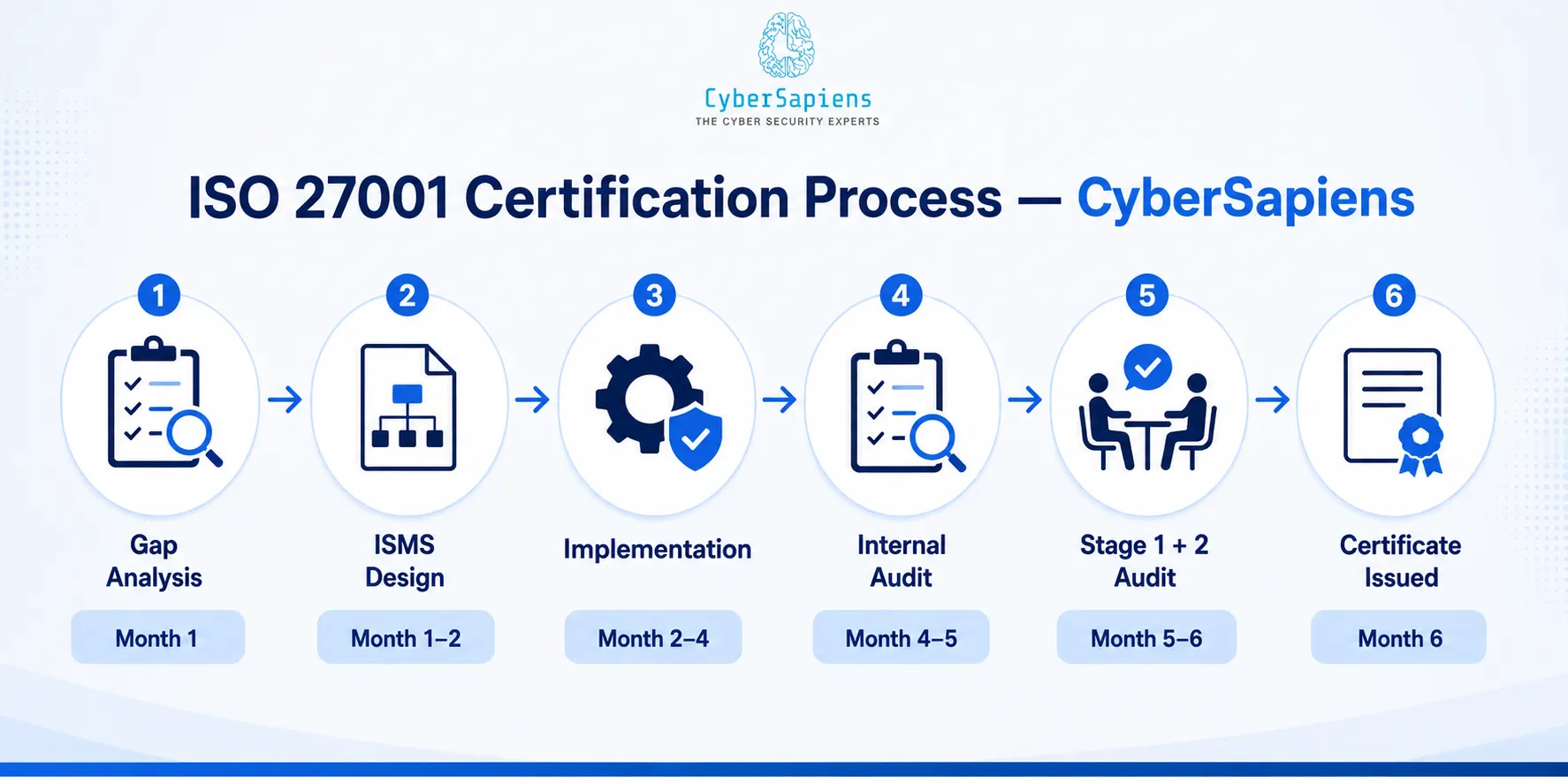
Achieving ISO 27001 certification in New Zealand is a strategic step toward building trust, showing commitment to information security, and strengthening data protection. Here’s a simplified breakdown of the process in the New Zealand context:

1. Scoping and Planning

Define the ISMS scope (which departments, systems, and business units are covered). Engage a consultant or certification partner to assist with planning and risk identification. 

2. Gap Analysis

Conduct a gap assessment of your current security posture against ISO 27001:2022. Identify missing controls, outdated policies, or risk areas needing attention.

3. Implementing ISO 27001 Controls

Apply required controls (access management, encryption, risk assessment, incident response). Guidance from an ISO 27001 consultant ensures alignment with the standard and effective documentation.

4. Internal Audit and Review

Carry out an internal audit to test how well the ISMS operates. Senior management reviews outcomes and initiates corrective actions to ensure readiness prior to the external audit. 

5. Certification Audit

An accredited certification body performs:

  • Stage 1: Documentation review.
  • Stage 2: Verification of implementation and effectiveness.

Upon successful completion, certification is awarded and valid for three years (subject to surveillance audits).

6. Continuous Monitoring and Improvement

ISO 27001 is not a one-off project. It demands ongoing monitoring, periodic audits, policy updates, and adaptation to evolving threats, technologies, and business conditions. 

7. Integrating Penetration Testing for Ongoing Security

To validate your ISO 27001 implementation and ensure controls hold up, regular penetration testing by specialist firms in New Zealand is essential. These tests simulate real-world attacks (on web apps, networks, cloud services, IoT) and provide actionable insight into whether your security controls are effective. This approach bridges the gap between compliance and operational security.

Why Is Penetration Testing Important for ISO 27001?

ISO 27001 and Penetration Testing

Penetration testing is a critical aspect of ISO 27001 compliance, providing a practical way to assess the real-world strength of security controls within an organization’s Information Security Management System (ISMS). While ISO 27001 defines the framework for managing information security risks, penetration testing delivers hands-on validation confirming that implemented controls are not only documented but also effective against real cyber threats.

Here’s why penetration testing is essential for organizations that are ISO 27001-certified or working toward certification:

1. Validates the Effectiveness of ISO 27001 Controls

ISO 27001 specifies key technical and operational controls, such as A.12.6.1 – Technical Vulnerability Management and A.18.2.3 – Technical Compliance Review. Penetration testing verifies these controls by simulating realistic cyberattacks on systems, applications, and networks. This process helps uncover hidden weaknesses that traditional audits or document-based reviews might miss.

2. Demonstrates a Risk-Based Approach

Because ISO 27001 is built on a risk management framework, penetration testing supports this principle by identifying exploitable vulnerabilities and analyzing their true business impact.
It allows organizations to prioritize remediation efforts based on actual risks rather than assumptions, ensuring that security resources are used where they are needed most.

3. Bridges the Gap Between Policy and Practice

While ISO 27001 focuses on governance, structure, and process documentation, penetration testing determines how well those measures work in practice. It answers the crucial question: Can our current security setup withstand a real attack?” thereby linking policy-level compliance with practical, results-driven assurance.

4. Supports Continuous Improvement

Continuous improvement is a fundamental requirement of ISO 27001. Regular penetration testing contributes to this process by identifying new vulnerabilities, testing recent control enhancements, and verifying that previously identified risks have been effectively addressed, helping the ISMS evolve with emerging threats.

5. Strengthens Audit Readiness and Stakeholder Confidence

Evidence of routine penetration testing demonstrates a proactive approach to security management during ISO 27001 surveillance and recertification audits. It gives auditors, customers, and partners confidence that your organization actively validates its defenses, showing commitment to strong, ongoing information security practices beyond compliance requirements.

6. Keeps Pace with Evolving Threats

Cyber risks evolve rapidly, often faster than compliance frameworks. Penetration testing helps ISO 27001-certified organizations stay ahead of new attack trends by uncovering vulnerabilities introduced through system updates, cloud adoption, or technology changes. This ensures your defenses remain robust, adaptive, and up to date in an ever-changing threat landscape.

Top 5 ISO 27001 and Penetration Testing Companies in New Zealand

Top 5 ISO 27001 and Penetration Testing Companies in New Zealand

Here are some notable providers operating in New Zealand:

1. CyberSapiens: ISO 27001 and Penetration Testing Company in New Zealand

CyberSapiens is a recognized cybersecurity and compliance consulting firm offering an integrated approach to ISO 27001 certification and penetration testing. The company combines regulatory expertise with technical excellence to help organizations achieve compliance while strengthening real-world cyber resilience.

Key Services Offered by CyberSapiens

ISO 27001 Certification and Implementation

  • End-to-end consulting for ISO 27001:2022 certification and implementation.
  • Conducts gap analysis, risk assessment, policy creation, and control implementation.
  • Assists in ISMS documentation, audit readiness, and certification coordination.
  • Focuses on establishing a robust Information Security Management System (ISMS) aligned with global standards.
  • Ensures continuous improvement and compliance with international data security regulations.

Vulnerability Assessment and Penetration Testing (VAPT)

Vulnerability Assessment and Penetration Testing (VAPT) is a comprehensive approach to evaluating and strengthening an organization’s digital security posture. It combines automated vulnerability scanning with manual ethical hacking techniques to identify, exploit, and remediate potential security weaknesses before attackers can.

At CyberSapiens, VAPT services cover diverse environments from web and mobile applications to APIs, cloud platforms, IoT devices, and enterprise infrastructure

Web Application VAPT
  • In-depth vulnerability assessment and penetration testing for web applications.
  • Detects OWASP Top 10 risks such as injection flaws, broken authentication, and access control issues.
  • Combines manual and automated testing for comprehensive coverage.
  • Provides detailed risk reports and mitigation strategies aligned with ISO 27001 and SOC 2 requirements.
Mobile Application VAPT
  • Comprehensive security testing for Android and iOS applications.
  • Identifies vulnerabilities in APIs, encryption, session management, and data storage.
  • Evaluates app permissions, insecure communication, and reverse engineering risks.
  • Ensures compliance with OWASP Mobile Top 10 standards and mobile security best practices.
Cloud VAPT
  • Penetration testing for multi-cloud environments, including AWS, Azure, and GCP.
  • Identifies misconfigurations, identity flaws, and privilege escalation risks.
  • Validates cloud-native security controls, APIs, and identity management systems.
  • Enhances cloud security posture through risk-based remediation and continuous monitoring.
AWS Penetration Testing
  • Specialized testing for Amazon Web Services (AWS) environments.
  • Detects IAM misconfigurations, privilege escalations, and S3 bucket exposures.
  • Evaluates EC2 instances, security groups, and virtual networks.
  • Provides compliance-aligned reports mapped to AWS Well-Architected Framework and ISO controls.
Azure Penetration Testing
  • Targeted testing for Microsoft Azure infrastructure and workloads.
  • Reviews Active Directory configurations, role-based access control (RBAC), and cloud networking setups.
  • Identifies vulnerabilities in virtual machines, databases, and storage accounts.
  • Aligns results with NIST and ISO 27001 frameworks for measurable compliance.
GCP Penetration Testing
  • Comprehensive testing for Google Cloud Platform (GCP) environments.
  • Detects insecure IAM roles, exposed APIs, and misconfigured resources.
  • Assesses workloads, storage, and container security within GCP projects.
  • Helps organizations meet ISO 27001, SOC 2, and GDPR compliance obligations.
IoT Device VAPT
  • Security evaluation for IoT ecosystems and connected devices.
  • Identifies firmware flaws, insecure communications, and hardware vulnerabilities.
  • Test authentication, encryption, and data transfer mechanisms.
  • Strengthens device integrity and ensures secure IoT deployment.
Infrastructure VAPT
  • End-to-end testing of servers, firewalls, routers, and enterprise systems.
  • Simulates both internal and external attacks to assess real-world defenses.
  • Detects configuration errors, outdated software, and privilege escalation risks.
  • Delivers in-depth reports with remediation aligned to ISO 27001 and NIST standards.
API VAPT
  • Comprehensive testing for Application Programming Interfaces (APIs).
  • Identifies security flaws such as broken authentication, injection, and data exposure.
  • Performs manual and automated testing on RESTful and SOAP APIs.
  • Strengthens API resilience and safeguards integration security.
Network VAPT
  • Internal and external network penetration testing to uncover vulnerabilities.
  • Evaluates firewalls, routers, VPNs, switches, and wireless security.
  • Simulates realistic attack vectors to assess network resilience.
  • Supports compliance with ISO 27001, SOC 2, and PCI DSS frameworks.
Thick Client and Thin Client VAPT
  • Testing for desktop-based (thick client) and web-dependent (thin client) applications.
  • Identifies flaws in data storage, code execution, and communication channels.
  • Evaluates authentication logic, insecure API interactions, and input validation.
  • Provides remediation guidance aligned with OWASP and ISO security controls.

Clients Served by CyberSapiens

2. CyberCX NZ Ltd.

Provides both ISO 27001 compliance/certification support and penetration testing services, with a strong local presence in New Zealand. 

3. Tesserent / Thales Cyber Services ANZ (NZ)

Offers ISO 27001 ISMS advisory, gap analysis, and remediation, and extensive penetration-testing/infrastructure assessment services in NZ.

4. Pākiki Security

Independent New Zealand-based penetration-testing specialist (Wellington & Christchurch) delivering thorough testing and recommendations.

5. NZINFOSEC

Specialises in information-security compliance certification services, including ISO 27001, ISO 22301, SOC 2, and more. 

ISO 27001 Penetration Testing with CyberSapiens

CyberSapiens seamlessly integrates penetration testing within its ISO 27001 consulting framework, helping organizations move beyond documentation-based compliance to achieve true, measurable security assurance.

1. Validating ISO 27001 Controls

CyberSapiens conducts targeted testing to evaluate the effectiveness of critical ISO 27001 controls, including:

  • A.12.6.1 – Technical Vulnerability Management
  • A.18.2.3 – Technical Compliance Review

These assessments uncover vulnerabilities that traditional audits may overlook, offering detailed remediation strategies to strengthen control performance and maintain compliance integrity.

2. Bridging Compliance and Security

While ISO 27001 certification establishes formal compliance, CyberSapiens ensures operational security through periodic penetration testing and validation. This integrated approach bridges the gap between governance and technology, enhancing both compliance alignment and real-world cyber resilience.

3. Supporting Certification Readiness

From initial gap analysis to audit preparation, CyberSapiens provides comprehensive support to ensure that every ISO 27001 implementation is technically verified, secure, and certification-ready, building confidence in both compliance and defense capabilities.

4. Building a Secure and Compliant Future

Achieving ISO 27001 certification and conducting regular penetration testing are crucial for New Zealand organizations striving to create a secure, compliant, and resilient business environment. Together, they form the backbone of cyber resilience—protecting sensitive data, maintaining regulatory compliance, and fostering customer trust.

CyberSapiens helps New Zealand businesses bridge the gap between compliance and active defense through its combined ISO 27001 and VAPT services, ensuring that implemented controls are continuously validated against evolving cyber threats.

FAQs

1. How does penetration testing support ISO 27001 compliance?

Answer: Penetration testing helps confirm that ISO 27001 controls are both correctly implemented and effective in practice. Simulating real-world cyberattacks, it exposes exploitable vulnerabilities and verifies the organization’s ability to detect, respond, and defend against active threats—ensuring genuine compliance rather than paper-based assurance.

2. How often should penetration testing be performed?

Answer: Penetration testing should be carried out at least once or twice each year, and additionally whenever major infrastructure, application, or policy changes occur. Regular testing maintains continuous ISO 27001 compliance and ensures resilience against new or emerging cyber threats.

3. Why is ISO 27001:2022 important for New Zealand organizations?

Answer: The ISO 27001:2022 update addresses today’s evolving security challenges, such as cloud adoption, hybrid work, and data-privacy obligations under frameworks like the Privacy Act 2020. It enables New Zealand businesses to align with global best practices while meeting local regulatory expectations and client security requirements.

4. How long does ISO 27001 certification take in New Zealand?

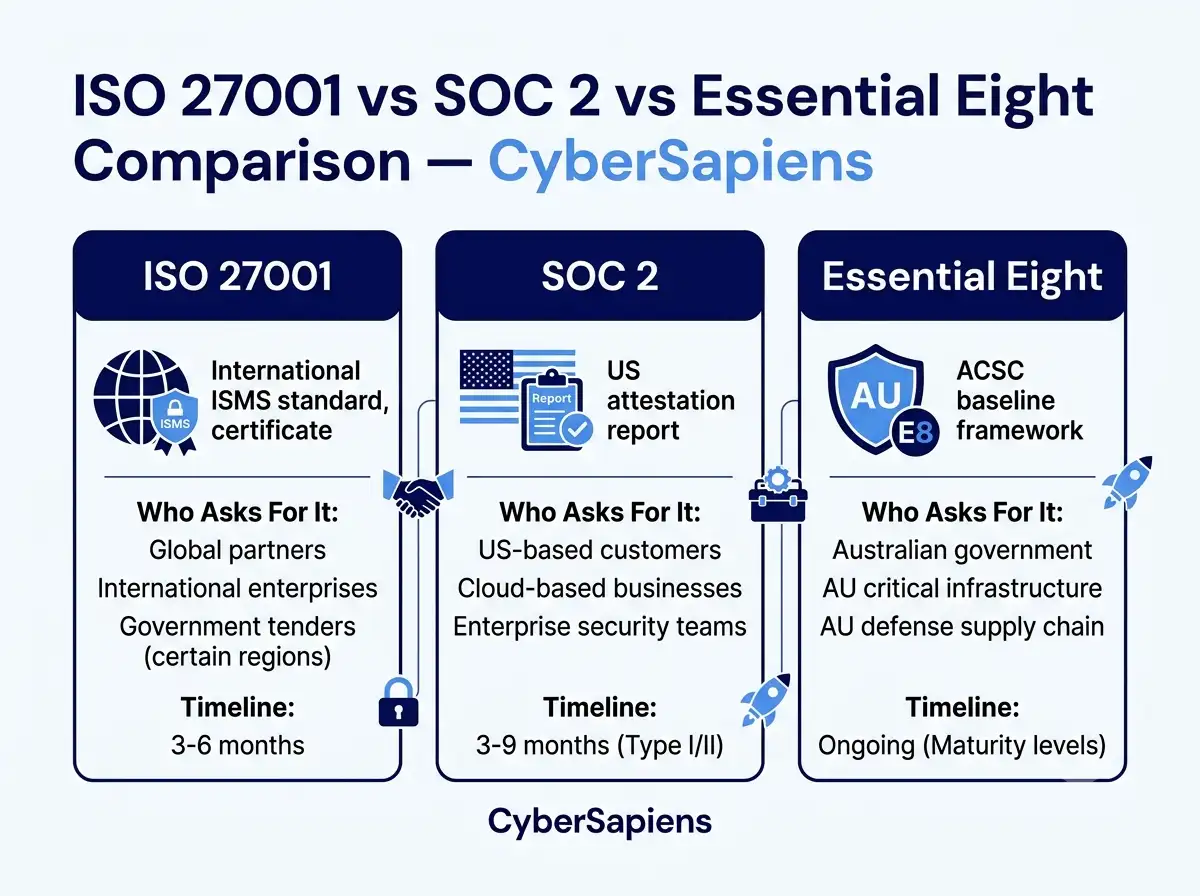
Answer: The timeframe for achieving ISO 27001 certification in New Zealand generally ranges from three to six months, depending on organizational size, ISMS scope, and current maturity of information-security controls. Larger or multi-site enterprises may require up to twelve months for full implementation and audit completion.

5. Can penetration testing help reduce ISO 27001 certification costs?

Answer: Yes. Conducting penetration tests early in the certification process identifies vulnerabilities before the formal audit stage, minimizing rework and corrective-action expenses. This proactive approach shortens certification timelines, enhances audit readiness, and lowers overall implementation costs.