
Key Security Policies Every Company Needs for SOC 2 Compliance in India
With more and more businesses adopting digital platforms for storing and processing confidential information, ensuring robust security and compliance practices is of utmost importance. Among the most recognized security and compliance practices is SOC 2 compliance. SOC 2 is a security and compliance standard created by the American Institute of Certified Public Accountants (AICPA), and it is based on how businesses handle customer information based on five Trust Service Criteria, namely security, availability, processing integrity, confidentiality, and privacy.
For many businesses across India, especially for software-as-a-service businesses, cloud service businesses, financial technology businesses, and technology startups, SOC 2 compliance is one of the critical requirements for working with global clients. Global clients expect businesses to adhere to robust security practices before they can share confidential information with them. SOC 2 compliance is one way for businesses to prove that they adhere to structured security practices.
A major aspect of SOC 2 compliance involves the development of security policies that are clearly defined. These security policies define the rules and procedures that an organization uses to safeguard its information and manage its risks effectively. Without security policies, it becomes hard for companies to prove that their security measures are consistent and effective.
Understanding SOC 2 and Trust Services Criteria
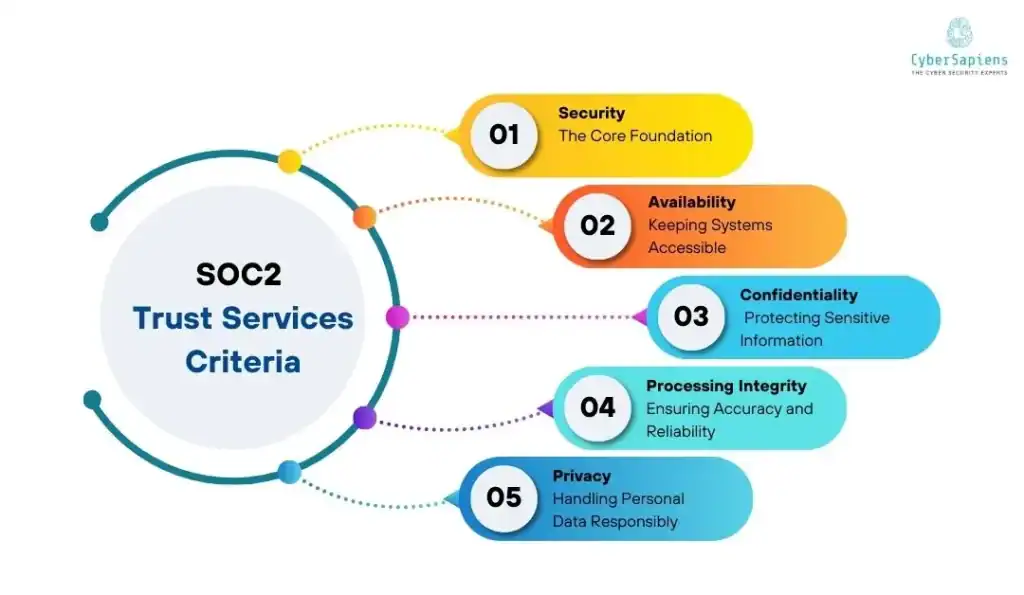
SOC 2 is an established auditing standard for ensuring that an organization is meeting its obligations towards customer information and data. SOC 2 is based on internal controls and covers criteria related to security, availability, integrity of data processing, confidentiality, and privacy. Organizations that have completed a SOC 2 audit report are able to assure users of their services that they have implemented robust security measures and procedures for protecting customer information.
The Trust Service Criteria (TSC), which is the foundation of SOC 2, is based on criteria for auditing an organization’s security and compliance practices. These criteria enable auditors to assess whether an organization is implementing adequate policies and procedures for managing risks and protecting information.
The five Trust Services Criteria are as follows:
1. Security: The primary and mandatory criterion for SOC 2 audits is Security. This criterion is intended to ensure that systems and data are secure and resistant to unauthorized access and cyber attacks.
2. Availability: This criterion is intended to ensure that systems and services are available as agreed upon with customers. The organizations are expected to ensure that they have implemented adequate processes for ensuring the availability and performance of systems.
3. Processing Integrity: This criterion is intended to ensure that systems are functioning correctly and that operations are complete and authorized. The organizations are expected to ensure that operations are carried out without errors or unauthorized changes.
4. Confidentiality: This criterion is intended to ensure that organizations are able to keep sensitive information secure and away from unauthorized access. The sensitive information could be related to business secrets and communications.
5. Privacy: Privacy is concerned with the way in which organizations collect, process, store, and dispose of personal information. The organizations must prove their ability to process personal data in a responsible manner and in compliance with their respective privacy policies and laws.
For this purpose, organizations must develop their respective security policies and procedures, which guide their employees and help them in maintaining uniformity in their respective security practices. These policies are the foundation of the SOC 2 compliance process.
Key Security Policies Required for SOC 2 Compliance
To become SOC 2 compliant, organizations are required to have a number of well-defined security policies in place that dictate how systems, information, and processes are secured. Security policies are also important as they ensure that all systems and processes within an organization are secure and that all users are able to perform operations in a consistent and standardized manner when it comes to handling sensitive information.
Security policies also serve as evidence for auditors that organizations have put in place adequate security controls as per the SOC 2 Trust Services Criteria. Some of the key security policies that organizations need to put in place are discussed below.
1. Information Security Policy
The Information Security Policy is the foundation on which the organization’s overall security strategy is based. It is used to describe the overall strategy regarding the organization’s systems, data, and digital assets.
This policy can include:
- Security goals and governance
- Security roles and responsibilities
- Guidelines on protecting information assets
- Compliance with risk management requirements
An effective information security policy ensures that the organization’s overall security practices are integrated and followed.
2. Access Control Policy
An Access Control Policy defines the way users are granted access to the organization’s systems, applications, and sensitive data. It ensures users are authorized to access critical resources.
Components of the Access Control Policy include:
- Role-Based Access Control (RBAC)
- Principle of Least Privilege
- Multi-Factor Authentication (MFA)
- Provisioning and Deprovisioning of user accounts
- Access Control Reviews
Access management can minimize risks of unauthorized access and insider attacks.
3. Data Protection and Encryption Policy
The Data Protection and Encryption Policy outlines how an organization will handle data in terms of storage, processing, and transmission to ensure that the data is kept confidential and cannot be accessed by unauthorized persons.
Some of the key aspects of this policy include:
- Data classification
- Encryption of data
- Data storage
- Data retention and deletion
- Backing up data
Implementing this policy is important in maintaining the security and integrity of data.
4. Incident Response Policy
The Incident Response Policy outlines how an organization will handle and contain security incidents that occur in the organization, whether it is a cyber attack or a data breach.
The policy will include:
- Incident identification and reporting
- The role of the incident handling team
- The steps taken in handling the incident
- The steps taken in communicating with all parties involved
- The steps taken in analyzing and reporting the incident
This policy is important in that it helps the organization to contain and manage security incidents that occur in the organization.
5. Risk Management Policy
A Risk Management Policy is a framework for managing and reducing the risk of security threats to the organization’s data and systems.
The major components of this policy are:
- Risk identification and risk assessment process
- Risk scoring and prioritization process
- Risk mitigation process
- Monitoring and reporting process
By regularly assessing their risk, organizations can take steps to mitigate any vulnerabilities, thus strengthening their security posture.
6. Change Management Policy
The Change Management Policy ensures that any changes made to the organization’s data and systems are done in a secure and controlled manner.
The major components of this policy are:
- Change request and approval process
- Testing and validation process
- Documenting the change process for the data and systems
- Version control and rollback process
7. Vendor and Third-Party Risk Management Policy
Organizations often use third-party vendors for service delivery, including cloud computing, payment gateways, and software applications. The Vendor Risk Management Policy ensures that third-party vendors are using adequate security measures.
The key areas covered by this policy are:
- Vendor risk assessments
- Security requirements for third-party vendors
- Vendor contractual obligations
- Ongoing monitoring of third-party vendors
The management of third-party vendors is crucial for ensuring overall compliance and security of sensitive information.
8. Logging and Monitoring Policy
The Logging and Monitoring Policy outlines how organizations will monitor and track activities on systems and potential security breaches.
The key areas covered by this policy are:
- Log collection and retention
- Security monitoring tools
- Alerts and warnings of potential security breaches
- Log review
Ongoing monitoring of systems is crucial for ensuring that potential security breaches are identified and addressed in a timely manner.
9. Security Awareness and Training Policy
Employees are key players when it comes to ensuring the security of an organization. A Security Awareness Policy is designed to ensure that employees are aware of their role in ensuring the security of the company.
This policy includes:
- Conducting regular cybersecurity training programs
- Conducting phishing awareness training
- Providing guidelines on acceptable use of company systems
- Keeping employees informed about new security threats
Educating employees is essential for minimizing human error and creating a robust security culture for any organization.
10. Business Continuity and Disaster Recovery Policy
A Business Continuity and Disaster Recovery Policy is designed to ensure that an organization is able to continue with its operations even when there is an unexpected event, for instance, a cyber attack, disaster, or infrastructure failure.
This policy includes:
- Conducting disaster recovery planning
- Conducting backup and restoring data
- Recovery Time Objective (RTO) and Recovery Point Objective (RPO)
- Conducting regular testing for disaster recovery plans
This policy is essential for ensuring business availability and minimizing downtime.
How CyberSapiens Simplifies SOC 2 Compliance for Organizations?
For many companies, the process of achieving SOC 2 compliance can be challenging, especially for growing SaaS, cloud, fintech, and tech companies that handle vast amounts of sensitive customer data. The process of implementing security policies, controls, and audits requires considerable time and resources. However, this is where CyberSapiens assists companies in simplifying the SOC 2 compliance process for their businesses.
CyberSapiens offers a compliance platform for companies to implement security best practices and achieve continuous compliance with SOC 2 requirements.
1. Pre-Built SOC 2 Policy Templates
CyberSapiens offers pre-built security policy templates based on SOC 2 Trust Services Criteria. This allows organizations to establish essential policies, such as information security, access control, incident response, and risk management, in an efficient way.
2. Automated Compliance Workflows
Managing compliance can be a tedious task. However, organizations can rely on automated workflows offered by CyberSapiens. These workflows include automated control tracking, documentation, and evidence collection. This allows organizations to stay on top of the compliance process.
3. Continuous Security Monitoring
SOC 2 compliance is not just limited to passing the audit. It requires continuous monitoring of the organization’s security controls. CyberSapiens offers continuous monitoring services, which enable organizations to identify potential risks and ensure the effectiveness of the security controls.
4. Risk Assessment and Management
CyberSapiens assists organizations in assessing and managing their security risks. The company’s technology allows organizations to prioritize their risks, mitigate them, and establish a risk management process in accordance with SOC 2 standards.
5. Simplified Audit Preparation
Preparing for a SOC 2 audit is a complex process, especially in terms of documentation and providing evidence of security policies and procedures. CyberSapiens simplifies this process, allowing organizations to collaborate more efficiently in preparing for their audit.
6. Support for Growing Technology Companies
For technology startups, becoming SOC 2 compliant can mean access to new business opportunities and partnerships worldwide. CyberSapiens assists these organizations in establishing a robust security posture while simplifying their compliance management process.
CyberSapiens allows organizations to develop and implement effective security policies, become SOC 2 compliant, and build trust among their consumers and stakeholders.
Clients Served by CyberSapiens




Strengthening Security for SOC 2 Success
Implementing robust security policies is one of the essential steps for businesses that want to achieve SOC 2 compliance. It offers a well-structured system for protecting sensitive data, managing security risks, and ensuring that employees adhere to the same security procedures within the organization. Whether it is access control, incident response, risk management, or vendor management, each security policy has a vital role to play in ensuring that the business operations of the organization comply with the SOC 2 Trust Services Criteria.
For businesses operating in India, especially SaaS, cloud, fintech, and tech companies, achieving SOC 2 compliance has become vital for businesses when working with global customers. By having well-defined security policies, not only can businesses comply with the audit requirements, but it also enhances the overall cybersecurity posture of the organization.
With the right policies in place and a proactive approach to compliance, organizations can minimize their security risks, remain operationally resilient, and remain ready to face any changing regulatory and security threats. The process can also be made simpler for organizations by using tools such as CyberSapiens, which is used for automated compliance solutions.
FAQs: Key Security Policies Every Company Needs for SOC 2 Compliance in India
1. Do Indian companies need SOC 2 compliance?
Answer: Indian SaaS, fintech, and cloud companies working with international clients often require SOC 2 to demonstrate strong security and data protection practices.
2. How long does it take to implement SOC 2 policies?
Answer: Most organizations take 3–6 months to implement policies and controls before undergoing a SOC 2 audit.
3. How can companies simplify SOC 2 policy management?
Answer: Using automated compliance platforms and standardized policy templates can significantly reduce the complexity of managing SOC 2 policies.
4. Can startups achieve SOC 2 compliance?
Answer: Yes, startups can achieve SOC 2 compliance. Many early-stage SaaS and technology startups pursue SOC 2 certification to build trust with enterprise clients and demonstrate that they follow strong security and data protection practices.
