
Latest Phishing Trends in the Software Development Industry
The software development industry, a cornerstone of modern technology, has become a prime target for phishing attacks. These attacks have become increasingly sophisticated and tailored to exploit the industry’s unique vulnerabilities.
As we navigate the ever-evolving threat landscape, we must stay informed about the Latest phishing Trends in the Software Development Industry and develop effective countermeasures to protect against them.
Top 5 Latest Phishing Trends in Software Development
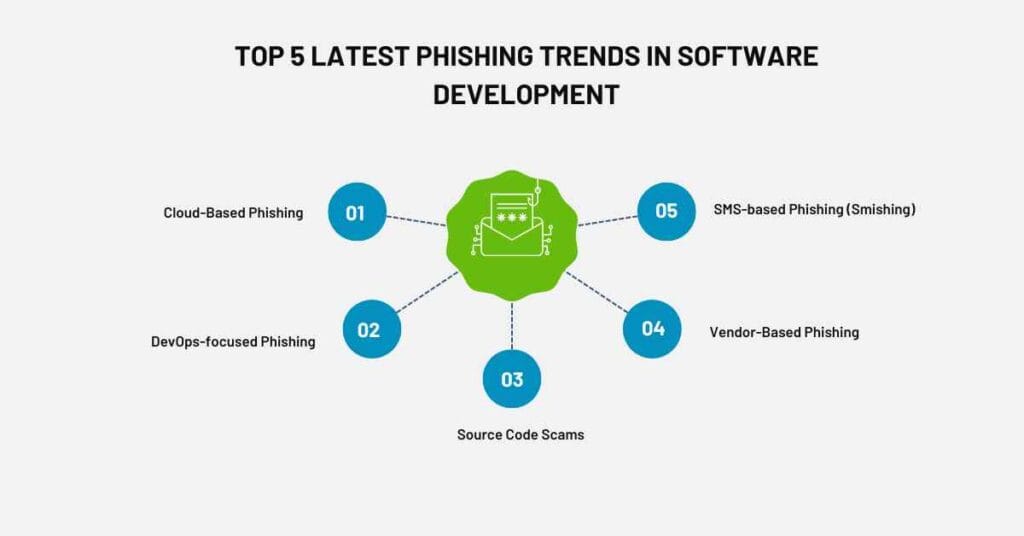
Several emerging phishing trends are worth noting in the software development industry:
1. Cloud-Based Phishing
With the increasing adoption of cloud-based services, attackers are now targeting cloud-based applications, such as Microsoft 365, Google Drive, and Dropbox. These attacks often take the form of fake password reset requests, account verification notifications, or urgent file download requests.
2. DevOps-focused Phishing
DevOps teams often use automated scripts to deploy and manage applications. Attackers are now targeting these scripts, injecting malicious code or fake updates that can compromise sensitive information and disrupt application workflows.
3. Source Code Scams
In this type of phishing attack, attackers pose as fellow developers or collaborators, sharing fake code revisions or updates that contain malicious code. Once the code is integrated into the project, the attacker can gain access to sensitive data or systems.
4. Vendor-Based Phishing
Software development companies often work with external vendors, such as coding libraries, APIs, or third-party services. Attackers are now targeting these vendors, impersonating them in phishing emails or fake website updates to steal sensitive information or inject malware.
5. SMS-based Phishing (Smishing)
As the software development industry increasingly adopts agile methodologies and mobile-first approaches, attackers are now targeting developers’ mobile devices. Smishing campaigns often involve sending fake texts that appear to be from trusted sources, attempting to trick users into revealing sensitive information.
Top 6 Mitigation Strategies to prevent phishing attacks
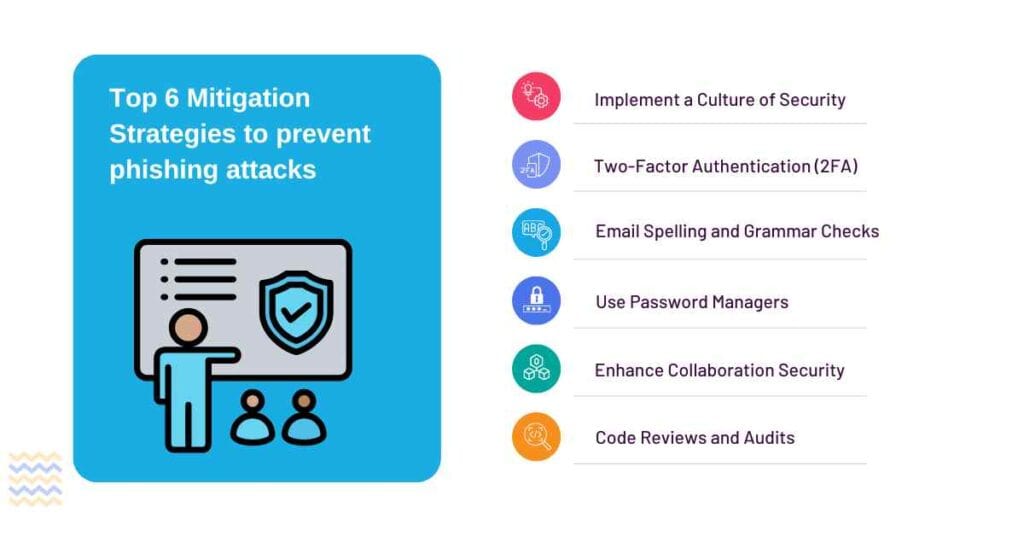
To protect against phishing attacks, software development companies should implement the following strategies:
1. Implement a Culture of Security
Educate developers on phishing risks and best practices for secure communication. Encourage users to report suspicious emails or messages to the IT department.
2. Two-Factor Authentication (2FA)
Enable 2FA for all users, especially for sensitive systems and applications.
3. Email Spelling and Grammar Checks
Legitimate emails are unlikely to contain basic spelling or grammar errors. Implement email scanning tools that detect suspicious content.
4. Use Password Managers
Encourage users to store passwords securely using password management tools.
5. Enhance Collaboration Security
Implement additional security measures, such as SAML-based authentication, OAuth token encryption, or collaboration tool-specific security integrations.
6. Code Reviews and Audits
Regularly review and audit code changes to detect potential security weaknesses.
