

Securing 5G Network Infrastructure: The Role of VAPT in Building a Resilient Future
As 5G technology ushers in a new era of connectivity with ultra-fast speeds, low latency, and the ability to connect billions of devices, the complexity of its underlying infrastructure demands a robust approach to security.
With an expanding attack surface and the critical role of 5G in enabling future technologies, ensuring the security of 5G network infrastructure is paramount. This is where Vulnerability Assessment and Penetration Testing (VAPT) becomes essential for protecting 5G networks against evolving threats.
Here in this article, we are going to discuss about Securing 5G Network Infrastructure: The Role of VAPT in Building a Resilient Future
The Unique Challenges of 5G Network Infrastructure
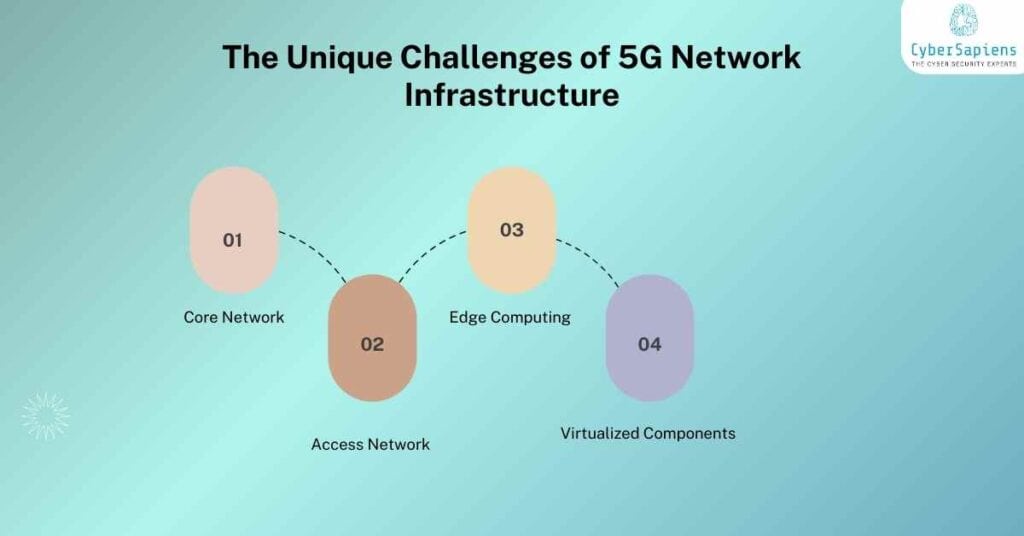
5G network infrastructure is a multi-layered, dynamic system that includes:
1. Core Network
The heart of the 5G system, managing data routing, resource allocation, and network functions.
2. Access Network
Comprising base stations and antennas that connect devices to the core network.
3. Edge Computing
Bringing computing resources closer to end-users for reduced latency and faster response times.
4. Virtualized Components
Leveraging software-defined networking (SDN) and network function virtualization (NFV) for scalability and flexibility.
While these components enable the powerful capabilities of 5G, they also introduce numerous security challenges, such as rogue base stations, signal hijacking, and cross-network intrusions. Regular VAPT is critical to uncover vulnerabilities in this intricate infrastructure and prevent potential breaches before they occur.
How VAPT Enhances 5G Network Infrastructure Security?
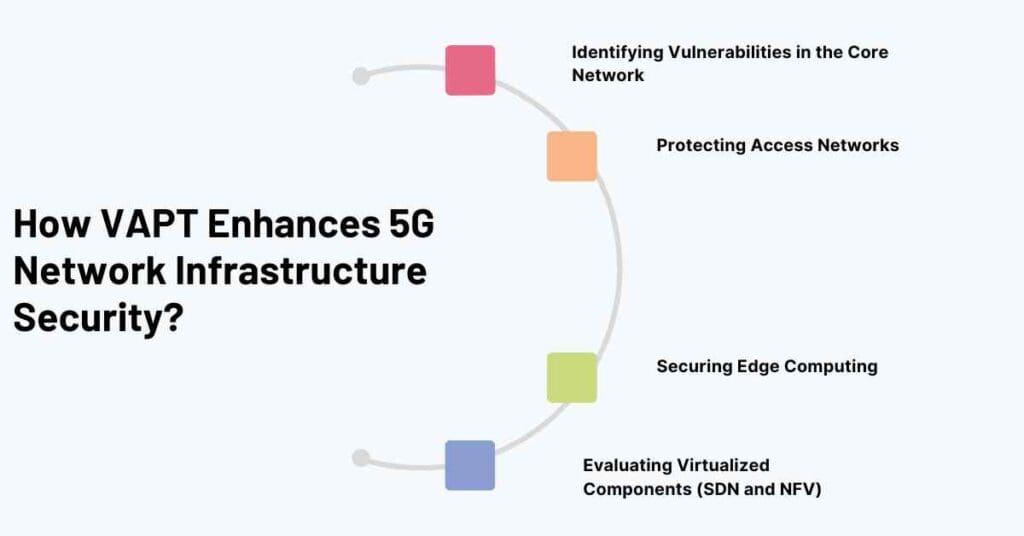
1. Identifying Vulnerabilities in the Core Network
- Configuration Weaknesses: VAPT tools scan for misconfigurations in SDN controllers and NFV systems, which could allow unauthorized access or system compromises.
- Protocol Flaws: Penetration tests simulate attacks on protocols like Diameter and GTP, which are commonly used in 5G to expose vulnerabilities that could be exploited by attackers.
2. Protecting Access Networks
- Rogue Base Stations: VAPT tools can simulate rogue base stations to test the network’s ability to detect and mitigate these malicious devices, which could otherwise compromise communication between devices and the network.
- Device Authentication: Testing ensures that authentication mechanisms for devices connecting to the access network are secure, protecting against spoofing and unauthorized access.
3. Securing Edge Computing
- Resource Isolation: Vulnerability assessments check if the edge computing resources are properly isolated, preventing unauthorized access to sensitive data from other users or applications.
- API Security: Penetration testing evaluates the security of exposed APIs in edge devices, ensuring they are not vulnerable to attacks like API abuse or data exfiltration.
4. Evaluating Virtualized Components (SDN and NFV)
- SDN/NFV Integrity: VAPT tools verify the security of virtualized components that form the backbone of 5G networks, detecting any vulnerabilities in the software-defined configurations.
- Dynamic Threat Modeling: Since 5G networks are highly dynamic, VAPT continuously assesses potential risks that arise from frequent updates or configuration changes in the SDN/NFV environments.
Tools for 5G Network VAPT

To ensure comprehensive security across 5G network infrastructure, the right set of tools is necessary. These tools help identify, assess, and exploit vulnerabilities in network components.
1. Network Vulnerability Scanners
- Nessus: Identifies misconfigurations and vulnerabilities in hardware and software across 5G core and edge components.
- OpenVAS: Useful for scanning SDN controllers and virtualized components to uncover vulnerabilities.
- Qualys: A cloud-based tool that helps scan hybrid 5G environments for vulnerabilities, including those in virtualized infrastructure.
2. Penetration Testing Frameworks
- Metasploit: A popular framework for simulating attacks on network protocols used in 5G, such as GTP, HTTP/2, and Diameter.
- Kali Linux: An operating system packed with tools like Aircrack-ng and Wireshark, useful for testing wireless communication and detecting vulnerabilities in access networks.
- Burp Suite: Primarily used for testing API security, a critical area for 5G’s MEC and edge computing.
3. Specialized 5G Testing Tools
- 5G-Specific Protocol Testers: Tools like Anritsu Radio Communication Tester and Keysight Technologies 5G Test Platforms simulate 5G signaling protocols to assess their security.
- CIRCUIT (Cyber Range): A specialized environment for testing telecom networks, offering controlled conditions to evaluate 5G infrastructure’s resilience.
4. Wireless Security Tools
- Aircrack-ng: A suite for analyzing wireless network traffic, useful in testing encryption and authentication vulnerabilities in 5G’s access layer.
- Kismet: A tool for detecting unauthorized base stations and rogue devices within 5G networks.
5. IoT and Device Security Scanners
- IoT Inspector: Scans IoT devices connected to 5G networks for vulnerabilities, such as default credentials or insecure communication protocols.
- Shodan: A search engine for finding devices exposed on the internet, allowing security professionals to spot potential entry points within a 5G network.
Methodologies for VAPT in 5G Network Infrastructure
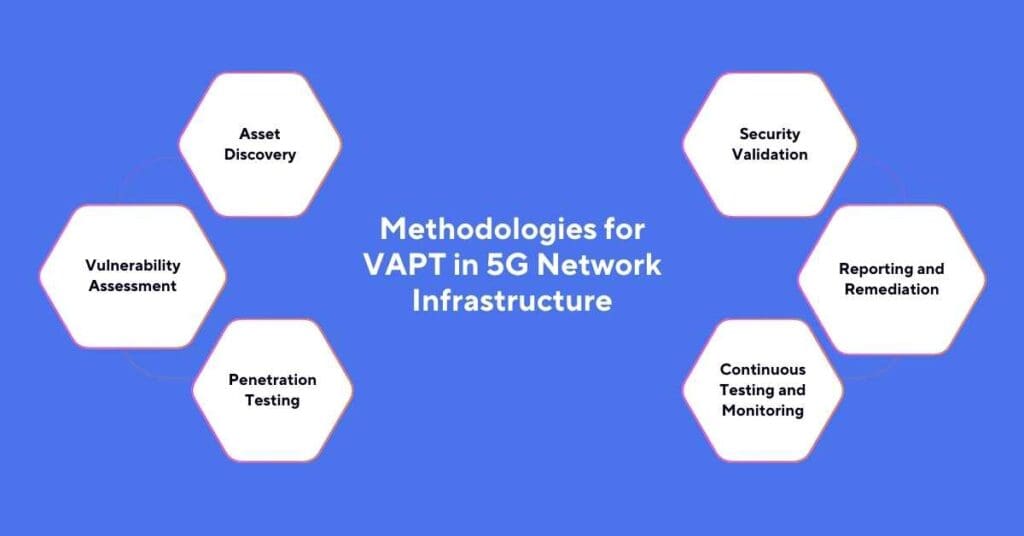
To conduct effective VAPT in 5G networks, a structured methodology is essential. Here’s a typical VAPT workflow for 5G infrastructure:
1. Asset Discovery
- Identify all critical components, including virtualized network functions (VNFs), SDN controllers, base stations, IoT devices, and edge computing resources.
2. Vulnerability Assessment
- Static Analysis: Use automated tools to scan for known vulnerabilities in configurations, firmware, and software.
- Dynamic Analysis: Test live components to identify runtime vulnerabilities, such as resource exhaustion or data leakage.
3. Penetration Testing
- Targeted Attacks: Simulate attacks on key components such as SDN controllers, MEC APIs, and rogue base stations.
- Social Engineering: Assess human vulnerabilities by testing internal security awareness and procedures.
4. Security Validation
- Use real-world attack scenarios to verify the effectiveness of security measures, such as denial-of-service (DoS) on edge computing or unauthorized access to network slices.
- Test the resilience of communication protocols like GTP, HTTP/2, and Diameter.
5. Reporting and Remediation
- Provide a detailed report that categorizes vulnerabilities by severity and offers remediation steps.
- After fixing the vulnerabilities, re-test the network to ensure that security patches are effective.
6. Continuous Testing and Monitoring
- Establish a regular schedule for VAPT to keep pace with new vulnerabilities and evolving threats in the dynamic 5G environment.
- Integrate with Security Information and Event Management (SIEM) systems for continuous monitoring and real-time threat detection.
Conclusion: A Secure 5G Future
The deployment of 5G networks is set to revolutionize industries and transform everyday experiences. However, this technological leap comes with significant security challenges. Vulnerability Assessment and Penetration Testing (VAPT) is a critical element in securing 5G network infrastructure, enabling organizations to proactively identify weaknesses and strengthen defenses.
By using advanced tools and structured methodologies tailored to 5G’s unique components, VAPT ensures the integrity and resilience of the network. As 5G continues to evolve, ongoing testing and collaboration between telecom providers and cybersecurity experts will be key to building a secure, scalable, and reliable infrastructure for the future.
