
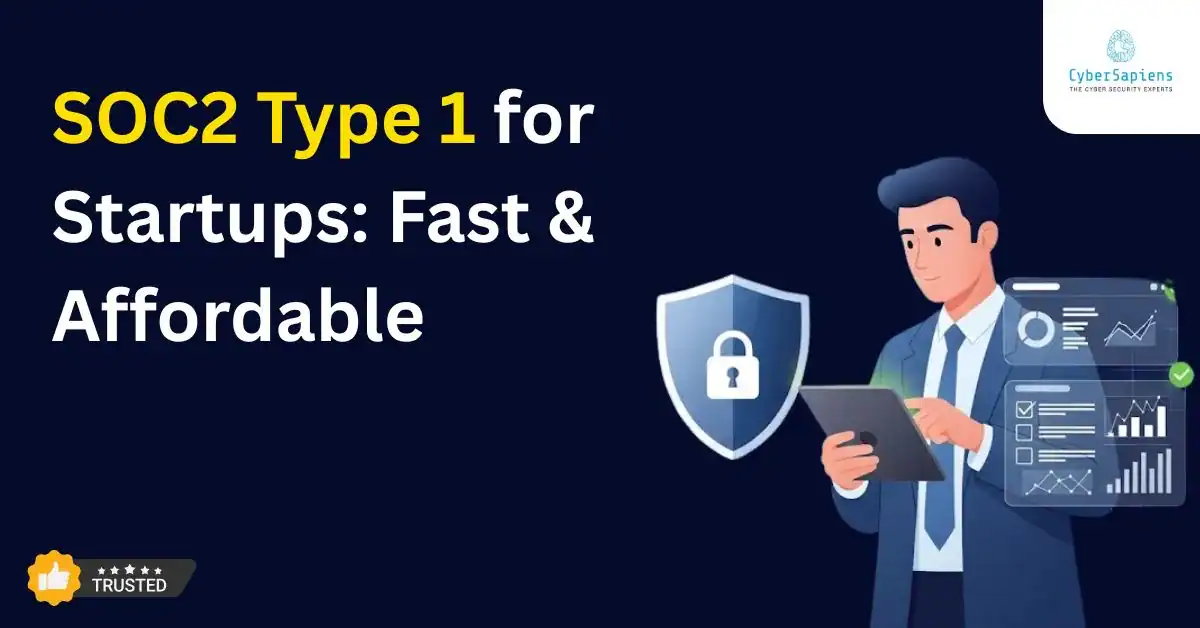
SOC2 Type 1 for Startups: Fast Affordable and Credible Compliance
With a hyper-connected business landscape, startups are scaling faster than ever, launching products, winning clients, and attracting investors. But as they grow, so do the expectations around data security and compliance. Investors, enterprise clients, and partners all ask the same critical question
For early-stage companies, establishing that trust early is essential. That’s where SOC2 Type 1 compliance becomes a game-changer, offering startups a fast, affordable, and credible way to demonstrate security readiness without disrupting innovation.
What Is SOC2 Type 1 Compliance?
SOC2 Type 1 is a globally recognized compliance standard developed by the American Institute of Certified Public Accountants (AICPA). It’s designed to evaluate how well an organization’s internal controls are structured to protect customer data, particularly in technology and cloud-based environments.
SOC2 Type 1 assesses whether your security controls are properly designed and implemented at a specific point in time.
At CyberSapiens, a trusted compliance partner, we understand that startups need compliance solutions that move at startup speed. Our SOC2 Type 1 certifications are designed to help you achieve audit readiness quickly with expert guidance, automated documentation, and scalable frameworks that evolve as your business grows.
In an era where trust is currency, SOC2 Type 1 certification doesn’t just prove compliance, it empowers startups to build credibility, unlock enterprise opportunities, and grow with confidence.
Why Startups and Emerging Businesses Prefer SOC2 Type 1 Compliance?
For fast-growing startups, every decision must balance speed, cost, and credibility. When it comes to compliance, SOC2 Type 1 strikes the perfect balance, offering a practical, affordable, and impactful way to build trust without slowing growth.
Here’s why it’s the ideal starting point for emerging companies:
1. Quick to Achieve
Unlike Type 2 audits, which require monitoring controls over several months, SOC2 Type 1 can often be completed in just a few weeks. This means startups can demonstrate compliance readiness early and respond quickly to enterprise security questionnaires or investor requirements.
2. Cost-Effective and Scalable
Startups operate with limited resources. SOC2 Type 1 offers a lower-cost entry point into compliance while laying the foundation for future frameworks like SOC2 Type 2, ISO 27001, or HIPAA. You get immediate credibility now and a scalable model for when your organisation grows.
3. Builds Early Credibility and Customer Confidence
Clients and investors want assurance that their data is in safe hands. A SOC2 Type 1 report signals that your company has the right policies, controls, and mindset in place. It builds instant confidence with potential customers, often becoming the difference between closing or losing a deal.
4. Strengthens Security Culture from Day One
Beyond compliance, the SOC2 journey helps startups establish a security-first culture, implementing best practices like access control, encryption, and incident response early on. These measures not only meet audit standards but also protect your brand as it scales.
Key Components of SOC2 Type 1 Compliance

To understand SOC2 Type 1 compliance, it’s essential to know what auditors actually evaluate and how these components come together to demonstrate your organization’s security posture. SOC2 isn’t just about having policies in place; it’s about showing that your systems, people, and processes are designed to protect data effectively.
The framework is built around five foundational pillars known as the Trust Service Criteria (TSC). Each criterion focuses on a different dimension of organizational security and operational integrity.
1. Security: The Core Foundation
Security is the mandatory criterion in every SOC2 audit and forms the heart of the framework. It evaluates how well your organization safeguards data against unauthorized access, disclosure, or modification.
Key focus areas include:
- Implementation of access controls and authentication mechanisms (like MFA).
- Network and system monitoring to detect suspicious activity.
- Policies for data encryption, firewalls, and vulnerability management.
Startups often begin with the Security principle as it provides the most visible proof of strong data protection and is often required by enterprise clients.
2. Availability: Keeping Systems Accessible
Availability focuses on ensuring that your systems and services are reliable and accessible as promised in your agreements or SLAs (Service Level Agreements).
Auditors assess:
- System uptime and performance monitoring practices.
- Incident management and disaster recovery procedures.
- Backup strategies and business continuity plans.
This component is crucial for startups offering SaaS platforms or cloud-based solutions, where uptime directly impacts user trust and satisfaction.
3. Confidentiality: Protecting Sensitive Information
Confidentiality ensures that sensitive business and customer information is only accessible to authorized individuals. It covers proprietary data, intellectual property, and any non-public information handled by your organization.
Key practices include:
- Data classification and labeling processes.
- Encryption during storage and transmission.
- Secure disposal of confidential data when no longer needed.
For startups working with B2B clients, strong confidentiality controls can serve as a competitive differentiator.
4. Processing Integrity: Ensuring Accuracy and Reliability
Processing Integrity verifies that your systems process data completely, accurately, and in a timely manner. It’s about maintaining the consistency and reliability of operations that depend on data accuracy — such as billing systems, analytics, or automated workflows.
This includes controls for:
- Input validation and data verification.
- Error detection and correction mechanisms.
- Change management processes to prevent unauthorized system alterations.
While not mandatory for every startup, this component is valuable for those managing financial transactions or real-time data processing.
5. Privacy: Handling Personal Data Responsibly
Privacy focuses on how your organization collects, uses, retains, and disposes of personal information in accordance with your privacy notice and relevant regulations (like GDPR or CCPA).
It evaluates:
- Transparency in how user data is collected and processed.
- User consent mechanisms and data subject rights.
- Secure data storage and retention policies.
For startups dealing with customer data or user accounts, aligning with privacy standards early builds a strong foundation for future compliance and consumer trust. Together, these Trust Service Criteria create a comprehensive view of your organization’s ability to protect and manage information securely.
While startups often begin with the Security principle, incorporating additional criteria over time strengthens overall governance and builds long-term credibility.
Why SOC2 Type 1 for Startups is a Fast and Affordable Compliance?
For startups, every decision matters, from how fast you grow to how much trust you can earn. Startups often face a tough balance: scaling quickly while staying secure. Yet, enterprise clients, investors, and partners increasingly expect verifiable proof that their data will be handled responsibly. SOC2 Type 1 certification provides exactly that: a third-party validation that your organization has the right security controls and processes in place.
Unlike lengthy, resource-intensive audits, SOC2 Type 1 offers a faster, more affordable entry point into compliance. It evaluates your organization’s systems and controls at a single point in time, helping you:
- Demonstrate strong data protection practices early on
- Build credibility and trust with clients and investors
- Lay the groundwork for SOC2 Type 2 and long-term security maturity
Startups can navigate the compliance process efficiently with expert guidance, tailored documentation, and audit readiness programs designed specifically for growing teams.
How CyberSapiens Helps Startups Achieve SOC2 Type 1 Compliance?

Achieving SOC2 Type 1 compliance can feel overwhelming for startups juggling rapid growth, limited resources, and evolving security needs. That’s where CyberSapiens steps in, making compliance simple, efficient, and startup-friendly.
At CyberSapiens, we specialize in helping startups and growing tech companies achieve SOC2 Type 1 certification faster, more affordably, and with complete confidence. Our tailored approach eliminates the complexity of traditional audits, empowering you to focus on what matters most: innovation and growth.
Here’s how we make it happen
1. Readiness Assessment
We start by understanding your current security landscape. Our team performs a gap analysis to identify what’s missing from your existing controls, policies, and processes compared to SOC2 requirements. You’ll receive a clear roadmap highlighting what needs to be improved before the audit — saving time, effort, and cost.
2. Policy Development & Documentation
CyberSapiens provides audit-ready policy templates and helps you customize them to fit your startup’s operations.
We cover essentials like:
- Access control and data protection policies
- Incident response procedures
- Change management and monitoring protocols
This ensures your documentation meets auditor expectations without unnecessary complexity.
3. Control Implementation
Our experts help implement practical, right-sized controls aligned with the Trust Service Criteria (Security, Availability, Confidentiality, etc.), ensuring your systems and processes are secure, compliant, and efficient.
We focus on achievable steps, such as:
- Enabling MFA and encryption
- Implementing regular backup and monitoring systems
- Defining user access and review mechanisms
4. Evidence Collection & Audit Support
We guide your team through evidence preparation, helping you gather and organize proof that demonstrates control implementation. When it’s time for the audit, CyberSapiens coordinates with licensed auditors and CPA firms to ensure a smooth, successful review, minimizing back-and-forth delays and technical confusion.
5. Certification & Ongoing Support
Once certified, we help you maintain compliance through continuous monitoring, periodic assessments, and readiness for Type 2 expansion.
Your SOC2 Type 1 report becomes a trust asset, something you can confidently share with clients, partners, and investors.
Clients Served by CyberSapiens



Why Startups Choose CyberSapiens for SOC 2 Type 1 Certification?
- Fast-track certification: Get SOC2 Type 1 ready in weeks, not months. Our proven process combines automation with expert guidance to help you meet compliance goals without delays.
- Startup-friendly pricing: We know budgets matter. That’s why we offer affordable, scalable compliance packages designed for startups that need enterprise-level trust without enterprise-level costs.
- Expert guidance: Work with professionals experienced in compliance and cybersecurity.Just clear, actionable guidance from cybersecurity professionals who understand your business.
- Global presence: Supporting clients across India, Australia, the USA, and Canada. We bring a global compliance perspective tailored to your industry and market.
At CyberSapiens, we don’t just help you get compliant, we help you build lasting trust and operational resilience. With our streamlined process and expert support, achieving SOC2 Type 1 becomes a strategic advantage, not a stressful hurdle.
Beyond Compliance: Building Long-Term Credibility
Achieving SOC2 Type 1 compliance isn’t just about ticking a regulatory box; it’s about building trust, transparency, and long-term credibility in an increasingly competitive market. For startups, this certification sends a strong message to customers, investors, and partners:
But true credibility doesn’t stop at compliance. It grows with continuous improvement, strong governance, and a culture of security awareness that extends across every level of your organization.
At CyberSapiens, we help you go beyond the audit, turning compliance into a strategic asset. Our ongoing support ensures your systems evolve alongside new risks, your teams remain trained and vigilant, and your business stays resilient against emerging cyber threats.
So, whether you’re preparing for your first SOC2 Type 1 audit or planning the path toward Type 2, CyberSapiens is your trusted partner, empowering you to grow with confidence, credibility, and compliance.
FAQs: SOC2 Type 1 for Startups: Fast Affordable and Credible Compliance
1. How long does it take to achieve SOC2 Type 1 compliance?
Answer: With proper guidance, startups can typically achieve SOC 2 Type 1 readiness in 4–6 weeks, depending on the current maturity of their security practices.
2. How much does SOC2 Type 1 cost?
Answer: Costs vary based on company size and audit scope, but CyberSapiens offers startup-friendly pricing, making SOC 2 compliance affordable even for small teams.
3. What kind of organizations need SOC2 compliance?
Answer: Any company that stores, processes, or manages customer data — especially SaaS, cloud, fintech, or IT service providers- benefits from SOC 2 compliance.
4. What happens during a SOC2 Type 1 audit?
Answer: Auditors review your policies, procedures, and implemented controls to confirm they meet SOC 2 requirements. They may also request documentation or system evidence.
5. How often should SOC2 Type 1 be renewed?
Answer: SOC 2 Type 1 compliance should be renewed every 12 months. Because SOC 2 Type 1 reflects your organization’s security posture at a specific point in time, it’s important to undergo the audit annually to maintain credibility and assure clients that your controls remain current and effective.
6. When can a company go for SOC2 Type 2 after completing SOC2 Type 1?
Answer: Most companies pursue SOC 2 Type 2 within 6–12 months after achieving Type 1 certification. This allows enough time to demonstrate that their controls operate effectively over a defined period.
