
SOC2 vs HIPAA vs ISO 27001: Choosing the Right Framework for Your Industry
As organizations handle increasing volumes of sensitive data, choosing the right security and compliance framework has become a critical business decision, not just a technical one. Customers, regulators, and partners now expect clear proof that data is protected, risks are managed, and security controls are consistently enforced. This is where frameworks like SOC2, HIPAA, and ISO 27001 come into play.
However, many organizations struggle to understand which framework applies to them. A SaaS company selling to US enterprises may be asked for SOC2, a healthcare or health-tech organization must comply with HIPAA, while globally operating businesses are often expected to hold ISO 27001 certification. Selecting the wrong framework or delaying the right one can lead to lost deals, regulatory exposure, and unnecessary compliance costs.
Each framework serves a different purpose, industry, and regulatory need. SOC2 focuses on customer trust and assurance, HIPAA is a legal requirement for protecting health data, and ISO 27001 provides a globally recognized, risk-based approach to information security management. Understanding these differences is essential to making the right choice for your industry and growth plans.
What Is SOC2 and Who Is It For?
SOC2 (System and Organization Controls 2) is a compliance framework developed by the American Institute of Certified Public Accountants (AICPA). It is designed to evaluate how organizations protect customer data based on defined trust principles, rather than prescribing a fixed set of controls.
SOC2 is especially popular in the United States and is often driven by customer and investor expectations, rather than legal mandate.
What SOC2 Focuses On
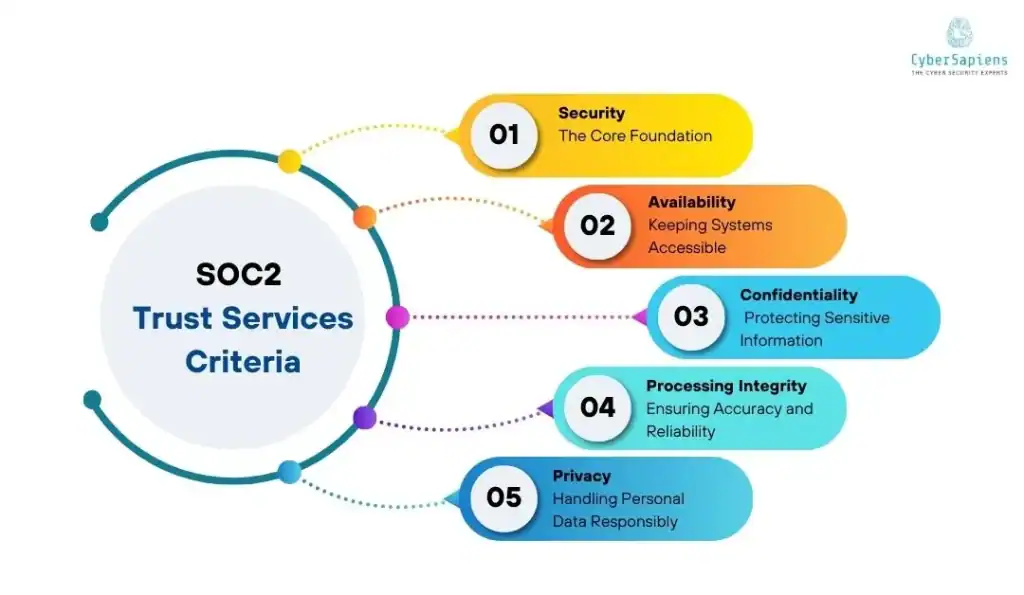
SOC2 assesses an organization’s controls against the Trust Services Criteria (TSC):
- Security: Protection against unauthorized access (mandatory for all SOC2 reports)
- Availability: System uptime and reliability
- Confidentiality: Protection of sensitive business data
- Processing Integrity: Accuracy and completeness of system processing
- Privacy: Handling of personal information
Organizations can choose which criteria apply based on their services and risk profile.
SOC2 Type I vs Type II
- SOC2 Type I: Evaluates whether controls are designed correctly at a specific point in time. Often used by startups or early-stage SaaS companies.
- SOC2 Type II: Evaluates whether controls are designed and operating effectively over time (typically 6–12 months). This is the version most enterprise customers require.
What Is HIPAA and Who Needs It?
HIPAA (Health Insurance Portability and Accountability Act) is a US federal law designed to protect the privacy and security of sensitive health information. Unlike SOC2 or ISO 27001, HIPAA is legally mandatory for organizations that create, access, process, or store protected health information (PHI).
HIPAA compliance is enforced by the US Department of Health and Human Services (HHS), and violations can result in significant financial penalties and legal consequences.
What HIPAA Focuses On
HIPAA is built around three primary rules:
- Privacy Rule: Governs how PHI can be used and disclosed
- Security Rule: Requires administrative, physical, and technical safeguards to protect electronic PHI (ePHI)
- Breach Notification Rule: Mandates timely notification in the event of a data breach involving PHI
Together, these rules ensure the confidentiality, integrity, and availability of health data.
Who Must Comply with HIPAA?
HIPAA applies to two main groups:
- Covered Entities: Healthcare providers, health plans, and healthcare clearinghouses.
- Business Associates: Vendors and service providers that handle PHI on behalf of covered entities, such as:
- Health-tech and SaaS platforms
- Cloud service providers supporting healthcare systems
- Billing, analytics, and IT service providers
If an organization touches PHI in any form, HIPAA compliance is not optional.
What Is ISO 27001 and Why Is It Widely Adopted?
ISO 27001 is an international standard for establishing, implementing, maintaining, and continually improving an Information Security Management System (ISMS). Unlike SOC2 or HIPAA, ISO 27001 is globally recognized and applicable across industries, making it one of the most widely adopted information security frameworks in the world.
ISO 27001 takes a risk-based approach to security, allowing organizations to design controls based on their specific threats, business context, and regulatory requirements rather than following a rigid checklist.
What ISO 27001 Focuses On
ISO 27001 emphasizes:
- Systematic identification and management of information security risks.
- Governance, policies, and defined security responsibilities.
- Technical, operational, and organizational controls.
- Continuous improvement through audits, monitoring, and reviews.
With the ISO 27001:2022 update, controls were modernized and simplified from 114 controls in the 2013 version to 93 controls to better align with cloud computing, digital services, and evolving cyber threats.
Who Should Choose ISO 27001?
ISO 27001 is suitable for:
- Organizations operating globally or in multiple regions.
- Enterprises handling sensitive or regulated data.
- SaaS and technology companies targeting international customers.
- Organizations seeking a long-term, scalable security framework.
It is often required in European markets and by enterprise customers as part of vendor risk assessments.
Key Differences: SOC2 vs HIPAA vs ISO 27001
While SOC2, HIPAA, and ISO 27001 all aim to strengthen information security, they differ significantly in purpose, scope, enforcement, and industry applicability. Understanding these differences is essential when deciding which framework best fits your organization.
1. Nature of the Framework
- SOC2 is an assurance framework. It provides an audit report that demonstrates how well controls meet the Trust Services Criteria.
- HIPAA is a regulatory law. Compliance is legally required for organizations handling protected health information (PHI).
- ISO 27001 is a certification-based international standard focused on building a structured ISMS.
2. Industry and Applicability
- SOC2 is commonly used by SaaS, cloud, and technology companies, especially those selling to US enterprises.
- HIPAA applies strictly to healthcare organizations and their vendors (covered entities and business associates).
- ISO 27001 is industry-agnostic and used globally across technology, finance, healthcare, manufacturing, and services.
3. Geographic Relevance
- SOC2 is primarily recognized in the United States.
- HIPAA applies only within the US healthcare ecosystem.
- ISO 27001 is globally recognized and often required for international or European markets.
4. Audit and Certification Model
- SOC2 results in an audit report (Type I or Type II), not a certification.
- HIPAA has no formal certification; compliance is demonstrated through assessments and enforcement readiness.
- ISO 27001 leads to a formal certification issued by an accredited certification body.
5. Maintenance and Ongoing Effort
- SOC2 Type II requires continuous evidence collection over time.
- HIPAA requires ongoing compliance and readiness for regulatory investigations.
- ISO 27001 requires continuous improvement, internal audits, and surveillance audits.
6. Business Impact
- SOC2 is often a sales enabler for SaaS and technology companies.
- HIPAA is a legal necessity for healthcare organizations.
- ISO 27001 is a long-term security foundation that builds trust across customers, partners, and regulators.
Choosing the Right Framework for Your Industry
Selecting the right security framework depends on your industry, the type of data you handle, your customer base, and where you operate. While SOC2, HIPAA, and ISO 27001 all strengthen security, each serves a different business purpose.
1. SaaS and Cloud Companies
For SaaS, cloud service providers, and technology startups, especially those selling to US enterprises, SOC2 is often the first requirement. Customers frequently request a SOC2 Type II report during vendor risk assessments. However, SaaS companies expanding globally or targeting European customers may also need ISO 27001 to meet international expectations.
2. Healthcare and Health-Tech Organizations
Organizations handling protected health information (PHI) must comply with HIPAA. This includes healthcare providers, digital health platforms, and vendors acting as business associates. In many cases, healthcare technology companies also pursue ISO 27001 to demonstrate broader information security maturity beyond HIPAA’s regulatory scope.
3. Enterprises and Global Organizations
Large enterprises and companies operating across regions often choose ISO 27001 because it is globally recognized and scalable. It provides a structured ISMS that can support multiple regulatory and customer requirements, including SOC2 and HIPAA.
Can Organizations Implement More Than One Framework?
Yes, many organizations implement more than one security framework, especially as they grow, enter new markets, or serve regulated industries. In fact, combining frameworks is often the most practical way to meet customer expectations, regulatory obligations, and global security standards without duplicating effort.
When Multiple Frameworks Make Sense
- SaaS Companies in Regulated Industries: A SaaS company serving healthcare clients may need HIPAA for regulatory compliance while also maintaining SOC2 to satisfy enterprise customers.
- Global or Expanding Organizations: Companies operating internationally often adopt ISO 27001 as a foundational framework and map SOC2 requirements to it for US customers.
- Health-Tech and Digital Health Platforms: These organizations frequently combine HIPAA + ISO 27001, HIPAA to meet legal requirements and ISO 27001 to demonstrate broader security governance and global trust.
Benefits of a Unified Security Program
- Reduced Duplication of Controls: Many controls overlap across SOC2, HIPAA, and ISO 27001 (access control, incident response, risk management). A unified approach avoids repeating work.
- Lower Compliance Costs Over Time: One well-designed security program can support multiple audits and assessments.
- Stronger Security Posture: Mapping multiple frameworks encourages deeper control implementation rather than checkbox compliance.
- Simpler Audit and Evidence Management: Centralized policies, logs, and controls make audits faster and less disruptive.
How CyberSapiens Helps You Choose and Implement the Right Framework?
Choosing between SOC2, HIPAA, and ISO 27001 can be complex, especially when customer demands, regulatory obligations, and business goals overlap. Cybersecurity expert at CyberSapiens helps organizations make informed decisions and implement the right framework through a structured, risk-driven, and industry-aligned approach.
1. Compliance Readiness & Gap Assessments
CyberSapiens begins by assessing your current security posture, data types, customer expectations, and regulatory obligations. This helps identify which framework, or combination of frameworks, is most appropriate for your business.
2. Industry-Specific Guidance
Whether you are a SaaS provider, healthcare organization, or global enterprise, CyberSapiens aligns compliance recommendations with your industry-specific risks, regulatory requirements, and growth plans. Controls and ISMS practices are tailored to your business model and operational maturity, ensuring security remains effective, scalable, and audit-ready as your organization expands, without unnecessary complexity or rework.
3. SOC2 Advisory and Audit Preparation
Support includes Trust Services Criteria (TSC) selection, practical control implementation, structured evidence collection, and full audit readiness for SOC 2 Type I or Type II assessments, ensuring organizations meet compliance requirements with confidence and minimal audit friction.
4. HIPAA Security Risk Assessments and Safeguards
CyberSapiens helps healthcare and health-tech organizations meet HIPAA requirements through structured risk assessments, tailored policy development, and the implementation of appropriate administrative, technical, and physical safeguards, ensuring patient data protection and regulatory compliance without disrupting clinical or digital health operations.
5. ISO 27001 Implementation and Certification Support
From ISMS design and risk assessment to internal audits and certification readiness, CyberSapiens delivers end-to-end ISO 27001 services, ensuring a practical, risk-based, and audit-ready information security management system aligned with business goals.
6. Control Mapping Across Frameworks
Overlapping controls across SOC 2, HIPAA, and ISO 27001 are mapped into a unified security program, eliminating redundant efforts, streamlining compliance activities, and reducing overall implementation and audit overhead.
7. Technical Security Validation and VAPT
Technical controls are validated through vulnerability assessment and penetration testing (VAPT) to ensure real-world effectiveness, identify exploitable weaknesses, and provide strong, evidence-based assurance for audits and risk management.
8. Continuous Compliance and Improvement
Post-certification and post-audit support ensure ongoing compliance, surveillance audit readiness, and continuous adaptation to evolving risks, technologies, and business changes, keeping security controls effective over time.
By combining multi-framework expertise with hands-on security implementation, CyberSapiens enables organizations to choose the right framework, implement it efficiently, and build a scalable security foundation that supports long-term business success.
Clients Served by CyberSapiens



Aligning Security Frameworks with Business Growth
Choosing between SOC2, HIPAA, and ISO 27001 is not about which framework is “better,” but about which one best aligns with your industry, data sensitivity, customer expectations, and growth strategy. Each framework serves a distinct purpose: SOC2 builds customer trust, HIPAA ensures regulatory compliance in healthcare, and ISO 27001 provides a globally recognized foundation for information security management.
Organizations that approach compliance strategically, rather than reactively, are better positioned to reduce risk, accelerate sales, and scale securely. In many cases, combining frameworks through a unified security program delivers the greatest long-term value without duplicating effort.
With its expertise across SOC2, HIPAA, and ISO 27001, CyberSapiens helps organizations turn compliance into a business enabler. By guiding framework selection, implementation, and continuous improvement, CyberSapiens ensures security supports growth, rather than slowing it down.
FAQs: SOC2 vs HIPAA vs ISO 27001
1. Which framework is mandatory?
Answer: HIPAA is legally mandatory for organizations handling protected health information (PHI). SOC2 and ISO 27001 are not legally required but are often demanded by customers or partners.
2. Is SOC2 or ISO 27001 better for SaaS companies?
Answer: SOC2 is commonly required by US enterprise customers, while ISO 27001 is preferred for global and European markets. Many SaaS companies implement both.
3. Can ISO 27001 replace SOC2 or HIPAA?
Answer: No. ISO 27001 can support SOC2 and HIPAA requirements, but it does not replace regulatory obligations or customer-specific audit requirements.
4. Do startups need compliance frameworks early?
Answer: Yes. Early compliance helps startups win enterprise deals, build trust, and avoid costly retrofits later.
