
The Complete SOC 2 Documentation Guide for Security Teams in New Zealand
As the use of cloud technologies, SaaS, and digital services increases in New Zealand, so has the need to prioritize data security and protection for the customers served by such organizations. Organizations that handle sensitive data must prove that they are employing adequate security measures to win the trust and confidence of their customers, and this is where attaining SOC 2 compliance comes into the picture.
SOC 2 is a type of audit that tests how well an organization is able to handle and secure customer data in accordance with the Trust Service Criteria, which are defined by security, availability, processing integrity, confidentiality, and privacy. For technology companies, service providers, and cloud-based companies in New Zealand, attaining SOC 2 compliance is a must, especially if they want to win the trust and confidence of international clients, especially in North America and other countries around the world.
Another important aspect in attaining SOC 2 compliance is documentation. Documentation should be thorough and well-organized to meet compliance requirements. Documentation plays a key role in ensuring that security controls are implemented and maintained effectively within an organization. Therefore, without proper documentation, it may be difficult to attain SOC 2 compliance, even if an organization has effective security measures in place.
Understanding SOC 2 and Its Documentation Requirements
SOC 2, also known as System and Organization Controls 2, is one of the most widely accepted security and compliance measures that seek to assess the management of customer data by different organizations. It was developed by the American Institute of Certified Public Accountants (AICPA) to ensure that service providers have adequate controls in place to protect information systems as well as maintain proper operations.
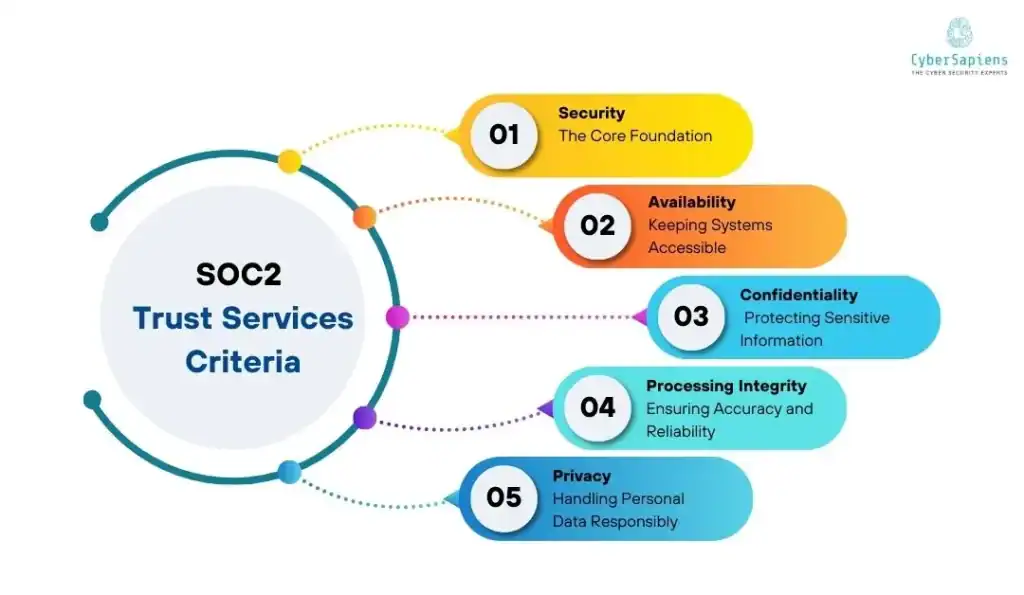
The SOC 2 audits are guided by the Trust Services Criteria (TSC), which outlines the guidelines that organizations should observe to prove that they have adequate controls in place to protect customer data.
The five Trust Services Criteria:
- Security: This refers to protecting systems and data from unauthorized access, intrusions, and vulnerabilities.
- Availability: This refers to providing systems with availability as promised to customers.
- Processing Integrity: This refers to providing systems with accurate, complete, and timely processing.
- Confidentiality: This refers to protecting sensitive data such as intellectual properties, financial information, and other proprietary data.
- Privacy: Which refers to protecting personal data and providing it with appropriate handling and disposal.
Among these, Security is a must-have for every SOC 2 audit, while the others depend on services and organizational requirements.
Why SOC 2 Documentation Matters for Security Teams?
For any organization that aims to attain SOC 2 compliance, it has been observed that security controls alone are not enough. It is important to have auditors verify that security controls are well-defined and implemented in an effective manner within the organization. This has made documentation one of the most important aspects in the SOC 2 audit process.
The security team within any organization has to ensure that proper documentation is maintained to prove how effectively security risks are being managed within the organization and how sensitive information is being safeguarded against any potential security risks.
- Demonstrates Implementation of Security Controls: It has been observed that SOC 2 auditors need to be provided with evidence to prove that security controls have been implemented within the organization and are functioning effectively.
- Provides Evidence for Audit Verification: During any SOC 2 audit process, it has been observed that proper documentation plays an important role in providing evidence to auditors to verify compliance with security controls within any organization. The security team has to ensure that proper documentation is maintained to prove how effectively security controls have been implemented within the organization.
- Improves Internal Governance and Accountability: Having proper documentation also provides clarity on the roles and responsibilities of handling security and compliance within the organization. This, in turn, improves internal governance and accountability.
- Supports Continuous Compliance: As mentioned earlier, achieving SOC 2 compliance is not a one-off activity, especially for Type 2 audits, where the effectiveness of controls over time is evaluated. Having proper documentation also enables the security team to monitor activities, which supports continuous compliance.
- Builds Trust with Customers and Partners: In New Zealand, for many organizations, achieving SOC 2 compliance is often seen as an indicator of good security practices within the organization. Having proper documentation can also help build trust among customers and partners.
By maintaining proper documentation, not only can the security team ensure the success of the SOC 2 compliance audit, but they can also ensure the building of a robust security posture within the organization.
Core Types of SOC 2 Documentation Organizations Must Maintain
To pass a SOC 2 audit, organizations must have a wide range of documentation that proves how they design, implement, and monitor security controls. This documentation will enable auditors to confirm that an organization is abiding by SOC 2 requirements.
To security teams, documentation is essential because it proves that an organization is always ready for a SOC 2 audit and can prove its compliance at any given time. Below are some of the core types of SOC 2 documentation that organizations must maintain.
1. Security Policies and Procedures
Security policies are a fundamental aspect of an organization’s security posture. These documents outline how an organization enforces its security policies and procedures.
Some of these documents include:
- Information security policy.
- Access control policy.
- Data protection and encryption policies.
- Acceptable use policy.
- Vendor and third-party management policies.
- Security awareness and training guidelines.
These documents prove that an organization has a governance posture that enforces security.
2. System Architecture and Infrastructure Documentation
Auditors must gain insight into how the organization’s systems are structured and how security is achieved in the technology stack.
Key documents in this category are:
- System architecture diagrams.
- Network infrastructure diagrams.
- Data flow diagrams.
- Cloud infrastructure diagrams.
- Security control implementations in the systems.
These documents give a clear view of how systems are interacting and how sensitive data is flowing in the organization’s infrastructure.
3. Access Control and Identity Management Records
In the SOC 2 audit, the organization must ensure that access to systems and data is properly controlled and monitored. The security teams must document how access is controlled and monitored.
Key documents in this category are:
- User access lists and permissions.
- Role-based access control configurations.
- Multi-factor authentication policies.
- Access review reports.
- Employee onboarding and offboarding procedures
These documents give a clear view that only authorized persons are accessing critical systems and data in the organization.
4. Risk Assessments and Security Control Documentation
The organization has to frequently assess the risks that may be encountered and document the measures that the organization has put in place to mitigate the risks. The organization’s security team keeps records of the measures the organization has put in place to mitigate the risks that may be encountered by the organization.
The records may include:
- Risk assessment report.
- Risk mitigation/Remediation report.
- Security control implementation report.
- Third-party risk assessment report.
- Security review report.
The records show that the organization has taken measures to manage the risks that may be encountered by the organization.
5. Monitoring and Logging Reports
The organization has to implement the requirements of the SOC 2 report by frequently monitoring the systems in the organization to detect any potential security risks that may be encountered by the organization.
The organization’s security team should keep the following records:
- System monitoring report
- Log retention report
- Security alert report
- Vulnerability scanning report
- Patch management report
The records show that the organization has been able to monitor the systems in the organization.
6. Incident Response and Business Continuity Documentation
SOC 2 also requires an organization to prove that it is able to respond effectively to security incidents or operational disruptions.
Some of the documents include:
- Incident response plans
- Incident investigation and resolution reports
- Disaster recovery plans
- Business continuity procedures
- Backup and restoration documentation
These documentation categories enable an organization’s security teams to prove that they have a well-thought-out process and effective controls and oversight of their security environment, which is critical for passing a SOC 2 audit.
How CyberSapiens Supports SOC 2 Documentation and Compliance?
Managing SOC 2 documentation can be challenging for many security teams because compliance evidence, policies, and reports are often spread across multiple systems and departments. CyberSapiens simplifies this process by providing a centralized platform that streamlines SOC 2 documentation management and automates key compliance processes. This allows security teams to focus more on strengthening security practices rather than handling complex documentation tasks.
1. Centralized Documentation Management
CyberSapiens provides a centralized platform where organizations can manage all SOC 2-related documentation in one place. Policies, procedures, compliance records, audit evidence, and reports can be organized and easily accessed, helping teams maintain a clear and structured documentation system for SOC 2 audits.
2. Automated Evidence Collection
CyberSapiens automates the collection of compliance evidence from integrated systems, reducing the need for manual documentation. By automatically gathering relevant records such as access logs, security monitoring data, infrastructure configurations, and system activity, the platform helps organizations quickly provide the evidence auditors require.
3. Continuous Monitoring of Security Controls
SOC 2 Type II audits require organizations to demonstrate the ongoing effectiveness of their security controls. CyberSapiens supports continuous monitoring, giving security teams real-time visibility into their security posture while identifying potential compliance risks early. This ensures organizations remain audit-ready throughout the year.
4. Integration with Engineering, Cloud, and Security Tools
CyberSapiens integrates with various engineering, cloud infrastructure, and security tools, enabling organizations to collect compliance data seamlessly without disrupting existing workflows. These integrations help maintain accurate documentation and simplify compliance tracking across systems.
5. Streamlined SOC 2 Audit Preparation
By combining centralized documentation, automated evidence collection, and continuous monitoring, CyberSapiens significantly simplifies SOC 2 audit preparation. Security teams can reduce documentation effort, gather evidence more efficiently, and maintain stronger compliance awareness across the organization.
Clients Served by CyberSapiens



Building SOC 2 Readiness with Strong Documentation
Effective documentation not only assists auditors with verification of compliance but also enhances internal governance, accountability, and security awareness for businesses. For businesses operating in New Zealand, effective documentation of SOC 2 compliance can be essential for building trust with customers, which can be vital for business expansion into international markets.
Businesses can effectively manage their documentation for SOC 2 compliance using tools such as CyberSapiens, which can greatly simplify the preparation for the audits.
FAQs: The Complete SOC 2 Documentation Guide for Security Teams in New Zealand
1. How often should SOC 2 documentation be updated?
Answer: SOC 2 documentation should be reviewed and updated regularly, especially when there are changes to systems, policies, infrastructure, or security processes. Many organizations conduct quarterly or annual reviews to ensure documentation remains accurate.
2. What are common documentation gaps during SOC 2 audits?
Answer: Common gaps include outdated policies, missing risk assessments, incomplete access records, insufficient monitoring reports, and a lack of incident response documentation. Keeping documentation organized and regularly updated helps avoid these issues.
3. Can automation tools help manage SOC 2 documentation?
Answer: Yes. Compliance automation platforms help security teams centralize documentation, automate evidence collection, and continuously monitor controls. This simplifies SOC 2 audit preparation and ensures organizations remain audit-ready.
4. Do startups in New Zealand need SOC 2 documentation?
Answer: While SOC 2 is not legally required, many startups adopt SOC 2 documentation practices to demonstrate strong security standards. This can help them win enterprise clients, secure partnerships, and build trust with international customers.
