
The Future of AWS Pentesting – AI, ML, and Evolving Threats
Introduction: The Next Evolution of Cloud Security
Cyber threats are evolving faster than ever. Traditional manual pentesting and static security measures struggle to keep up with AI-driven attacks, deepfake phishing, and automated exploitation tools.
The future of AWS pentesting lies in AI and ML-driven security. But what does that mean for businesses? In this blog, we’ll explore: How AI and ML are revolutionizing AWS security testing, Emerging attack vectors businesses should prepare for, and How companies can leverage AI-powered pentesting tools
The Rise of AI-Driven Cyber Threats

Attackers are no longer just manual hackers—they now use AI-driven tools to automate attacks, evade detection, and exploit cloud misconfigurations at scale.
1. Automated Cloud Scanning
AI bots continuously scan for misconfigured S3 buckets, open EC2 instances, and exposed credentials.
2. Deepfake Phishing Attacks
AI-generated voices and emails trick employees into sharing AWS credentials.
3. Adaptive Malware
AI-powered malware can change its behavior to bypass security tools.
Example: A 2024 study found that AI-assisted attacks are 10x faster than traditional manual exploitation.
How AI & ML Are Transforming AWS Pentesting?
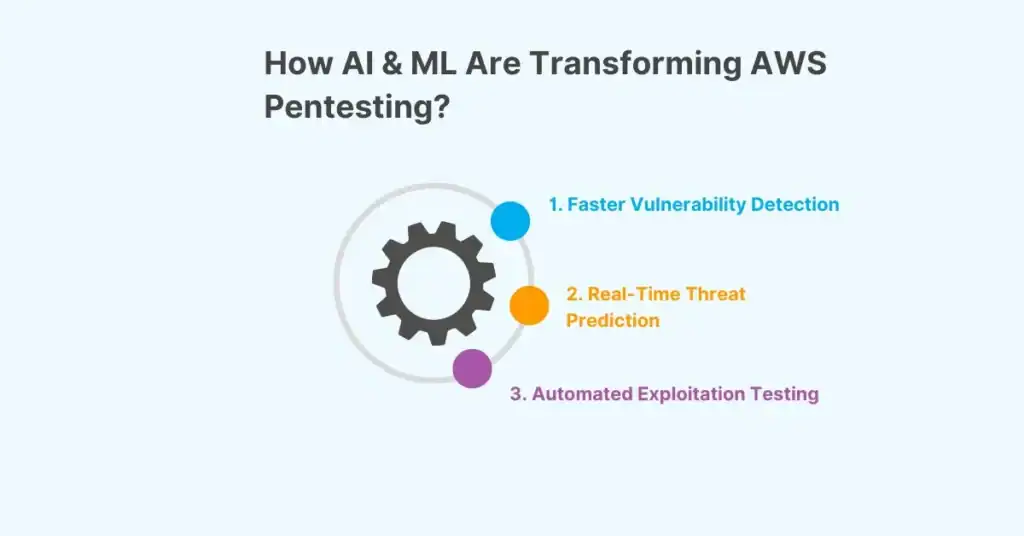
To fight AI-driven threats, businesses need AI-powered defense.AI in AWS Pentesting: What’s Changing?
1. Faster Vulnerability Detection
AI can scan millions of cloud configurations in minutes to detect misconfiguration.
2. Real-Time Threat Prediction
ML algorithms analyze AWS activity to predict potential breaches before they happen.
3. Automated Exploitation Testing
AI simulates real-world attacks on AWS environments without human intervention.
Emerging AWS Attack Vectors: What Businesses Need to Watch
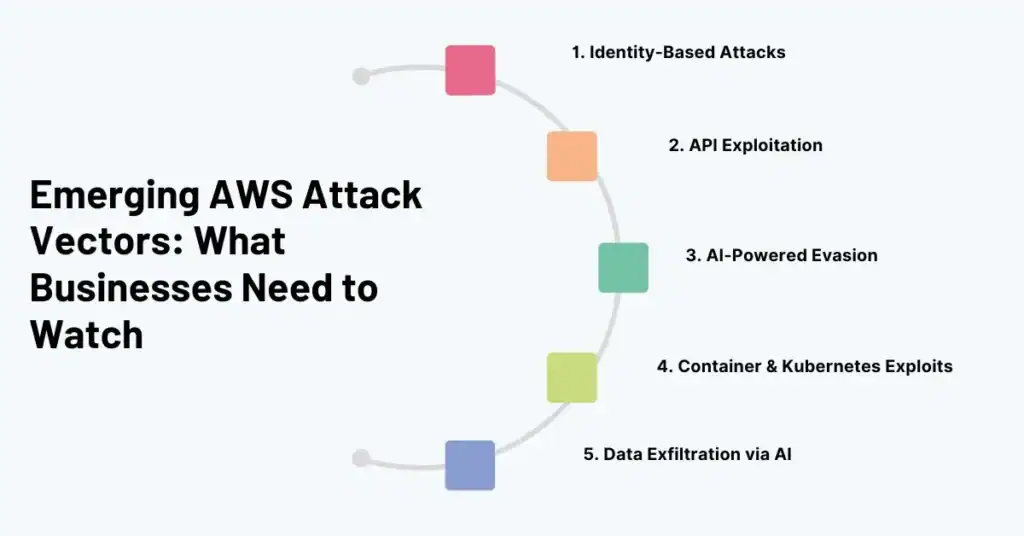
New threats are targeting AWS infrastructure in ways never seen before.Key AWS Vulnerabilities That AI Can Help Defend Against:
1. Identity-Based Attacks
Attackers use stolen credentials and weak IAM policies to escalate privileges.
2. API Exploitation
APIs are now a primary attack surface, with AI-powered tools searching for weak authentication and misconfiguration.
3. AI-Powered Evasion
Malicious actors use AI to bypass AWS GuardDuty, WAF, and security logging by mimicking normal behavior.
4. Container & Kubernetes Exploits
AWS-hosted EKS and Lambda functions are being targeted for supply chain attacks.
5. Data Exfiltration via AI
AI-driven malware can detect and exfiltrate sensitive data from AWS storage while evading security monitoring.
Example: A major tech firm discovered that AI-driven pentesting tools found vulnerabilities that traditional scanners missed.
AI vs. Human Pentesters: Can AI Replace Ethical Hackers?
AI is powerful, but it’s not replacing ethical hackers it’s making them more effective.
| Feature | AI-Powered Pentesting | Human Pen testers |
| Speed | Fast scanning & automation | Slower, manual testing |
| Pattern Recognition | Detects known attack patterns | Finds unknown & complex vulnerabilities |
| Contextual Analysis | Limited business context | Understands business risks |
| Creative Exploits | Cannot perform unique attacks | Thinks outside the box |
| Compliance Reports | Auto-generates compliance reports | Customizes reports for businesses |
Preparing Your Business for AI-Driven Pentesting
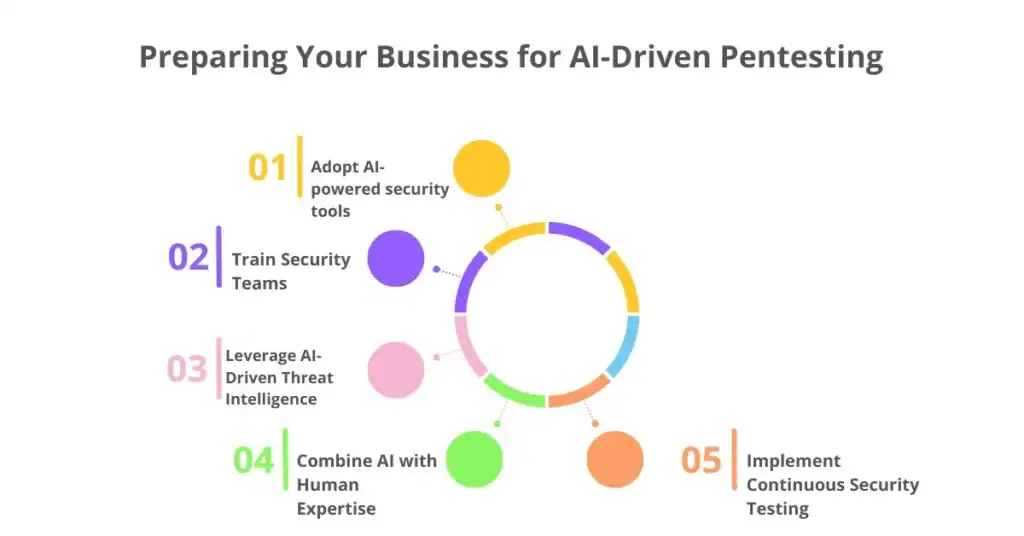
Step 1: Adopt AI-powered security tools
Implement AWS GuardDuty, Darktrace, or Orca Security for proactive monitoring.
Step 2: Train Security Teams
Ensure security analysts understand how to use AI tools effectively.
Step 3: Leverage AI-Driven Threat Intelligence
Monitor real-time AWS attack trends using machine learning-based analytics.
Step 4: Combine AI with Human Expertise
AI handles automation, while ethical hackers conduct manual deep-dive pentesting.
Step 5: Implement Continuous Security Testing
Use AI to test AWS security configurations in real-time.
Conclusion: The Future of AWS Pentesting is Here
Cyber threats are evolving, and businesses can’t rely on old-school security approaches anymore.
- AI & ML-driven pentesting helps detect vulnerabilities faster.
- Automated security tools reduce response time from weeks to minutes.
- Combining AI with expert pentesters creates a powerful security defense.
