

The Role of Active Directory in Network Security and Why Securing It is Essential
In today’s interconnected IT environments, Active Directory (AD) is the backbone of network management for countless organizations. From user authentication to access control, AD plays a pivotal role in maintaining operational efficiency and security. However, its significance also makes it a prime target for cybercriminals. Ensuring its security is not just a technical priority but a strategic necessity for protecting network infrastructure.
Here in this article we are going to discuss about the topic The Role of Active Directory in Network Security and Why Securing It is Essential
Understanding Active Directory: The Heart of Network Management
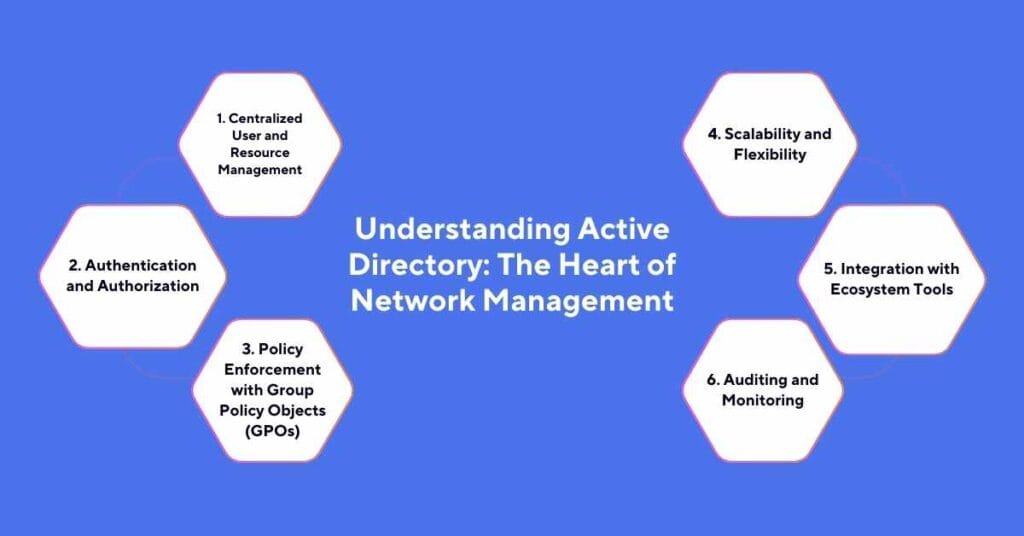
Active Directory, a Microsoft-developed directory service, is a centralized platform for managing users, devices, and resources in a network. Its versatility and robust features make it indispensable for organizations seeking scalable and efficient IT operations. Here’s why AD holds such importance:
1. Centralized User and Resource Management
AD provides a single interface for administrators to manage users, computers, printers, and other network resources. This centralized approach simplifies user provisioning, access control, and resource allocation.
2. Authentication and Authorization
Active Directory authenticates users and authorizes their access to network resources based on predefined permissions. This ensures that only the right individuals can access specific systems, files, or applications.
3. Policy Enforcement with Group Policy Objects (GPOs)
GPOs enable administrators to enforce security settings, application restrictions, and configurations across the entire network. From password policies to screen lock settings, GPOs ensure uniformity and compliance.
4. Scalability and Flexibility
Whether managing a small office or a global enterprise, AD scales seamlessly to meet diverse organizational needs. It supports complex hierarchies, multi-site environments, and trust relationships between domains.
5. Integration with Ecosystem Tools
AD integrates with a wide range of tools and services, including Microsoft’s Exchange and SharePoint, as well as third-party applications. This interoperability makes it the backbone of many IT ecosystems.
6. Auditing and Monitoring
Active Directory logs activities like login attempts, permission changes, and administrative actions. These logs are invaluable for monitoring user behavior, identifying anomalies, and conducting forensic investigations.
Why Securing Active Directory is Critical?
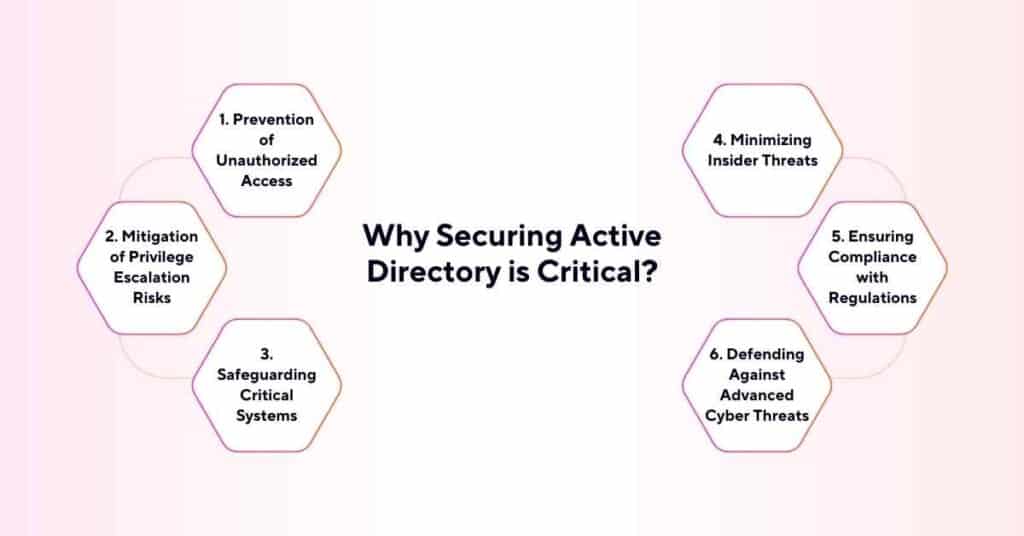
While AD streamlines network management, its compromise can have devastating consequences. A breached AD can grant attackers the keys to an organization’s entire digital kingdom, enabling data theft, operational disruptions, and reputational damage. Below are the reasons why securing AD should be a top priority:
1. Prevention of Unauthorized Access
AD acts as the gatekeeper for network access. If compromised, attackers can infiltrate sensitive systems, access confidential data, and disrupt operations. Securing AD ensures that only authenticated and authorized users gain entry.
2. Mitigation of Privilege Escalation Risks
Attackers often attempt to escalate their privileges once they gain access to a network. A poorly secured AD allows them to move from standard user accounts to administrative privileges, amplifying the damage they can cause.
3. Safeguarding Critical Systems
Many critical systems and applications rely on AD for authentication. A breach can compromise these systems, leading to widespread disruptions and potential financial losses.
4. Minimizing Insider Threats
Not all threats come from external actors. Insider threats, whether malicious or accidental, can exploit AD vulnerabilities. Proper security controls limit the damage insiders can inflict.
5. Ensuring Compliance with Regulations
Many regulatory frameworks, such as GDPR, HIPAA, and ISO 27001, mandate strong access control and auditing mechanisms. Securing AD helps organizations meet these compliance requirements.
6. Defending Against Advanced Cyber Threats
Sophisticated cyberattacks, such as ransomware and lateral movement campaigns, often target AD to gain a foothold in the network. A secure AD significantly reduces the effectiveness of these attacks.
Best Practices for Securing Active Directory

Implementing robust security measures for Active Directory is crucial to protecting your network. Here are some actionable steps:
1. Enforce the Principle of Least Privilege
Grant users and administrators only the permissions necessary to perform their tasks. Regularly review and revoke excessive privileges to minimize potential misuse.
2. Enable Multi-Factor Authentication (MFA)
MFA adds an additional layer of security by requiring users to verify their identity through multiple methods, such as a password and a mobile device.
3. Regularly Audit and Monitor Activities
Conduct frequent audits of AD accounts, permissions, and logs. Use tools to monitor real-time activities for unusual behavior, such as failed login attempts or unauthorized changes.
4. Apply Security Updates Promptly
Outdated software can leave AD vulnerable to known exploits. Ensure all patches and updates are applied as soon as they become available.
5. Implement Network Segmentation
Separate AD servers from other parts of the network and enforce strict communication controls to limit potential attack vectors.
6. Secure Administrative Workstations
Use dedicated, hardened devices for administrative tasks. Avoid conducting administrative operations from standard user machines.
Conclusion
Active Directory is the cornerstone of modern network infrastructure, offering unparalleled capabilities for managing users, resources, and policies. However, its central role also makes it a high-value target for cyberattacks. By securing AD through best practices like enforcing least privilege, enabling MFA, and regularly auditing activities, organizations can significantly reduce risks and enhance their overall network security posture.
In an era where cyber threats are evolving rapidly, protecting Active Directory is not just an IT task but a critical business strategy. Strengthen your defenses today and make AD security a top priority for your organization.
