

Top 10 Cloud Hacking Tools
As cloud computing continues to revolutionize the way we store, process, and manage data, the need for robust security measures has never been more pressing. With the increasing reliance on cloud infrastructure, cyber attackers have shifted their focus towards exploiting vulnerabilities in cloud-based systems.
To combat this, security professionals and researchers have developed a range of cloud hacking tools designed to identify and exploit weaknesses in cloud infrastructure. In this article, we will explore the top 10 cloud hacking tools, their features, and their uses.
List of Top 10 Cloud Hacking Tools
Here is the list of Top 10 Cloud Hacking Tools
1. Nmap
Nmap, or Network Mapper, is a popular open-source tool used for network scanning and discovery. While not exclusively a cloud hacking tool, Nmap can be used to identify open ports and services on cloud-based systems, making it an essential tool for cloud security professionals.
Nmap can be used to perform various types of scans, including TCP SYN scans, UDP scans, and ICMP scans, providing valuable information about the target system’s network configuration.
2. Burp Suite
Burp Suite is a comprehensive toolkit for web application security testing.
While not specifically designed for cloud hacking, Burp Suite can be used to identify vulnerabilities in cloud-based web applications, such as SQL injection and cross-site scripting (XSS). The tool includes a range of features, including a proxy server, a scanner, and an intruder, making it an indispensable tool for cloud security professionals.
3. ZAP (Zed Attack Proxy)
ZAP, or Zed Attack Proxy, is an open-source web application security testing tool.
Developed by the Open Web Application Security Project (OWASP), ZAP is designed to identify vulnerabilities in web applications, including those hosted in the cloud. ZAP includes a range of features, including a proxy server, a scanner, and a fuzzer, making it an essential tool for cloud security professionals.
4. Cloud-Enum
Cloud-Enum is a tool specifically designed for cloud security testing. The tool allows users to enumerate cloud-based resources, such as Amazon Web Services (AWS) and Microsoft Azure, and identify potential vulnerabilities.
Cloud-Enum includes a range of features, including a resource scanner, a security group analyzer, and a vulnerability scanner, making it an invaluable tool for cloud security professionals.
5. Prowler
Prowler is a comprehensive tool for AWS security testing. The tool allows users to identify potential vulnerabilities in AWS configurations, including security groups, IAM roles, and S3 buckets.
Prowler includes a range of features, including a configuration scanner, a security group analyzer, and a compliance scanner, making it an essential tool for AWS security professionals.
6. Scout2
Scout2 is a security tool designed to identify potential vulnerabilities in AWS configurations. The tool allows users to scan AWS resources, such as security groups, IAM roles, and S3 buckets, and identify potential security risks.
Scout2 includes a range of features, including a configuration scanner, a security group analyzer, and a vulnerability scanner, making it an indispensable tool for AWS security professionals.
7. CloudTracker
CloudTracker is a tool designed to track and monitor cloud-based resources. The tool allows users to identify potential security risks, such as unauthorized access to cloud resources and provides real-time alerts and notifications.
CloudTracker includes a range of features, including a resource scanner, a security group analyzer, and a threat intelligence feed, making it an essential tool for cloud security professionals.
8. Core Impact
Core Impact is a comprehensive tool for penetration testing and vulnerability assessment. The tool allows users to simulate real-world attacks on cloud-based systems and identify potential vulnerabilities.
Core Impact includes a range of features, including a vulnerability scanner, a penetration testing framework, and a reporting engine, making it an indispensable tool for cloud security professionals.
9. MetaSploit
MetaSploit is a popular open-source tool for penetration testing and vulnerability assessment. The tool allows users to simulate real-world attacks on cloud-based systems and identify potential vulnerabilities.
MetaSploit includes a range of features, including a vulnerability scanner, a penetration testing framework, and a reporting engine, making it an essential tool for cloud security professionals.
10. Pacu
Pacu is a comprehensive tool for AWS security testing. The tool allows users to identify potential vulnerabilities in AWS configurations, including security groups, IAM roles, and S3 buckets.
Pacu includes a range of features, including a configuration scanner, a security group analyzer, and a vulnerability scanner, making it an indispensable tool for AWS security professionals.
Best Practices for Using Cloud Hacking Tools
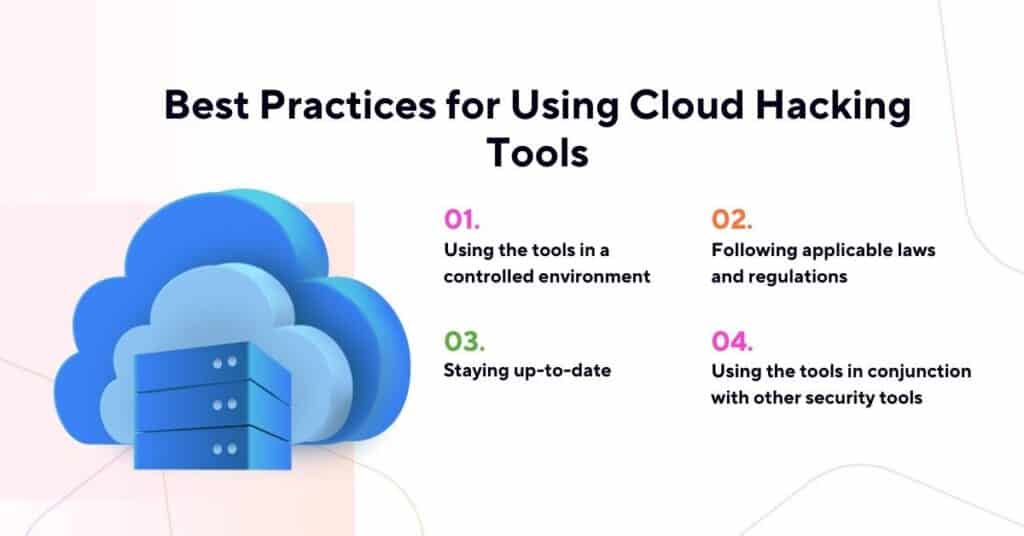
To get the most out of cloud hacking tools, it is essential to follow best practices, including:
1. Using the tools in a controlled environment
Before using cloud hacking tools in a production environment, test them in a controlled laboratory setting to ensure you understand their features and functionalities.
2. Following applicable laws and regulations
Ensure that you have the necessary permissions and follow applicable laws and regulations when using cloud hacking tools.
3. Staying up-to-date
Stay up-to-date with the latest features and functionalities of cloud hacking tools, as well as any security patches or updates.
4. Using the tools in conjunction with other security tools
Cloud hacking tools can be used in conjunction with other security tools, such as intrusion detection systems and firewalls, to provide comprehensive security coverage.
Summary: Top 10 Cloud Hacking Tools
- Nmap
- Burp Suite
- ZAP (Zed Attack Proxy)
- Cloud-Enum
- Prowler
- Scout2
- CloudTracker
- Core Impact
- MetaSploit
- Pacu
Conclusion:
The top 10 cloud hacking tools listed in this article provide a range of features and functionalities for identifying and exploiting vulnerabilities in cloud-based systems. While these tools can be used for malicious purposes, they are also essential for cloud security professionals who need to identify and remediate potential security risks.
By using these tools, security professionals can ensure the security and integrity of cloud-based systems and protect against cyber threats. As the cloud security landscape continues to evolve, it is essential to stay up-to-date with the latest cloud hacking tools and technologies and to continuously monitor and evaluate the security of cloud-based systems.
FAQs
1. What are cloud hacking tools, and what are they used for?
Ans: Cloud hacking tools are software programs designed to identify and exploit vulnerabilities in cloud-based systems, allowing users to test the security of cloud infrastructure and identify potential weaknesses.
2. What is the difference between cloud hacking tools and penetration testing tools?
Ans: Cloud hacking tools are specifically designed to test the security of cloud-based systems, while penetration testing tools are more general-purpose and can be used to test the security of a wide range of systems, including cloud-based systems.
3. Are cloud hacking tools only used for malicious purposes?
Ans: No, cloud hacking tools are not only used for malicious purposes. They are also used by security professionals to identify and remediate vulnerabilities in cloud-based systems, helping to improve the overall security of cloud infrastructure.
4. What are some common features of cloud hacking tools?
Ans: Common features of cloud hacking tools include vulnerability scanning, penetration testing, and security risk identification, as well as tools for exploiting vulnerabilities and gaining unauthorized access to cloud-based systems.
5. How do I choose the right cloud-hacking tool for my needs?
Ans: To choose the right cloud hacking tool, consider the specific features and functionalities you need, as well as the type of cloud-based system you are testing. Research and compare different tools to find the one that best fits your needs and budget.
6. Are cloud hacking tools difficult to use, or do they require specialized knowledge?
Ans: Some cloud hacking tools can be complex and require specialized knowledge to use effectively, while others are more user-friendly and can be used by those with limited experience. It’s essential to research and understand the tool’s requirements and features before using it.
7. Can cloud hacking tools be used to test the security of any cloud-based system?
Ans: Most cloud hacking tools are designed to test the security of specific cloud-based systems, such as Amazon Web Services (AWS) or Microsoft Azure. However, some tools may be more versatile and can be used to test a wider range of cloud-based systems.
8. How often should I use cloud hacking tools to test my cloud-based system’s security?
Ans: It’s recommended to use cloud hacking tools regularly to test the security of your cloud-based system, ideally as part of a comprehensive security testing and evaluation program. This can help identify vulnerabilities and weaknesses before they can be exploited by malicious actors.
9. Can cloud hacking tools be used in conjunction with other security tools and technologies?
Ans: Yes, cloud hacking tools can be used in conjunction with other security tools and technologies, such as intrusion detection systems and firewalls, to provide comprehensive security coverage and help identify and remediate vulnerabilities.
10. Are cloud hacking tools subject to any laws or regulations, and what are the potential consequences of using them improperly?
Ans: Yes, cloud hacking tools are subject to various laws and regulations, including those related to computer security and data protection. Using cloud hacking tools improperly or without authorization can result in serious consequences, including fines, penalties, and even criminal prosecution. It’s essential to understand and comply with all applicable laws and regulations when using cloud hacking tools.
