

Top 10 REST API Security Service Providers in Canada
REST APIs is paramount for organizations across sectors. With the increasing reliance on APIs for connectivity between applications and services, the threats posed by malicious attacks have also grown. Canada, known for its robust tech ecosystem, is home to several leading REST API security service providers dedicated to offering reliable protection against these threats.
This article explores the top 10 REST API security service providers in Canada, discussing their offerings, specialties, and significance in the industry.
List of Top 10 REST API Security Service Providers in Canada
1. CyberSapiens: Best REST API Security Service Provider
CyberSapiens is the best and leading REST API Security Service Provider. Their REST API Security Services services are designed to safeguard your Application against potential threats and vulnerabilities caused by affected API’s
How do CyberSapiens Conduct REST API?
1. Scope Definition
Define the scope of the assessment, including which APIs will be tested, the testing environment, and specific objectives.
2. Reconnaissance
Gather information about the APIs, such as endpoints, protocols, and communication methods.
3. Threat Modeling
Identify potential threats and vulnerabilities that could affect the APIs and their users.
4. Vulnerability Scanning
Utilize automated tools to scan for common vulnerabilities, including injection, authentication, and authorization issues.
5. Manual Testing
Perform manual testing to identify vulnerabilities that automated tools may miss, such as logical flaws and business logic issues.
6. Authentication Testing
Evaluate the strength of authentication mechanisms in place to prevent unauthorized access.
7. Authorization Testing
Assess the effectiveness of authorization controls, ensuring that users can access only the appropriate data and functions.
8. Data Encryption Testing
Verify that data transmitted and stored by the APIs is properly encrypted to protect sensitive information.
9. Session Management Testing
Examine how sessions are managed to prevent session hijacking and fixation.
10. Input Validation Testing
Check for input validation flaws that could lead to injection attacks, such as SQL injection or Cross-Site Scripting (XSS).
2. Trustwave
Trustwave is a global leader in cybersecurity solutions with a strong presence in Canada. Their API security services encompass threat detection, vulnerability management, and compliance support. Trustwave’s unique approach leverages their extensive experience in managing security incidents to provide proactive protection for REST APIs.
3. Cloudflare
Cloudflare is well-known for its web application firewall (WAF) and content delivery network (CDN), but its API security features deserve equal attention. Their API security solutions provide robust protection against common threats like DDoS attacks, bot attacks, and credential stuffing.
4. Salt Security
Salt Security specializes in APIs and offers a unique approach to securing them through API-specific threat detection and response. Their platform utilizes machine learning to understand application behaviour and identify anomalies, providing proactive security measures.
5. Veracode
Veracode focuses on application security, and their API security solutions are tailored for developers and organizations needing to secure their code effectively. Their platform offers various testing services including dynamic application security testing (DAST) that thoroughly examine APIs for vulnerabilities.
6. Fortinet
Fortinet offers a wide range of cybersecurity solutions, and its FortiWeb product line includes robust API security features. FortiWeb provides a web application firewall specifically designed to protect APIs from attacks such as injection attacks, DDoS, and data breaches.
7. Protection Level Inc.
Protection Level Inc. specializes in cybersecurity services for small and medium businesses (SMBs) in Canada. They offer tailored API security solutions that are both cost-effective and highly secure, ensuring that even smaller organizations can protect their assets against API-related threats.
8. Netskope
Netskope is recognized for its cloud security solutions, and its API security features are a key component of its offering. Focused on securing enterprise applications and APIs, Netskope utilizes its patented cloud traffic classification technology to provide comprehensive visibility and control.
9. Data Theorem Inc.
Data Theorem specializes in API security and offers an automated analysis tool for REST APIs. Their platform assists organizations in identifying vulnerabilities and misconfigurations throughout the API lifecycle, from development to production.
10. Snyk
Snyk specializes in DevSecOps and integrates seamlessly into development workflows to provide security for APIs among other technologies. Their platform offers tools for developers to identify vulnerabilities in real time as they code.
Evaluating the Landscape: Key Considerations for API Security
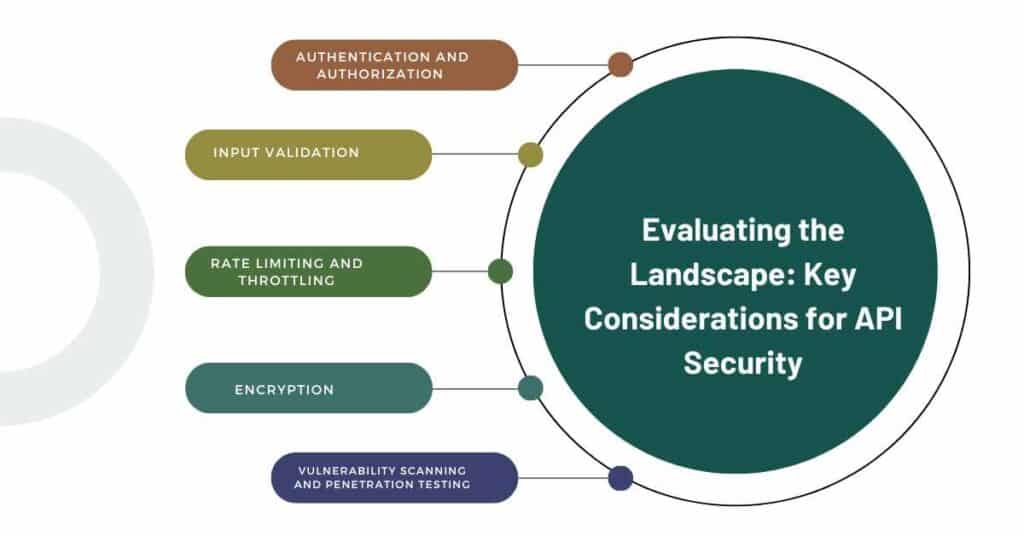
Before diving into the specific providers, it’s important to understand the key considerations for effective REST API security:
1. Authentication and Authorization
Ensuring only authorized users and applications can access sensitive data and functionalities. Robust authentication mechanisms (e.g., OAuth 2.0, JWT) and fine-grained authorization controls are crucial.
2. Input Validation
APIs must meticulously validate all incoming data to prevent injection attacks (e.g., SQL injection, command injection), cross-site scripting (XSS), and other forms of malicious input.
3. Rate Limiting and Throttling
Protecting APIs from denial-of-service (DoS) attacks by limiting the number of requests a client can make within a given timeframe.
4. Encryption
Protecting data in transit and at rest using strong encryption algorithms (e.g., TLS/SSL, AES).
5. Vulnerability Scanning and Penetration Testing
Regularly assessing APIs for security flaws and weaknesses through automated scanning and manual penetration testing.
Summary: Top 10 REST API Security Service Providers in Canada
- CyberSapiens
- Trustwave
- Cloudflare
- Salt Security
- Veracode
- Fortinet
- Protection Level Inc.
- Netskope
- Data Theorem Inc.
- Snyk
Conclusion:
Securing REST APIs is a complex and ongoing process that requires a multifaceted approach. By partnering with a reputable API security service provider in Canada, organizations can gain access to the expertise, tools, and resources they need to protect their digital assets and maintain the trust of their customers.
The providers highlighted in this article represent the leading edge of API security in Canada, offering a range of solutions to meet the diverse needs of organizations across industries. As the threat landscape continues to evolve, it is essential to stay informed and proactive in order to stay one step ahead of the attackers.
Choosing the right partner is a critical step in fortifying the digital frontier and ensuring the continued success of your business.
FAQs
1. What exactly is API security, and why is it so critical in today’s digital environment?
API security refers to the protective measures implemented to safeguard Application Programming Interfaces (APIs) from unauthorized access, misuse, and attacks. It’s critical because APIs are the connective tissue of modern applications, handling sensitive data and enabling critical functionalities. A compromised API can lead to data breaches, service disruptions, and significant financial and reputational damage.
2. What are some of the most common API security vulnerabilities that businesses should be aware of?
Common vulnerabilities include injection flaws (like SQL injection), broken authentication and authorization, excessive data exposure, lack of resource and rate limiting, broken object level authorization, security misconfiguration, and insufficient logging and monitoring. The OWASP API Security Top 10 list is an excellent resource for understanding the most prevalent threats.
3. How does API security differ from traditional web application security?
While there’s some overlap, API security focuses on the unique characteristics of APIs, such as their machine-to-machine communication patterns and often stateless nature. Traditional web application security often centers around user interfaces and browser-based interactions. API security requires specialized tools and techniques to address vulnerabilities specific to API architectures.
4. What is an API gateway, and how does it enhance API security?
An API gateway acts as a central point of control for all API traffic. It provides security features like authentication, authorization, rate limiting, and threat detection. By intercepting and managing API requests, a gateway can prevent malicious traffic from reaching backend systems and enforce security policies consistently.
5. How can I implement strong authentication and authorization for my APIs?
Use industry-standard protocols like OAuth 2.0 and JSON Web Tokens (JWT) for authentication and authorization. Implement multi-factor authentication (MFA) where appropriate. Ensure that access control is granular and follows the principle of least privilege, granting users only the minimum level of access they need.
