
Top 10 SOC 2 Compliance Mistakes That Delay Your Audit
With the increasing trend towards cloud computing and the utilization of various SaaS applications to store sensitive business information, security and compliance have become major business imperatives for many organizations. The most widely accepted method to prove the effectiveness of security practices is to achieve SOC 2 compliance, which is a framework established by the American Institute of Certified Public Accountants. The achievement of SOC 2 compliance provides organizations with the opportunity to prove to their clients and other relevant stakeholders that they have implemented effective security measures to protect their sensitive information.
However, many organizations underestimate the complexity involved in the preparation process to achieve SOC 2 compliance, which may be time-consuming and challenging if not done properly. While the SOC 2 compliance framework provides organizations with the opportunity to prove the effectiveness of their security practices, the process may be time-consuming and challenging if not done properly, which may delay business opportunities, especially for SaaS, cloud, and technology organizations that highly rely on the SOC 2 report to win enterprise deals with their clients. Understanding the various mistakes that delay the SOC 2 compliance process can be helpful to organizations to prepare adequately and avoid costly setbacks.
What Is SOC 2 Compliance?
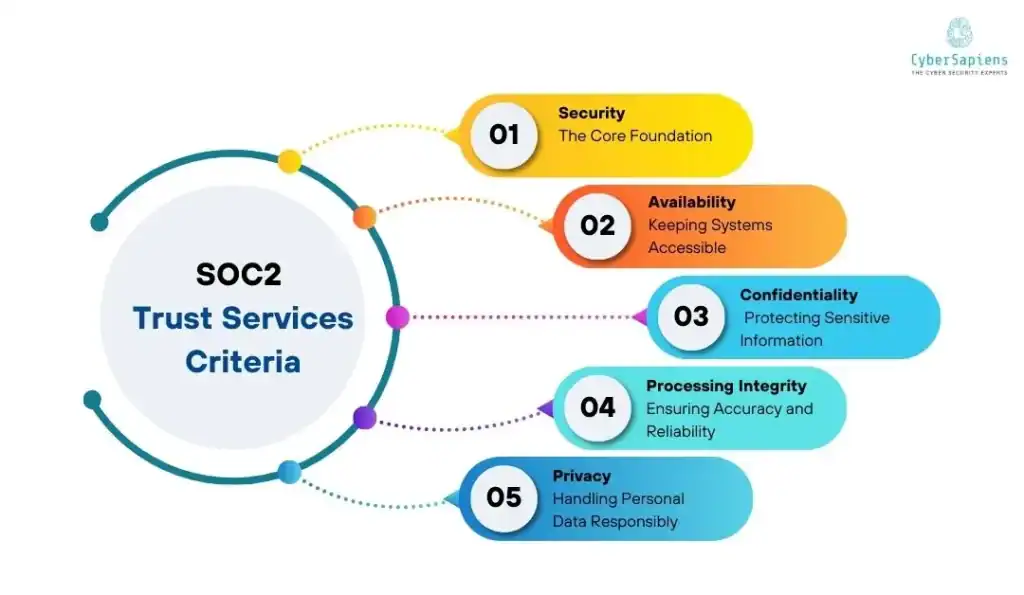
SOC 2 compliance is an established security standard used to assess the way organizations handle customer data. It is based on the Trust Services Criteria, which was established by the American Institute of Certified Public Accountants. SOC 2 compliance is used by SaaS organizations, cloud organizations, and technology organizations.
The main objective of SOC 2 compliance is to ensure that organizations have adequate internal controls, security measures, and monitoring processes in place to ensure data security and system reliability.
What Are the Five Criteria Used in SOC 2 Compliance?
SOC 2 compliance assesses organizations on five trust services criteria:
1. Security: This criterion ensures data and system security from unauthorized users, cyber attacks, and data breaches.
2. Availability: This criterion ensures data system reliability and ensures data is accessible as promised.
3. Processing Integrity: It ensures that the system processing is comprehensive, precise, prompt, and authorized.
4. Confidentiality: It safeguards sensitive business data from unauthorized disclosure.
5. Privacy: It ensures that the collection, use, storage, and sharing of personal data are done with due consideration.
For an organization to successfully go through the SOC 2 audit process, it must prove that it meets the necessary criteria for security controls and operations. The organization must have adequate security measures to safeguard customer data.
For many businesses, obtaining SOC 2 compliance is not just about compliance; it is also about gaining the trust of customers and stakeholders. Gaining SOC 2 compliance proves that the organization adheres to the security standards set by the industry and values the security of the data it holds.
Top 10 SOC 2 Compliance Mistakes That Delay Your Audit
Preparing for SOC 2 compliance involves preparation, documentation, and implementation of security controls. However, there are instances where delays are experienced during the audit process due to various errors. Understanding these errors is essential for streamlining the audit process and ensuring timely compliance.
1. Delaying SOC 2 Preparation Until the Last Minute
Many organizations initiate SOC 2 preparation too late. They often wait for a customer request for a SOC 2 report before they start preparing for SOC 2 compliance.
How to avoid it:
It is essential for every organization to initiate SOC 2 preparation at least 3-6 months prior to the audit process. This involves conducting a SOC 2 readiness assessment and implementing SOC 2 controls.
2. Incomplete or Missing Security Policies
SOC 2 compliance involves ensuring that an organization maintains security policies for key security domains. These domains include:
- Access Control
- Incident Response
- Risk Management
- Data Protection
- Change Management
When these policies are missing, it is possible for auditors to delay the evaluation process until proper documentation is established.
Best Practice:
It is essential for every organization to ensure it maintains structured and updated security policies for SOC 2 compliance.
3. Lack of Evidence of Implemented Controls
SOC 2 audits require a great deal of evidence that security controls are implemented and functioning. It is not enough to say that a security control is in place.
Auditors will usually ask to see things such as:
- Access logs to computer systems
- Security monitoring logs
- Incident response logs
- Employee training records
- Change management approvals
If the auditor does not see this information, the audit process will be stopped.
4. Inadequate Access Control Management
Inadequate access control management is perhaps the most common SOC 2 finding.
Inadequate access control management can include things such as:
- Too many permissions assigned to users.
- Shared accounts.
- Inadequate use of multi-factor authentication.
- Inadequate access control audits.
5. Weak Vendor Risk Management
Most organizations use third-party vendors for cloud infrastructure services, payment processing, or software development tools. But organizations that do not assess the security posture of their vendors may be at risk for compliance risks.
To mitigate risks, organizations can:
- Assess vendor security controls
- Document vendor risk management
- Monitor vendor compliance
6. Misunderstanding SOC 2 Trust Services Criteria
There are five Trust Services Criteria defined by the American Institute of Certified Public Accountants. SOC 2 addresses the following criteria:
- Security
- Availability
- Processing Integrity
- Confidentiality
- Privacy
Most organizations struggle with the idea that they need to meet all five criteria. In most cases, SOC 2 audits only require organizations to meet the Security criteria (Common Criteria), with additional criteria being required on a per-service basis.
7. Inconsistent Security Monitoring
Monitoring is critical in order to sustain SOC 2 compliance. For instance, organizations without security monitoring systems may not be in a position to prove that security controls are being implemented consistently.
Monitoring weaknesses may include:
- Lack of a centralized logging system
- Limited security alerts
- Lack of detection mechanisms for security incidents
Automated security monitoring systems can be very instrumental in sustaining SOC 2 compliance.
8. Poor Change Management Practices
SOC 2 compliance demands that organizations have formal processes for system changes.
Delays in audits may be caused by:
- Lack of documentation for system changes.
- Lack of testing processes.
- Lack of clear system deployment approvals.
Having a formal change management process ensures that system changes are properly documented.
9. Lack of Employee Security Awareness
Employees are essential in ensuring the security of an organization. However, this can only be ensured through proper training. Lack of training can cause employees to commit actions that can compromise the security of an organization.
SOC 2 requires organizations to provide training on security and employee awareness. It also requires organizations to have documentation showing that employees are aware of the organization’s security policies and procedures. Training programs can be very useful in reducing risks and ensuring SOC 2 compliance.
10. Attempting SOC 2 Compliance Without Expert Guidance
Most organizations think that SOC 2 compliance is an easy task. However, this is not true. It requires proper guidance, which can only be found through the services of experienced professionals.
This can cause organizations to:
- Implement controls incorrectly.
- Not having proper documentation.
- Causes delays in the audit process.
How CyberSapiens Helps Companies Achieve SOC 2 Compliance Faster?
Preparing for SOC 2 compliance can be a very complicated process for growing SaaS, cloud-based organizations, and technology companies that need to address security controls, documentation, and continuous monitoring at the same time. Without proper guidance and tools, organizations can experience delays in the readiness assessment process.
CyberSapiens helps organizations prepare for SOC 2 compliance in the following ways.
- CyberSapiens helps organizations prepare for SOC 2 compliance by allowing organizations to conduct a thorough readiness assessment that will measure the security practices of organizations with SOC 2 compliance.
- The platform also makes it easier for organizations to implement security controls and evidence collection, which are two of the most labor-intensive aspects of preparing for a SOC 2 audit. This is because automated monitoring and documentation enable organizations to easily track compliance activities and evidence needed for auditors.
- Another advantage of CyberSapiens is that it enables organizations to develop robust risk management and governance processes, ensuring that security policies and processes are aligned with SOC 2 Trust Services Criteria.
- With its automated compliance and expert guidance, CyberSapiens assists organizations in achieving SOC 2 compliance in effecient and structured way.
- By having a proper plan and tool in place, organizations are able to turn what is often a daunting process into a smooth and efficient experience.
- CyberSapiens is able to assist organizations in achieving SOC 2 compliance in a timely fashion while also improving their overall security posture and building customer and partner trust.
Clients Served by CyberSapiens




Moving Towards a Successful SOC 2 Compliance
SOC 2 compliance is an essential process for organizations to show that they have good security practices in place. This helps build trust with various stakeholders. Despite this, organizations have to go through unnecessary delays in the SOC 2 audit process because of various mistakes. In most cases, organizations have not properly prepared for the audit process. In addition to this, there have been instances of missing documentation, poor access control, and monitoring practices.
Understanding the various challenges associated with SOC 2 compliance can help organizations move towards a successful audit process. For instance, organizations need to have security policies in place. In addition to this, there is a need to have proper documentation and monitoring.
Most importantly, by taking a strategic and structured approach to compliance, organizations can avoid costly delays and actually improve their overall security position. With the right preparation and expertise, organizations can complete SOC 2 audits in a timely manner and prove their commitment to safeguarding sensitive information.
Working with compliance professionals like CyberSapiens can make the process even easier for organizations. Not only can they speed up the audit process, but they can also focus on growing their business without compromising security and compliance.
FAQS
1. Why do SOC 2 audits get delayed?
Answer: SOC 2 audits are often delayed due to issues such as missing documentation, incomplete security controls, lack of evidence for implemented controls, poor access management, and insufficient monitoring practices.
2. How long does it take to prepare for a SOC 2 audit?
Answer: Preparation typically takes 3 to 6 months, depending on the organization’s security maturity, existing policies, and operational processes. SOC 2 Type 2 audits may require a longer observation period to demonstrate that controls operate effectively over time.
3. Do startups need SOC 2 compliance?
Answer: Yes. Many enterprise customers require SaaS and technology vendors to provide SOC 2 reports before entering into business agreements. Achieving SOC 2 compliance can help startups build credibility and win larger clients.
4. What evidence is required for a SOC 2 audit?
Answer: Auditors typically request evidence such as system access logs, security monitoring reports, policy documents, incident response records, change management documentation, and employee security training records.
