

Understanding and Mitigating Excessive Data Exposure in APIs
Introduction
APIs facilitate seamless data exchange between applications, but improper implementation can lead to excessive data exposure. This occurs when APIs return more information than necessary, increasing the risk of data breaches and unauthorized access. Attackers can exploit such vulnerabilities to extract sensitive data, putting businesses at risk of financial losses and compliance violations.
This blog explores the Understanding and Mitigating Excessive Data Exposure in APIs and causes of excessive data exposure, real-world risks, and strategies to mitigate this vulnerability.
What is Excessive Data Exposure?
Excessive data exposure occurs when an API unintentionally discloses more data than required. Instead of filtering sensitive details on the server side, APIs often expose full data objects, relying on the client to handle filtering. This approach increases the risk of data leaks, especially if API responses are intercepted or manipulated.
Common Causes of Excessive Data Exposure
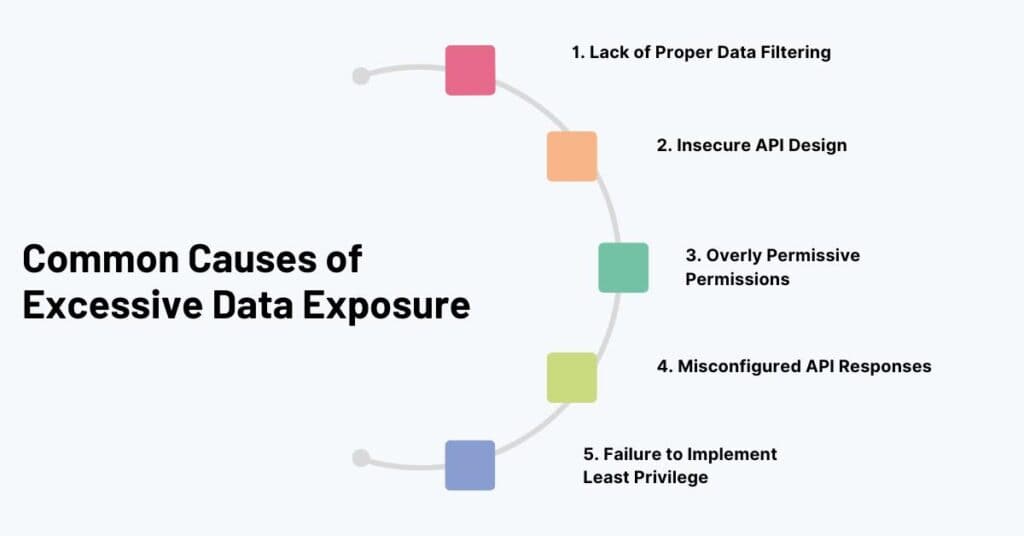
So, why does this happen? Here are some of the most common factors:
1. Lack of Proper Data Filtering
APIs often return entire database records instead of just the specific fields needed. It’s like giving someone access to your entire photo album when they only asked for one picture.
2. Insecure API Design
Sometimes, developers unintentionally expose sensitive fields without realizing the risks. This can happen when APIs are designed without security as a priority.
3. Overly Permissive Permissions
APIs that don’t enforce strict access controls can end up giving users more data than they should have. Think of it as handing over the keys to the entire building when someone only needed access to one room.
4. Misconfigured API Responses
Debugging modes, verbose error messages, or misconfigured responses can accidentally expose hidden details. It’s like leaving your diary open on the kitchen table.
5. Failure to Implement Least Privilege
When APIs don’t follow the principle of least privilege, users end up with unnecessary access to confidential information. It’s like giving everyone in the office access to the CEO’s email.
Real-World Examples of Excessive Data Exposure
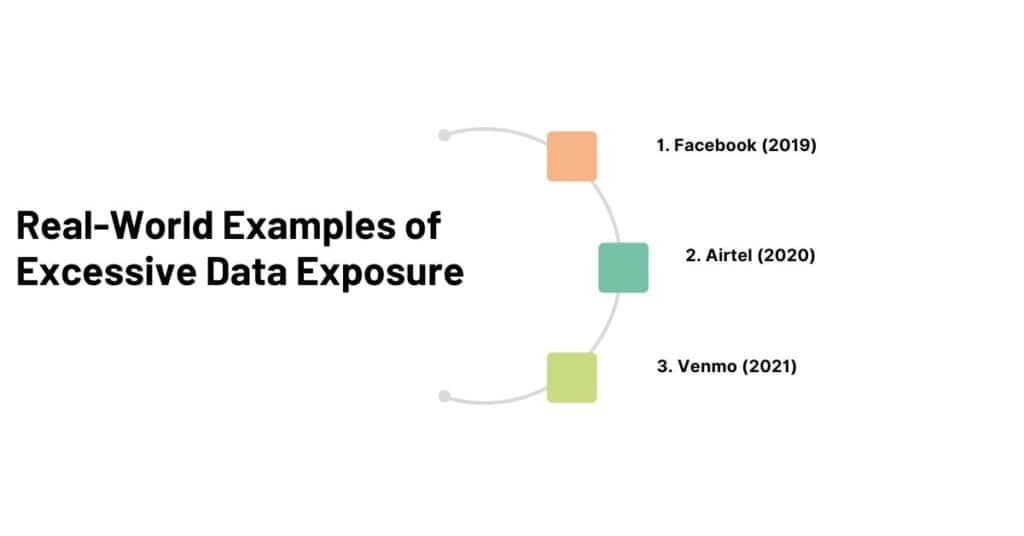
1. Facebook (2019)
In 2019, Facebook faced a significant data exposure incident when over 540 million user records were left exposed on Amazon cloud servers. The data included sensitive information such as comments, reactions, and account details. The root causes? Misconfigured APIs that stored data in publicly accessible storage without proper access controls.
2. Airtel (2020)
In 2020, Airtel, one of India’s largest telecom providers, experienced a data exposure incident due to a misconfigured API. Attackers were able to retrieve personal details, including names, emails, and addresses, simply by modifying mobile numbers in API requests.
3. Venmo (2021)
Venmo, a popular payment app, made headlines in 2021 when its public API exposed millions of user transactions. The API allowed unauthorized users to collect transaction data, including payment amounts, timestamps, and user comments, enabling them to profile users and track their spending habits.
Key Takeaways from These Incidents
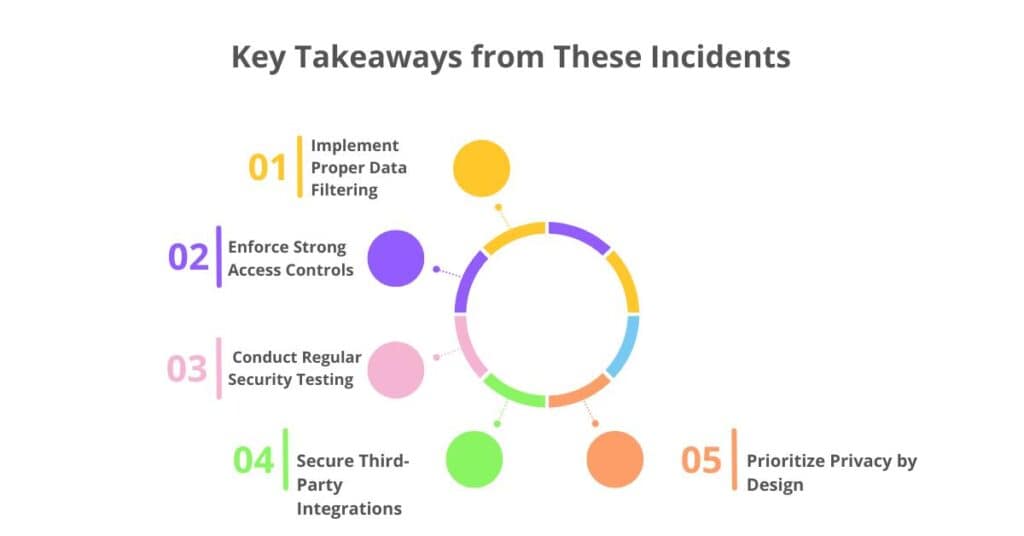
These real-world examples highlight the importance of securing APIs to prevent excessive data exposure. Here are some essential takeaways:
1 .Implement Proper Data Filtering
Always return only the data that’s needed, and filter out sensitive information on the server side.
2. Enforce Strong Access Controls
Use authentication and authorization mechanisms to restrict access to sensitive data.
3. Conduct Regular Security Testing
Perform vulnerability assessments and penetration testing to detect and address security flaws.
4. Secure Third-Party Integrations
Ensure that third-party services and cloud storage are properly configured and secured.
5. Prioritize Privacy by Design
Build APIs with privacy and security in mind from the ground up.
Conclusion
Excessive data exposure remains a critical security risk in APIs. By implementing strict data filtering, enforcing access controls, securing endpoints, and conducting regular security assessments, businesses can prevent unauthorized data leaks and enhance API security.
CyberSapiens specializes in API security testing and vulnerability assessments. Secure your APIs today to prevent data exposure risks.
Contact Us
Website: https://cybersapiens.co
Email: [email protected]
Phone: +91 6364011010 | 1300 507 668
