

What is a common security issue in thick client applications?
In the world of software development, client-server architectures can be categorized primarily into two types: thin clients and thick clients. Thick client applications, also known as rich clients or fat clients, are designed to perform the bulk of data processing locally on the user’s machine, rather than relying primarily on server-side processing.
This design offers several advantages, including improved performance and offline capabilities. However, it also introduces unique security challenges that are often overlooked or underestimated. One of the most common and critical security issues in thick client applications is client-side data manipulation and unauthorized access due to insufficient protection of business logic and sensitive data.
This article explores this security vulnerability in-depth, explaining why it occurs, its implications, and how developers and organizations can mitigate the risks associated with it.
Understanding Thick Client Applications
Before diving into the security issues, it is important to understand what thick client applications are and how they function. Unlike thin clients, which essentially act as interfaces consuming services from the server (like web browsers), thick clients handle much of the application logic, data storage, and processing locally on the client machine. Examples include desktop applications, certain mobile apps, and sophisticated software like Microsoft Outlook or Photoshop.
The thick client model can lead to enhanced user experiences and efficiency, especially in scenarios where network connectivity is intermittent or where rapid processing is essential. However, with this local processing power comes increased responsibility for securing the application at the client level.
The Common Security Issue: Client-Side Data Manipulation and Business Logic Exposure
Client-side data manipulation occurs when an attacker modifies data or logic within the application running on their own machine to change application behavior or gain unauthorized privileges. Since thick client applications often embed business logic—rules that govern data operations, validation, and authorization—on the client side, this can be exploited if not properly secured.
For instance, in a financial application, business logic determining transaction limits might reside partially on the client. If an attacker reverse-engineers the application or tampers with its code, they can manipulate transaction limits or bypass checks, potentially leading to fraudulent activity.
Why Is This a Threat?
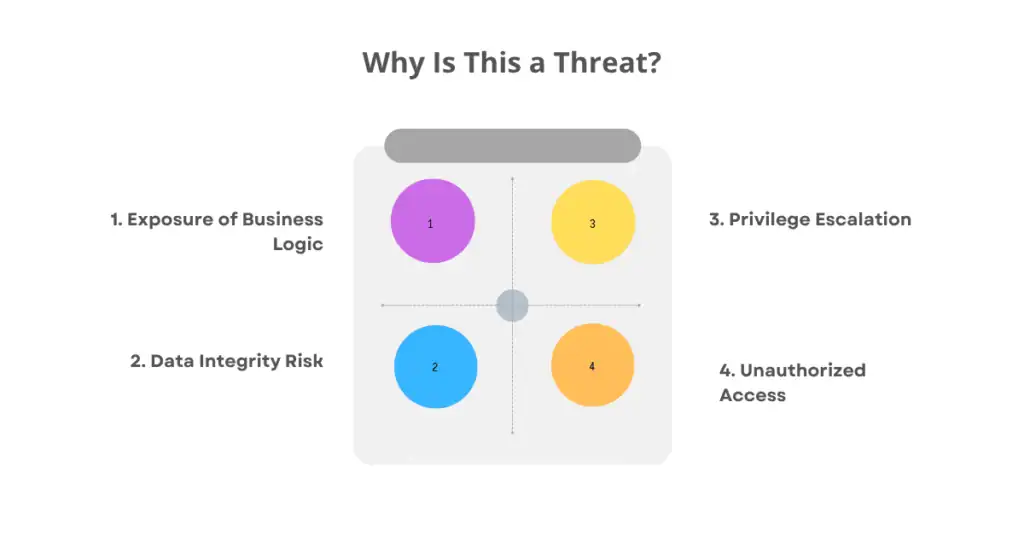
1. Exposure of Business Logic
Thick clients often contain business rules embedded in their code or configuration files, which can be extracted using reverse engineering or debugging tools. Once attackers understand these rules, they can manipulate inputs or tweak the logic to bypass controls.
2. Data Integrity Risk
Since the application processes and stores sensitive data locally, tampering with this data before it is sent to a server may lead to unauthorized transactions or corrupted records.
3. Privilege Escalation
Attackers might modify client-side code or intercept communication to escalate privileges or impersonate other users.
4. Unauthorized Access
Applications may rely solely on client-side checks for authentication or authorization, which can be bypassed or manipulated.
Common Scenarios Illustrating Client-Side Manipulation
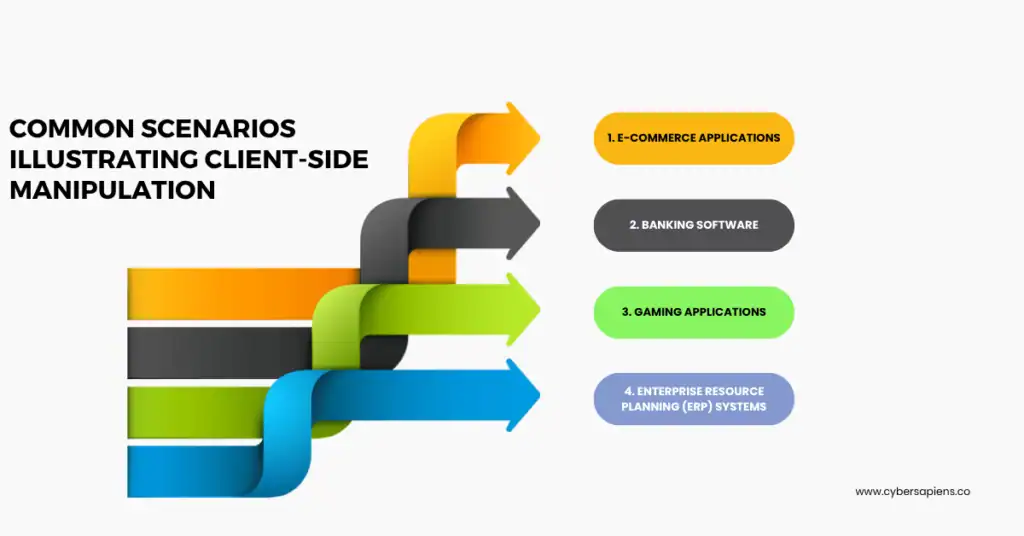
1. E-commerce Applications
In a thick client-based shopping application, the price calculation or discount rules may be embedded within the client. An attacker could intercept or modify these calculations to pay less than the actual price.
2. Banking Software
If transaction limits or validation rules reside on the thick client, an attacker could manipulate the client application to transfer amounts exceeding authorized limits.
3. Gaming Applications
Online or offline games often suffer from client-side cheats where gamers modify the client code to gain unfair advantages like unlimited lives or resources.
4. Enterprise Resource Planning (ERP) Systems
Certain ERP tools that run heavy client logic could leak business rules or financial data, enabling malicious insiders or hackers to modify transactions
Mitigation Strategies for Protecting Thick Client Applications
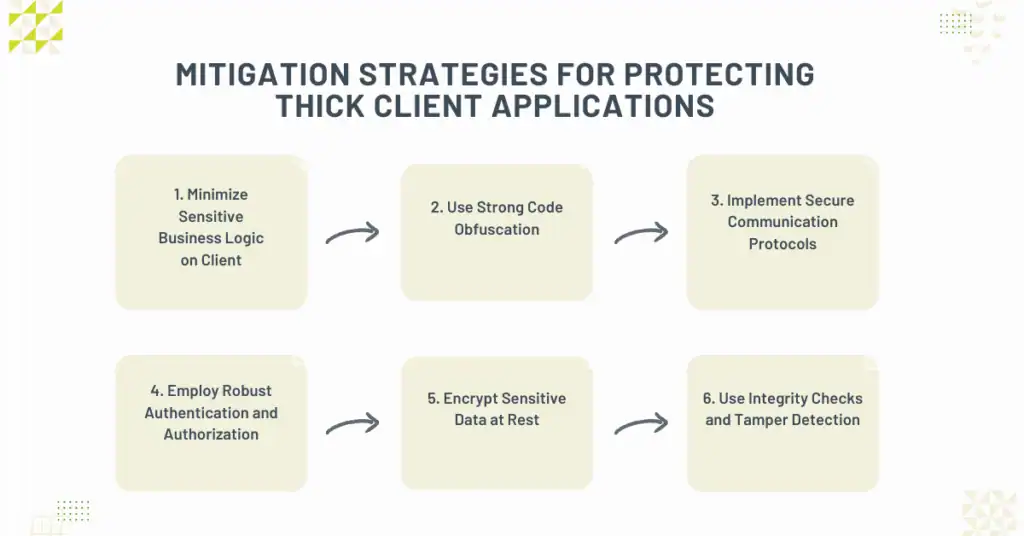
Given that client-side manipulation is a significant security risk, organizations developing thick client applications should adopt a multi-layered approach to mitigate these vulnerabilities.
1. Minimize Sensitive Business Logic on Client
Whenever possible, critical business logic and validation should occur on the server side, where the environment is more secure and controlled. The client should primarily serve as a user interface or a lightweight processor.
2. Use Strong Code Obfuscation
Obfuscating the client application code raises the difficulty for attackers trying to reverse engineer the application. Techniques include renaming variables to meaningless characters, code encryption, and control flow obfuscation.
3. Implement Secure Communication Protocols
All data transmitted between client and server should use strong encryption methods like TLS/SSL to prevent interception and tampering by third parties.
4. Employ Robust Authentication and Authorization
Do not rely exclusively on client-side authentication. Implement server-side checks to verify user credentials and privileges for every sensitive operation.
5. Encrypt Sensitive Data at Rest
If sensitive information or configuration data must be stored locally, encrypt it using strong encryption algorithms to prevent unauthorized access.
6. Use Integrity Checks and Tamper Detection
Implement checksum or hash-based integrity verification to detect unauthorized changes to files or application code. If tampering is detected, the application can refuse to run or alert the user.
Conclusion
Thick client applications provide many functional benefits but also come with increased security challenges due to their reliance on client-side processing and data storage. The most common and critical security issue in these kinds of applications is the risk of client-side data manipulation and exposure of sensitive business logic. Attackers exploiting this vulnerability can manipulate application behavior, authorize fraudulent transactions, or steal sensitive data.
Mitigating this issue requires careful architectural decisions, prioritizing server-side enforcement of business rules, robust encryption, secure communication, and employing multiple layers of defense including code obfuscation and runtime protections.
By understanding and addressing these security risks early in development, organizations can protect their thick client applications from prevalent exploits and safeguard sensitive user and business data.
FAQs
1. What is a thick client application?
A thick client application is software that performs most of its data processing and business logic locally on the user’s device, rather than relying heavily on a server. It usually stores data and processes requests within the client environment.
2. Why are thick client applications more vulnerable to security risks?
Because thick clients handle much of the processing and data storage locally on user devices, they expose sensitive information and business logic on the client side, making them easier to analyze, manipulate, or attack compared to thin clients.
3. What is client-side data manipulation in thick client apps?
Client-side data manipulation refers to a situation where users or attackers modify the data, logic, or behavior of an application running on their own device to gain unauthorized access, bypass rules, or alter results.
4. How can business logic exposure lead to security issues?
When business logic is embedded in the client, attackers can reverse engineer the application to understand how it works, then manipulate or bypass critical checks, leading to fraud, privilege escalation, or data corruption.
5. Are encryption and secure communication important in thick client applications?
Yes. Encrypting data stored locally and securing communication between client and server (i.e., using TLS/SSL) helps prevent attackers from intercepting or tampering with sensitive information.
