

What Makes PhishCare the Leading Phishing Simulation and Awareness Platform in 2026?
Phishing attacks have evolved far beyond poorly written emails and obvious scams. In 2026, cybercriminals are using AI-generated content, highly targeted social engineering, and multi-channel attack techniques to bypass traditional security controls by exploiting human behavior. For organizations, this means employee security awareness is no longer a “nice to have”; it is a critical line of defense.
However, many phishing awareness programs still rely on outdated training models that fail to reflect real-world threats or scale with growing teams. This is where PhishCare stands apart. By combining fully automated phishing simulations, behavior-driven training, and actionable security intelligence, PhishCare helps organizations continuously reduce human risk and build a resilient security culture.
As phishing threats become more sophisticated in 2026, the organizations that succeed are those that move beyond checkbox training and adopt platforms designed for realism, automation, and measurable impact. PhishCare represents this next generation of phishing simulation and awareness, purpose-built for modern IT and security teams.
The Changing Phishing Threat Landscape in 2026
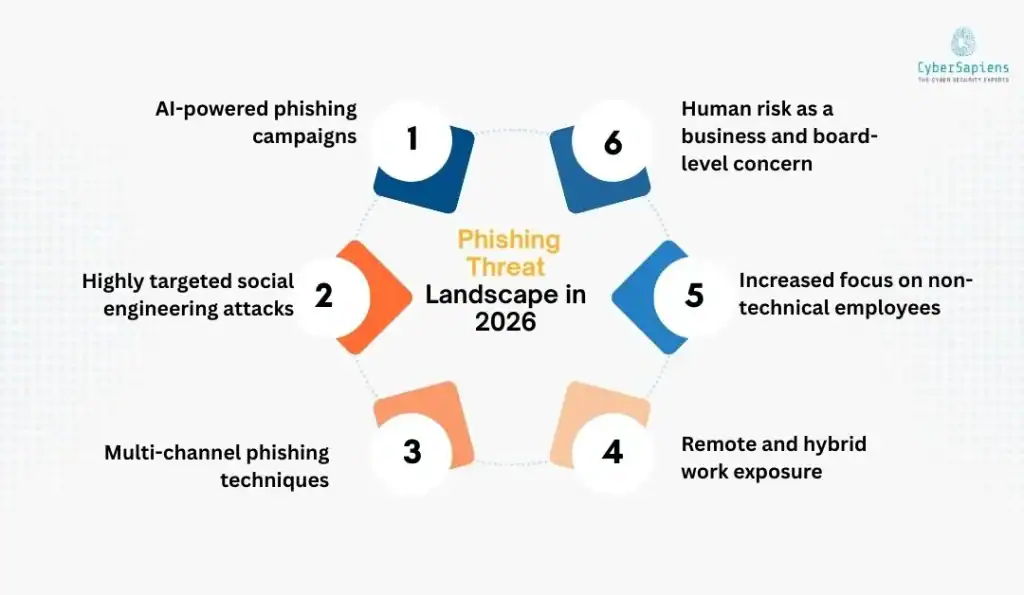
Phishing has rapidly evolved into a highly sophisticated, adaptive threat that targets human behavior more precisely than ever before. In 2026, attackers are no longer relying on generic mass emails; they are leveraging advanced technologies and detailed reconnaissance to craft convincing, high-impact attacks.
- AI-powered phishing campaigns: Cybercriminals now use generative AI to create grammatically perfect, context-aware phishing emails that closely mimic internal communications, vendors, and executives, making them harder for employees to detect.
- Highly targeted social engineering attacks: Phishing attempts are increasingly personalized using publicly available data, breached credentials, and social media insights, resulting in spear-phishing attacks aimed at specific roles and individuals.
- Multi-channel phishing techniques: Attacks extend beyond email to include SMS (smishing), voice calls (vishing), collaboration tools, and social media platforms, increasing the chances of user interaction.
- Remote and hybrid work exposure: Distributed workforces rely heavily on digital communication and cloud services, expanding the attack surface and reducing opportunities for in-person verification.
- Increased focus on non-technical employees: Attackers deliberately target employees outside IT and security teams, knowing they often have access to sensitive systems but receive less security training.
- Human risk as a business and board-level concern: Phishing-driven breaches now lead directly to financial loss, regulatory penalties, and reputational damage, pushing human risk management into executive and boardroom discussions.
This evolving threat landscape makes it clear that traditional awareness training is no longer sufficient. Organizations in 2026 must adopt continuous, automated, and realistic phishing simulation programs to keep pace with increasingly intelligent attackers.
What Organizations Expect from Phishing Simulation Platforms in 2026?
As phishing attacks become more advanced and business impact increases, organizations in 2026 expect far more from phishing simulation platforms than basic awareness training. Modern platforms must deliver continuous value, measurable outcomes, and minimal operational overhead for IT and security teams.
- Automation-first security awareness: Organizations expect phishing simulations and training to run automatically, reducing manual effort while ensuring consistent testing across the workforce.
- Realistic, up-to-date attack simulations: Platforms must reflect current phishing techniques, including AI-generated and highly targeted attacks, to prepare employees for real-world threats.
- Behavior-based training, not generic content: Training should be triggered by employee actions and tailored to roles and risk levels, ensuring learning is relevant and effective.
- Clear visibility into human risk: IT and security leaders need dashboards that translate user behavior into actionable insights, risk scores, and improvement trends.
- Scalability for growing organizations: Solutions must support startups, SMBs, and enterprises alike, scaling easily as employee counts and security needs increase.
- Low operational complexity: Organizations expect quick deployment, simple management, and minimal integration requirements to avoid burdening IT teams.
- Compliance and audit readiness: Phishing simulation platforms must provide documented evidence of ongoing security awareness to support audits and regulatory requirements.
- Measurable ROI and business impact: Beyond clicks and reports, organizations want to see reduced incidents, improved employee behavior, and tangible risk reduction over time.
In 2026, phishing simulation platforms are expected to be strategic security tools, not just training solutions, helping organizations proactively manage human risk in an increasingly hostile threat environment.
How PhishCare Redefines Phishing Simulation & Awareness?
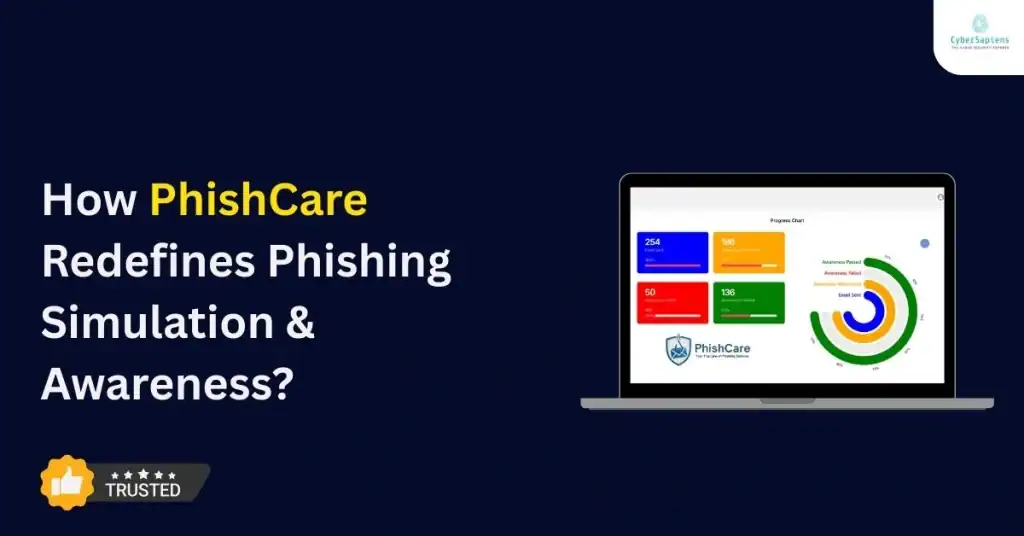
In 2026, phishing defense can no longer rely on periodic testing or generic awareness programs. Attackers continuously adapt their techniques, and organizations must do the same. PhishCare redefines phishing simulation and awareness by transforming it into a continuous, automated, and intelligence-driven security process that focuses on reducing real human risk.
1. Automation-first security design
PhishCare eliminates the need for manual campaign planning and execution by fully automating phishing simulations and training workflows. IT teams can schedule recurring campaigns that run in the background, ensuring consistent testing without increasing operational workload. This allows security teams to maintain continuous coverage while focusing on higher-value security initiatives.
2. High-fidelity, real-world attack simulations
Unlike basic or outdated templates, PhishCare simulations are designed to closely reflect modern phishing techniques. Scenarios replicate real attacker behavior, helping employees learn to identify subtle indicators of phishing rather than relying on obvious warning signs.
3. Behavior-driven awareness training
PhishCare shifts training from generic, one-size-fits-all content to behavior-based learning. When an employee interacts with a simulated phishing attempt, targeted training is automatically delivered at the moment of risk. This immediate reinforcement improves retention and drives long-term behavior change.
4. Actionable security intelligence
PhishCare converts employee actions into meaningful security insights through clear dashboards and reports. IT and security teams gain visibility into high-risk users, repeat patterns, and overall awareness trends, enabling data-driven decisions rather than assumptions.
5. Designed for modern IT environments
PhishCare is built to support startups, SMBs, and enterprise organizations alike. Its scalable design ensures that phishing simulation and training programs can grow with the organization without adding complexity or administrative burden.
By integrating automation, realism, and intelligence, PhishCare elevates phishing simulation from a compliance checkbox to a strategic human risk management capability, empowering organizations to stay ahead of evolving phishing threats in 2026 and beyond.
PhishCare Pricing Plans Overview (2026)
PhishCare offers flexible, transparent pricing designed to fit organizations of all sizes, from small teams to large enterprises, while delivering phishing simulations, awareness training, and insights in one platform. Though exact prices can vary by region and plan duration, here’s a structured look at how pricing typically works based on official PhishCare details and available pricing information:
| Quantity Range | Yearly | Bi-Annually | Quarterly | Monthly |
| 1-50 | $15.00 | $14.00 | $13.00 | $12.00 |
| 51-150 | $14.50 | $13.75 | $12.80 | $11.70 |
| 151-350 | $14.15 | $13.20 | $12.45 | $11.50 |
| 351-800 | $13.90 | $12.70 | $12.00 | $11.00 |
| 801-1500 | $13.30 | $12.00 | $11.65 | $10.60 |
| 1501-3000 | $13.00 | $11.75 | $11.30 | $10.20 |
| 3001-5000 | $12.60 | $11.40 | $11.00 | $9.80 |
| 5001-10000 | $12.30 | $11.00 | $10.60 | $9.50 |
The Future of Phishing Awareness Starts with PhishCare
Phishing threats in 2026 are faster, smarter, and more human-focused than ever before. As attackers continue to exploit behavior rather than technology, organizations can no longer rely on traditional, checkbox-style awareness programs. Effective defense now requires continuous testing, real-world realism, and automated learning that evolves with the threat landscape.
This is where PhishCare clearly stands apart. By combining automation-first phishing simulations, behavior-driven training, actionable security intelligence, and scalable pricing, PhishCare transforms phishing awareness into a strategic security capability, not just a compliance requirement.
For startups, SMBs, and enterprises alike, PhishCare delivers measurable risk reduction, lower operational overhead, and a stronger security culture. In 2026 and beyond, organizations that want to stay ahead of phishing threats will choose platforms that don’t just train employees, but continuously empower them. PhishCare leads that shift.
FAQs: What Makes PhishCare the Leading Phishing Simulation and Awareness Platform in 2026?
1. How does PhishCare conduct phishing simulations?
Answer: PhishCare enables organizations to send realistic-looking phishing emails to employees and track actions such as email opens, link clicks, and data submissions. This helps identify awareness gaps and tailor training to improve detection and response.
2. Can PhishCare be customized for my organization’s needs?
Answer: Yes. PhishCare offers extensive customization options, including tailored email and landing page templates, campaign settings, and reporting metrics, so simulations align with your branding and security goals.
3. What tracking and analytics capabilities does PhishCare provide?
Answer: PhishCare provides comprehensive tracking from email delivery and open rates to link clicks and employee responses, supported by dashboards and reports that help measure user behavior and campaign effectiveness.
4. Does PhishCare help identify vulnerable employees?
Answer: Yes — by analyzing responses to simulated phishing attacks, PhishCare helps pinpoint users or teams with higher vulnerability, enabling targeted awareness training to improve their readiness.
