

How to Conduct Cyber Security Awareness Training for Employees?
What is Cyber Security Awareness Training for Employees? It is a structured programme that educates staff on recognising, avoiding, and reporting cyber threats, such as phishing and unsafe browsing
Why is it critical? Human error causes over 90% of data breaches, making staff the “weakest link” unless empowered with knowledge
Scope: This guide focuses strictly on awareness and behaviour-change training—not deep technical controls or penetration testing—ensuring relevance and clarity.
What Does an Effective Cyber Security Awareness Training Programme Look Like?
Key Objectives
- Forge a security-first mindset: Turn casual clickers into vigilant gatekeepers.
- Slash mistakes: Aim to reduce human-caused incidents by 30–50%—that’s not just talk, it’s a benchmark!
- Stay compliant: Tick boxes for ISO 27001, GDPR, and whatever acronym your auditors love.
Core Components
- Threat spotlights: Understand phishing, social engineering, and malware—no PhD required.
- Hands-on drills: Simulated phishing campaigns that make “Oops, did I click?” a learning moment.
- Policy quick-reads: Bite-sized summaries of acceptable use, data handling, and “what to do when you spot trouble.”
Planning Your Cyber Security Awareness Training
1. Conduct a Training Needs Analysis
- Survey staff: A five-question quiz reveals who’s doing well and who’s winging it.
- Role mapping: Tailor phishing defences for finance, IP protection for R&D, and so on.
2. Define SMART Learning Outcomes

- Specific: Spot phishing with 90%+ accuracy.
- Measurable: Reduce click-through in tests by 40%.
- Achievable: Use existing tools and no extra headcount.
- Relevant: Tie to Cybersapiens’ ISO 27001 goals.
- Time-bound: Hit targets in 12 months.
3. Select In-Scope Topics
| Topic | Why It Matters |
|---|---|
| Phishing recognition | 80% of breaches start here |
| Password hygiene & MFA | Weak creds cause ~30% of intrusions |
| Safe web browsing | Ransomware often hides in rogue sites |
| Data handling | Protects customer trust and legal sanity |
| Remote-work security | 60% of staff log in from home weekly |
| Incident reporting | Quick flags = faster response times |
Developing Training Content
1. Choose the Right Formats
- Workshops: Ideal for high-risk teams—think roundtable, not lecture hall.
- Self-paced e-learning: Fits into coffee breaks and late-night study sessions.
- Micro-lessons: Five-minute videos or infographics—because no one wants to binge a two-hour module.
2. Incorporate Engagement Techniques
- Gamification: Quizzes with badges and leaderboards. Who doesn’t love a bit of healthy competition?
- Real-world scenarios: Case studies of real breaches—nothing beats a true crime story to wake people up.
- Role-play drills: Act out a phishing attempt; it’s hokey, but it sticks.
3. Leverage Multimedia
- Short videos (2–3 minutes) with captions—so no one has to crank up the volume.
- Infographics: “5 Steps to Spot a Phish” stuck on the staff noticeboard.
- Cheat-sheets: Laminated wallet cards—security wisdom at your fingertips.
Delivering Your Training
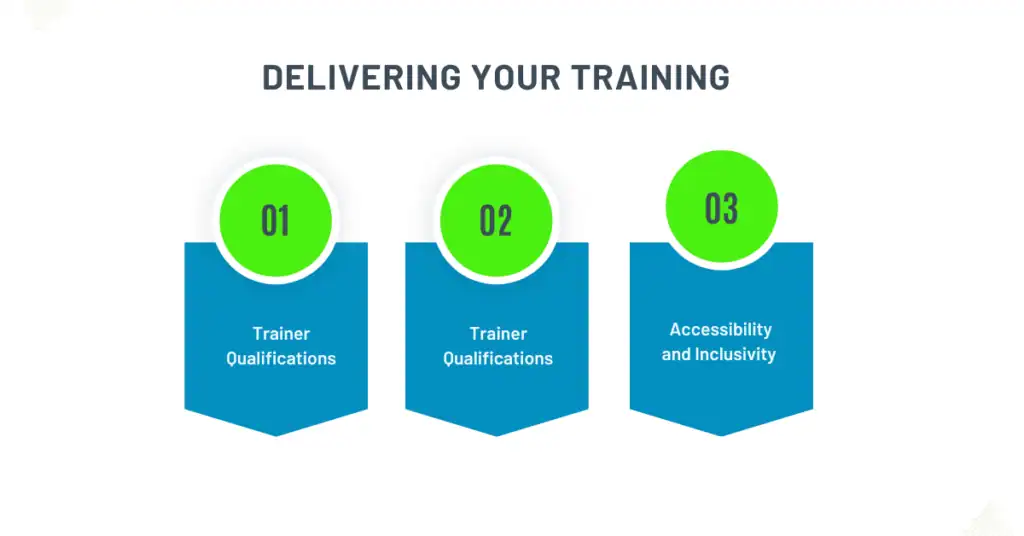
1. Scheduling and Logistics
- Cadence: Annual deep-dives, quarterly refreshers, monthly micro-bursts.
- Module length: Keep each under 60 minutes—attention spans aren’t what they used to be.
- Blend: In-person kickoff, live webinars, and on-demand follow-ups.
2. Trainer Qualifications
- Internal champions: Staff members who live and breathe security (and aren’t too busy).
- Guest experts: Bring in fresh voices to share the latest threat intel—like a cybersecurity TED Talk.
3. Accessibility and Inclusivity
- Subtitles for videos in multiple languages.
Beginner to advanced tracks: So newbies don’t drown and experts don’t snooze.
Measuring and Evaluating Effectiveness
1. Knowledge Assessments
- Pre- and post-quizzes: Benchmark change—did they actually learn something?
- Pass thresholds: Set 85% as your gold standard.
2. Simulated Phishing Campaigns
- Realistic lures: Use recent scam themes to test vigilance.
- Metrics: Track click rates—anyone still biting the hook needs a nudge.
3. Tracking Key Metrics
| Metric | Target | Outcome |
|---|---|---|
| Completion rate | ≥ 95% | 92% |
| Quiz pass rate | ≥ 85% | 88% |
| Phish click-through | ≤ 5% | 7% |
| Incident reports | + 20% | + 18% |
Technology and Tools
1. Learning Management Systems (LMS)
- Look for auto-reminders, progress dashboards, and analytics—your HQ for training ops.
2. Phishing Simulation Platforms
- Features: campaign templates, user risk scoring, and granular reports—so you know who needs a helping hand.
3. Supplemental Resources
- Internal library: Curated articles, videos, and cheat-sheets.
- Trusted externals: Links to CISA, NIST, and other gold-standard resources.
Overcoming Common Challenges
1. Low Engagement
- Make it mandatory, with backing from the top brass.
- Incentivise: Certificates, swag, or even a team pizza party for top performers.
2. Budget Constraints
- DIY with open-source LMS and free CISA content.
- Tap internal experts—often the best lessons come from colleagues.
3. Demonstrating ROI
- Calculate prevented breach costs: A single incident can wipe out your training budget tenfold.
- Link training metrics to business goals, like reduced downtime or saved customer trust.
Conclusion
Conducting Cyber Security Awareness Training for Employees is not a one-and-done affair but a continuous journey—like training for a marathon, not a sprint. By planning smartly, creating engaging content, delivering it thoughtfully, measuring results, and keeping the momentum going, Cybersapiens can transform every employee into a vigilant guardian of your digital fortress.
FAQs
1. What is cyber security awareness training for employees?
A structured programme that teaches staff to spot and respond to cyber threats, reducing the chances of human error.
2. How often should training occur?
Deep-dive sessions annually, refreshers quarterly, and micro-learning monthly.
3. Who should attend?
Everyone—from the intern to the CEO. Security is a team sport.
4. How long should each session be?
Keep modules between 30–60 minutes to maintain attention.
5. How do you measure success?
Completion rates, quiz scores, phishing simulation metrics, and incident reporting trends.
