

Difference Between SOC Analyst vs Security Analyst?
Imagine standing at a crossroads: one path leads to a buzzing control room, screens flashing red, green, and yellow alerts like city lights at midnight; the other winds through policy documents, risk assessments, and boardroom briefings. That’s the Difference Between SOC Analyst vs Security Analyst? pinpointed for you. Whether you’re fresh out of uni or plotting a career pivot, understanding these roles is as essential as a compass in the wild.
Who Is a SOC Analyst?
A SOC Analyst—think of them as the cyber equivalent of air-traffic controllers—monitors an organisation’s digital runway 24×7, guiding packets of data safely through the skies and diverting any suspicious craft before they cause a collision.
“A security operations centre… is responsible for protecting an organisation against cyber threats. SOC analysts perform round-the-clock monitoring and investigate any potential security incidents.”
Typical Responsibilities
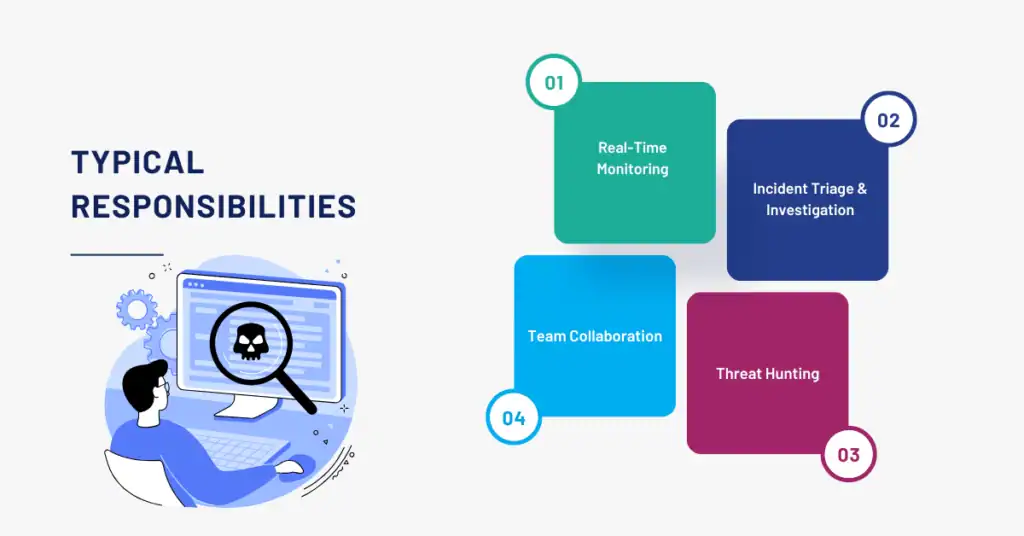
- Real-Time Monitoring: Scanning logs and network traffic like a hawk eyeing prey, using SIEM tools (Splunk, IBM QRadar).
- Incident Triage & Investigation: Prioritising alerts as if sorting mail—urgent bills first, spam later—then escalating the high-stakes items.
- Threat Hunting: Playing detective with threat intelligence feeds, hunting down Indicators of Compromise (IoCs) before they spawn nightmares.

Team Collaboration: Tag-teaming with Tier 2/3 experts, sharing insights faster than whispers in a busy newsroom.
Who Is a Security Analyst?
A Security Analyst is more like the architect who drafts blueprints for a fortress—they design the ramparts (policies), fortify the walls (controls), and train the guards (staff) to keep marauders at bay.
“A Security Analyst analyses and assesses vulnerabilities in the infrastructure … investigates using available tools and countermeasures … and recommends solutions and best practices.”
Typical Responsibilities

- Risk Assessment & Management: Running vulnerability scans (Nessus, Qualys) and drawing up risk maps—think of an accountant spotting financial leaks in a ledger.
- Policy Development: Crafting and updating security playbooks that even your pet goldfish could follow.
- Training & Awareness: Holding workshops, simulating phishing attacks—like fire drills for the digital age.
- Audit & Compliance: Rolling out the red carpet for auditors, ensuring GDPR, HIPAA, and friends are happy.
Core Differences: SOC Analyst vs Security Analyst
| Aspect | SOC Analyst | Security Analyst |
|---|---|---|
| Day-to-Day | Real-time alerts, incident response, adrenaline-fuelled shifts | Strategic planning, policy design, calm boardroom discussions |
| Focus | Operational defence | Governance, risk management, compliance |
| Timeframe | Minutes to hours | Weeks to months |
| Mindset | Sprinters—short bursts of high energy | Marathon runners—steady pace with long-term endurance |
Education & Certifications
Whether you pick the SOC or Security route, a solid academic grounding helps. Degrees in IT, Computer Science, or Cybersecurity lay the foundation. But show me the badges!
| Role | Top Certs |
|---|---|
| SOC Analyst | EC-Council C |
| Security Analyst | CompTIA Security+, CISSP, ISACA CISM |
Certification cherry-picking tip: start with CompTIA Security+ for your passport into either world.
Career Path & Growth Opportunities
- SOC Analyst Ladder: Junior → Mid → Senior → SOC Manager → CISO.
- Security Analyst Ladder: Analyst → Engineer → Architect → Manager → CISO.
Anecdote: One analyst began hunting threats at midnight. Five years later, they were drafting global risk strategies at board meetings—talk about a career moonshot!
Salary & Compensation Comparison
| Role | Entry-Level (AUD p.a.) | Senior (AUD p.a.) |
|---|---|---|
| SOC Analyst | 60 000–70 000 | 110 000–140 000 |
| Security Analyst | 100 000–105 000 | 135 000–150 000 |
Figures from SEEK and Talent.com—because who doesn’t love a paycheck that makes the bank account do a happy dance?
How to Choose Between SOC Analyst vs Security Analyst
- Crave the buzz? If midnight alerts and hands-on defence get your heart racing, SOC is your stage.
- Prefer big-picture? If crafting policies, managing risks, and guiding teams feels rewarding, become a Security Analyst.
Remember: There’s no wrong path—only the one that sparks your passion.
Conclusion
Both SOC Analysts and Security Analysts are the yin and yang of cybersecurity: one tackles immediate threats with reflexes of a cat, the other builds long-term defences with the patience of a gardener. Match your strengths and ambitions to the role that resonates, and you’ll be steering your career ship toward success.
FAQs: Difference Between SOC Analyst vs Security Analyst?
1. What’s the core difference between SOC Analyst vs Security Analyst?
SOC Analysts are the rapid responders in a command centre; Security Analysts craft policies and manage risk across the board.
2. Can a Security Analyst wear a SOC hat?
Sure—skills overlap. A solid grasp of SIEM tools and incident response helps you slide into a SOC role.
3. Is a university degree mandatory?
Helpful, but not always a deal-breaker. Practical certifications and hands-on labs can open doors.
4. How do pay scales compare Down Under?
Security Analysts generally edge ahead, but SOC roles with odd-hours allowances can tip the scales.
5. Which tools should beginners master?
For SOC: Splunk or QRadar. For Security: Nessus or Qualys.
