

Can an Arts Student Enrol in a Cyber Security Course and Get a Job?
The cybersecurity world usually is seen as a realm for those tech wizz kids, the gifted ones of all in coding who have a fundament understanding of all system components.
However, it is also notable that students from fields, such as history, languages, and literature –can find their place there too. So the question is can an arts student enrol in a cyber security course and get a job? The answer is definitely yes.
Why Cybersecurity Needs Arts Graduates
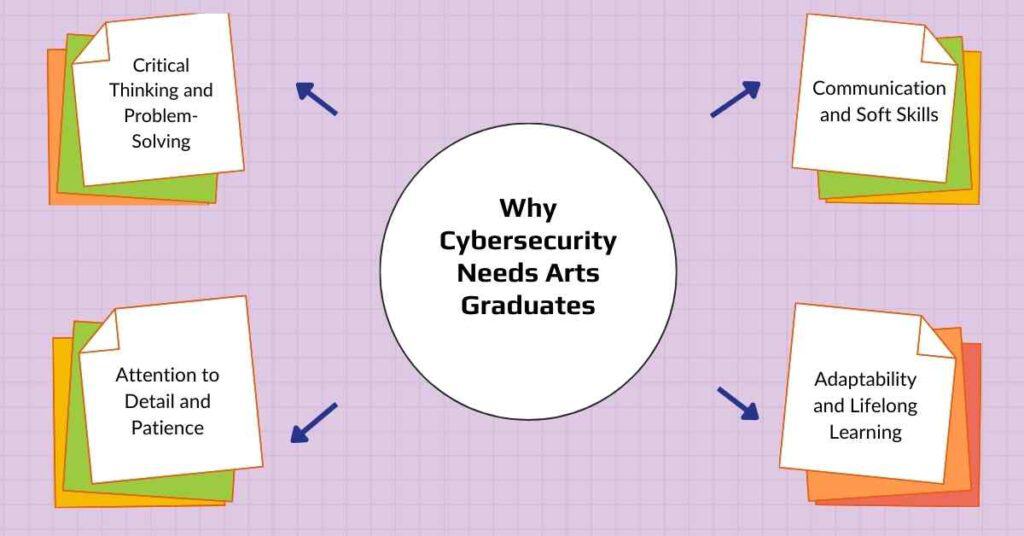
The cybersecurity terrain is a battleground possessed of different niches, and for an effective defence to be mounted, a well-balanced and cohesive team is required.
Given that technical skills are undoubtedly the most important aspect, the field of art also requires people with effective critical thinking, problem-solving, and analytical skills – skills that are developed within an art education.
1. Critical Thinking and Problem-Solving:
Art students not only succeed in this process of intellectual dissection and decoding multiple situations into different aspects but are also known to generate innovative solutions and approaches.
These abilities are irreplaceable for the tasks, such as to perception of possible security threats, the tendencies of the attackers and the development of countermeasures, respectively.

2. Communication and Soft Skills:
Cybersecurity is not only technical, it’s about people as well. Graduates in arts are usually good in clear and straightforward communication, as well as both oral and writing.
They can very well be of help in elaborating complex technical ideas to the ordinary masses hence being a major asset to the establishing consciousness of cybersecurity issues within the organizations.
Last but not least, the ability to relate well with others enables teamwork within the security units and with other department players as partners.
3. Attention to Detail and Patience:
You know, cracking the security code needs in most cases a lot of precision, which is what a lot of art students have in them. All these are necessary for extensive security threat detection and incident handling.
Thus, tedious and wide-range reading, deep thinking, and rational decisions are needed.
4. Adaptability and Lifelong Learning:
The cyber threat environment ceased being static a long time ago; as a result, we began a ceaseless learning process and developing strategies for definite changes.
Arts students will often appreciate assimilating substantial information, coming up with new ideas and updating their methods. This flexibility is essential as it allows one to remain at the frontline in this rapidly changing information security scenario.
Know How to Building a Cybersecurity Skillset: 6 Clear Steps
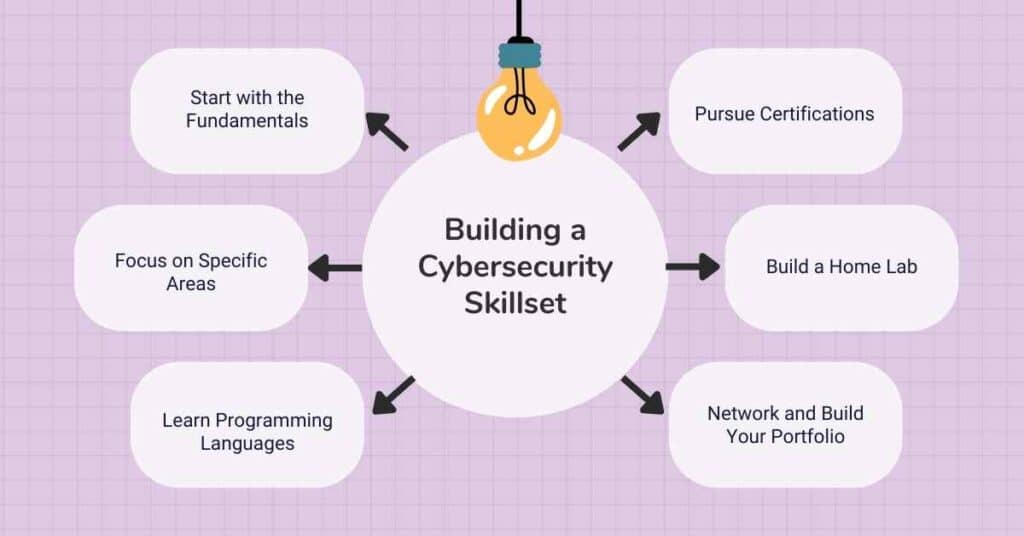
While an arts degree provides a strong foundation, additional skills are necessary to excel in cybersecurity. Here’s how arts students can bridge the gap:
1. Start with the Fundamentals
Develop a fundamental knowledge of the computer system, the network principle, and the working principle of the operating system. Online courses, tutorials, or education books can be the perfect first step in your learning process.
2. Focus on Specific Areas
Cybersecurity is an area with many specialized fields, for example, security analysis, ethical hacking, and incident response expert to name a few. Research different fields and pick one of them that is based on what you are great at and like.
3. Learn Programming Languages
A programming language like Python may not be so intensive, yet the basics of scripting languages such as Bash can be a wild card in your pocket, especially for the Linux operating system. Online resources and those courses with a low entry-level, could be used to study these languages.
4. Pursue Certifications
Certified in the subjects or domain models is an added advantage in the resume as it shows your knowledge and skills in cybersecurity. The top choices in this realm include CompTIA Security+, Certified Ethical Hacker (CEH), and Security+ Network+.
5. Build a Home Lab
Providing the atmosphere of a simulated environment, cybersecurity skills may be learned by practising them.
6. Network and Build Your Portfolio
Interact with cybersecurity professionals both offline and online. Through the many opportunities offered by these platforms, cultivate these valuable relationships and gain a deeper understanding of the industry. Attend hacker conferences, and be active on the net in security-discussing and open-source initiatives relating to hacking. Prove your competence by creating a portfolio where you can enclose cyber security projects of your own.
Conclusion
Cybersecurity retains an interdependent and rewarding career lane that promises huge career progression. For those in the arts who can pair their computer skills adequately, with the willingness to continue learning, the door towards a cybersecurity career is wide open.
By tapping into their existing skill set together with participating in technical education programs, arts graduates can prove to be great helpers in combating cyber offences.
FAQs
1. I have an Arts degree, but I’m interested in cybersecurity. Is it too late to switch paths?
Ans: Not at all! While a computer science background can be helpful, cybersecurity also requires critical thinking, communication, and problem-solving skills – strengths honed by an Arts education. With some additional learning, you can transition successfully.
2. What specific skills from my Arts degree can benefit me in cybersecurity?
Ans: Your analytical abilities, attention to detail, and clear communication skills are all valuable assets. You’re also likely adept at researching and learning new things, which is crucial in cybersecurity.
3. What are some entry-level cybersecurity jobs suitable for Arts graduates?
Ans: Security Analyst, Security Awareness Trainer, and Penetration Tester are good options. These roles often leverage communication, analysis, and problem-solving skills alongside technical knowledge.
4. Where can I learn the technical skills needed for cybersecurity?
Ans: Many online resources, tutorials, and introductory books can teach you computer basics, networking, and operating systems. Additionally, courses and certifications can provide more in-depth knowledge.
5. Do I need to be a programming whiz to work in cybersecurity?
Ans: Not necessarily. While basic coding skills in Python or scripting languages can be helpful, many cybersecurity roles focus on analysis, strategy, and communication.
6. What are some good cybersecurity certifications for Arts graduates?
Ans: CompTIA Security+, Certified Ethical Hacker (CEH), and Security+ Network+ are popular options. These certifications demonstrate your understanding of core security concepts.
7. How can I practice my cybersecurity skills without a job?
Ans: Setting up a home lab using free virtual machines and open-source software allows you to test security tools and techniques in a simulated environment. Online forums and communities also offer practice opportunities.
8. Are there scholarships or financial aid programs for cybersecurity training?
Ans: Yes, several organizations offer scholarships for cybersecurity education. Research industry associations and government websites to find potential funding sources.
9. What’s the job outlook for cybersecurity professionals?
Ans: Cybersecurity is a rapidly growing field with a high demand for skilled professionals. Arts graduates with the right skillset can find rewarding job opportunities with excellent growth potential.
10. What are some resources for Arts students interested in cybersecurity?
Ans: Look for online communities like (ISC)²’s student membership program or Women in Cybersecurity (WiCyS) for support and networking opportunities. Cybersecurity industry websites often offer resources specifically for career changers.
