

Difference Between Cyber Security and Cyber Law
In the sprawling expanse of our interconnected digital realm, maintaining both safety and order has become paramount. Imagine navigating through a bustling metropolis. Cyber security is like the vigilant security guard shielding you from lurking threats, while cyber law is the justice system ensuring that offenders face the consequences.
Though distinct, these two elements are inseparably linked, collaborating to create a secure online ecosystem. Let’s delve into the difference between cyber security and cyber law and uncover their critical roles in safeguarding the digital frontier.
What is Cyber Security?
Picture an impregnable fortress encircled by a deep trench, armed guards stationed at every entrance, and watchtowers scanning the horizon. That’s the essence of cyber security—a robust system designed to defend your digital assets against infinite threats.
At its core, cyber security focuses on safeguarding networks, systems, and data from nefarious actors. It’s the relentless art of thwarting cyber adversaries while empowering legitimate users to operate freely.
Key Pillars of Cyber Security

1. Confidentiality
Ensuring that only authorized eyes see the sensitive information.
2. Integrity
Preventing malicious tampering or unauthorized changes to data.
3. Availability
Guaranteeing access to legitimate users, even under siege.
Common Cyber Threats
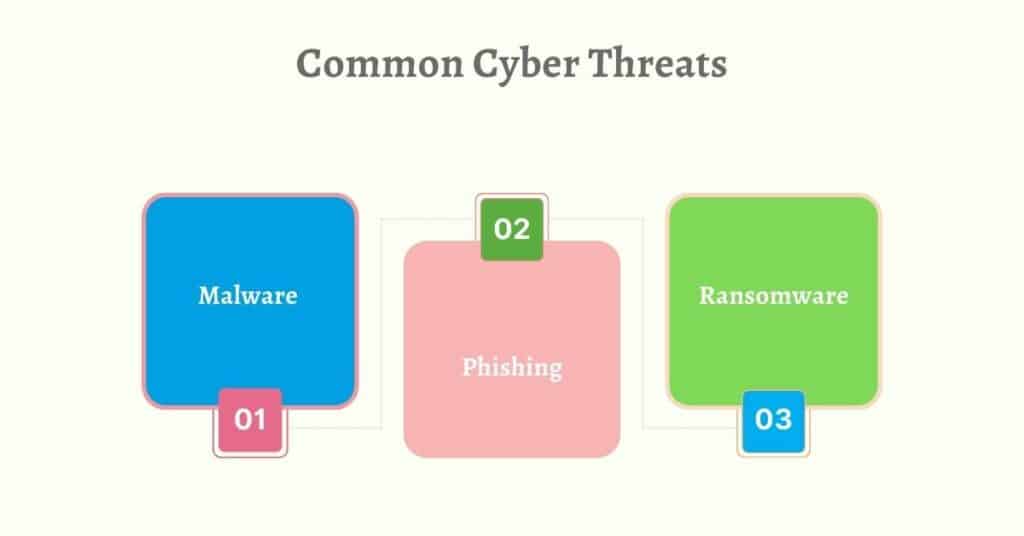
Picture this: you’re sipping your morning coffee, casually opening an email, and suddenly—“Claim your free prize now!” A single click, and you’re ensnared in a phishing scam.
Here are the usual suspects in the cybercrime world:
1. Malware
Malware is a digital Trojan horse that infiltrates computers disguised as something innocent.
2. Phishing
Phishing refers to deceptive offers made by scammers.
3. Ransomware
Ransomware is when a cyber bully locks your files and demands a ransom, typically in Bitcoin.
Cyber Security in Practice
- Deploying a firewall is like stationing a bouncer at your digital doorstep, rejecting unwelcome intruders.
- Data encryption transforms sensitive information into an undecipherable code, accessible only to trusted parties.
- Incident response teams are akin to digital first responders, mitigating breaches with precision.
What is Cyber Law?
Switching gears, if cyber security is your bodyguard, cyber law plays the role of a stern yet fair judge. It’s the legal framework governing our online behaviours and ensuring accountability.
Cyber law encompasses everything from protecting personal data to punishing digital wrongdoers. It brings structure to the often-chaotic world of the internet, ensuring fairness and order.
Domains of Cyber Law
- Data Protection: Laws like GDPR and CCPA safeguard individual privacy.
- Cybercrime Legislation: Encompasses offences like hacking, identity theft, and fraud.
- Intellectual Property Rights: Ensures ownership and attribution in the digital age.
- E-commerce Regulation: Monitors online transactions, securing consumer rights.
Real-World Impacts
- Prosecuting hackers for illegal activities.
- Penalizing companies for mishandling user data.
- Resolving disputes over intellectual property in viral content.
Cyberlaw ensures justice prevails in the digital arena, even when offenders operate from behind layers of anonymity.
Difference Between Cyber Security and Cyber Law: A Quick Comparison

| Aspect | Cyber Security | Cyber Law |
| Objective | Protecting systems from threats. | Enforcing rules and punishing violators. |
| Focus | Prevention and defense. | Regulation and accountability. |
| Primary Actors | Security professionals, IT experts. | Lawyers, lawmakers, law enforcement. |
| Nature | Proactive—stopping attacks beforehand. | Reactive—addressing breaches and crimes. |
How They Work Together?
Imagine a high-profile data breach—cyber security acts as the frontline defense, attempting to thwart the attack. When the breach succeeds, cyber law steps in to address the aftermath.
Take the Equifax data breach in 2017. While cyber security measures faltered, cyber law initiated lawsuits, imposed fines, and enforced stricter regulations. Together, they form a holistic strategy for digital safety.
The Growing Importance of Both
Omitting either cyber security or cyber law is akin to leaving your valuables exposed and hoping for the best. Businesses, governments, and individuals must embrace both to protect assets, maintain trust, and ensure justice.
Emerging Trends in Cyber Security and Cyber Law
1. AI-Powered Cybersecurity
Automation in threat detection and response.
2. International Cyber Law Frameworks
Initiatives like the Budapest Convention for cross-border collaboration.
3. Data Sovereignty
Nations demanding tighter control over their citizens’ data.
Conclusion:
In essence, the difference between cyber security and cyber law lies in their objectives—protection versus prosecution. Cyber security shields, while cyber law enforces. Together, they form a formidable duo essential for navigating the complexities of the digital era.
FAQ: Difference Between Cyber Security and Cyber Law
1. What’s the difference between cyber security and cyber law?
Ans: Cyber security focuses on prevention; cyber law handles enforcement and justice.
2. Are strong cyber laws enough to prevent threats?
Ans: No. Laws address breaches after they happen; security prevents them.
3. Can a company function without adhering to cyber laws?
Ans: Not legally—violations lead to hefty fines and reputational damage.
4. What role do international laws play in combating cybercrime?
Ans: They establish global cooperation for addressing cross-border offences.
5. How does AI impact cybersecurity?
Ans: It enhances real-time detection and response to evolving threats.
