






SOC 2 Compliance Timeline and Certification Process for Australian SaaS Companies (2026 Guide)
For most Australian SaaS companies, SOC 2 Type 1 readiness typically takes several weeks of preparation, while SOC 2 Type 2 certification requires a longer observation period with continuous evidence collection and operational maturity. The exact timeline depends on infrastructure complexity, security maturity, customer requirements, and internal compliance ownership.
This guide explains the full SOC 2 certification process for Australian SaaS companies, including readiness assessment phases, implementation requirements, audit timelines, compliance risks, cost drivers, and the operational steps needed to achieve enterprise-grade trust and audit readiness.
CONTENT REVIEWED BY
- What Australian SaaS companies need before starting the SOC 2 certification process
- Phase 1 of the SOC 2 certification process for Australian SaaS companies
- Building operational SOC 2 controls for Australian SaaS environments
- SOC 2 Type 1 vs Type 2 timeline for Australian SaaS companies
- What influences SOC 2 implementation costs for Australian SaaS companies
- SOC 2 implementation support for SaaS companies across Australia
- Frequently asked questions about SOC 2 certification in Australia
- How long does SOC 2 certification take for Australian SaaS companies?
- What is the difference between SOC 2 Type 1 and Type 2?
- Do startups in Australia need SOC 2 certification?
- What are the biggest SOC 2 compliance risks for SaaS companies?
- Why do Australian SaaS companies work with SOC 2 readiness consultants?
- Build enterprise trust with a structured SOC 2 compliance program
Robin Dsouza
CISA, CPISI v3.2, ISO 27001 Lead Implementer with 10+ years of cybersecurity and compliance consulting experience.
50+
Compliance engagements delivered
100%
SOC 2 audit pass rate
0
Failed SOC 2 audits
6–8
Weeks to Type 1 readiness
What Australian SaaS companies need before starting the SOC 2 certification process
SOC 2 requirements for Australian SaaS companies extend beyond basic cybersecurity controls. Organisations must demonstrate operational security maturity, documented governance processes, evidence-based compliance management, and continuous monitoring aligned with the Trust Services Criteria.
For first-time SOC 2 projects in Australia, the biggest challenges usually involve policy standardisation, access governance, vendor oversight, logging visibility, and proving that controls operate consistently over time. Most SaaS businesses begin with a formal SOC 2 compliance checklist and readiness assessment before implementation starts.
Governance and security policies
Australian SaaS organisations pursuing SOC 2 certification require formal security policies covering access control, incident response, change management, vendor management, backup handling, business continuity, and employee security responsibilities.
Technical security controls
SOC 2 auditors expect operational controls such as MFA enforcement, endpoint protection, centralised logging, vulnerability management, cloud access governance, encryption standards, and privileged access monitoring across SaaS infrastructure.
Evidence and operational maturity
SOC 2 compliance in Australia depends heavily on evidence quality. Companies must demonstrate that controls are actively operating through tickets, logs, approvals, monitoring reports, onboarding records, access reviews, and incident management evidence.
Melbourne SaaS companies
SOC 2 readiness support for scaling cloud and fintech organisations.
Sydney technology teams
Enterprise-grade SOC 2 implementation for investor-backed SaaS environments.
Brisbane cloud providers
Structured SOC 2 readiness programs for growing SaaS operations.
Perth SaaS startups
SOC 2 governance support for cloud-native technology businesses.
Phase 1 of the SOC 2 certification process for Australian SaaS companies
The first stage of the SOC 2 compliance timeline in Australia focuses on scoping, infrastructure understanding, risk identification, and readiness analysis. This phase determines how prepared the SaaS company is before implementation work begins and identifies operational gaps that could delay certification later.
Australian SaaS startups often underestimate the importance of proper scoping. Defining which systems, cloud environments, teams, vendors, and customer-facing services fall within the SOC 2 audit boundary directly affects implementation effort, evidence collection, audit complexity, and long-term compliance maintenance.
Compliance scoping and audit boundary definition
CyberSapiens begins by identifying the systems, applications, cloud platforms, vendors, employees, and operational processes that fall within the SOC 2 audit scope. This step is critical because unnecessary scoping can increase audit effort and implementation complexity.
Gap assessment against SOC 2 Trust Services Criteria
The next stage evaluates existing security, operational, and governance controls against SOC 2 expectations. This includes policy reviews, access governance analysis, infrastructure security checks, incident response evaluation, logging visibility, and evidence readiness analysis.
Most Australian SaaS businesses already operate partial controls before starting compliance. The readiness assessment identifies which controls require remediation, documentation, automation, or operational improvement before audit preparation begins.
SOC 2 roadmap planning and implementation prioritisation
Once the gaps are identified, CyberSapiens develops a structured implementation roadmap aligned with business priorities, customer deadlines, investor requirements, and audit readiness goals. This stage also defines responsibilities, remediation timelines, tooling needs, and evidence ownership.
Australian SaaS founders typically use this roadmap to align engineering, DevOps, HR, and leadership teams before entering the implementation phase of the SOC 2 certification process.
Key outcome of Phase 1
A clearly defined SOC 2 scope, remediation plan, implementation sequence, audit readiness timeline, and operational compliance roadmap.
Common Australian SaaS risk
Expanding audit scope too early without operational maturity often increases implementation overhead and delays certification timelines.
Recommended starting point
Begin with a formal SOC 2 compliance in Australia readiness assessment before implementing new controls or purchasing tooling.
Why Phase 1 determines the overall SOC 2 timeline
The quality of the initial readiness assessment directly impacts how efficiently the organisation moves through implementation and audit preparation. Companies that skip formal scoping or underestimate evidence requirements often experience delays during Type 1 and Type 2 audits.
CYBERSAPIENS ADVANTAGE
Structured readiness methodology with faster remediation planning and audit-aligned implementation support for Australian SaaS companies.
Building operational SOC 2 controls for Australian SaaS environments
After the readiness assessment is complete, Australian SaaS companies move into the implementation phase of the SOC 2 certification process. This stage focuses on operationalising policies, strengthening technical safeguards, standardising evidence collection, and ensuring security controls function consistently across cloud infrastructure and internal workflows.
For many SaaS startups in Australia, this is the most resource-intensive stage of the SOC 2 compliance timeline because it involves collaboration between leadership, engineering, DevOps, HR, and compliance stakeholders. The objective is not only to deploy controls, but also to prove that they operate effectively over time.
Policy and governance implementation
SOC 2 implementation requires formal governance documentation covering access control, acceptable use, risk management, change management, incident response, vendor reviews, and employee security obligations.
Technical security control deployment
Australian SaaS environments implementing SOC 2 commonly strengthen MFA enforcement, endpoint protection, SIEM logging, cloud configuration monitoring, privileged access management, vulnerability scanning, and backup verification workflows.
Evidence management and audit preparation
SOC 2 certification requires structured evidence retention. Teams must collect approvals, logs, screenshots, onboarding records, access reviews, monitoring reports, and remediation records in a consistent and auditable format.
| Implementation Area | Typical SOC 2 Requirement | Evidence Expected |
|---|---|---|
| Identity and access management | MFA, access reviews, least privilege controls | Review records, screenshots, approvals |
| Logging and monitoring | Security monitoring and alert management | SIEM reports, incident tickets, alerts |
| HR and onboarding | Background checks and security training | Training logs and onboarding evidence |
| Vendor management | Third-party security reviews and contracts | Vendor assessments and approvals |
SOC 2 Type 1 vs Type 2 timeline for Australian SaaS companies
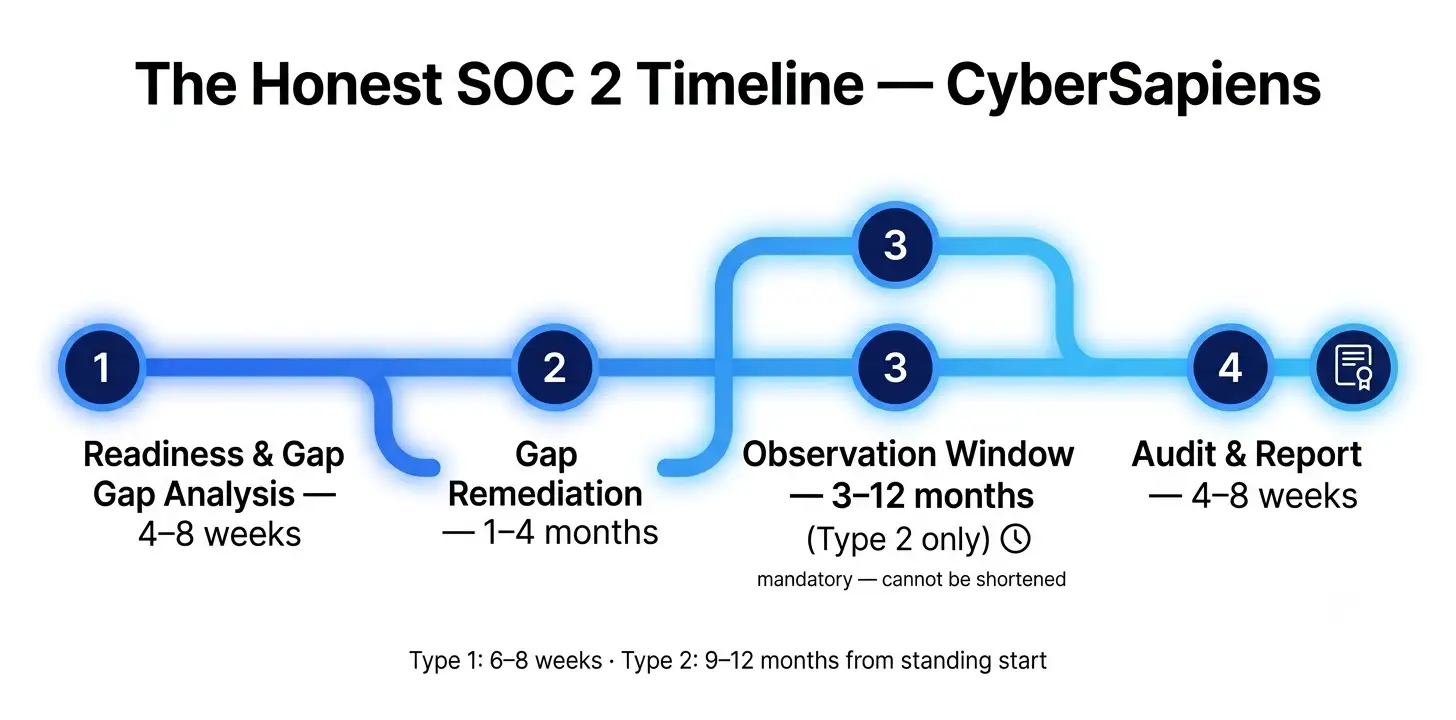
One of the most common questions Australian SaaS founders ask is how long SOC 2 certification actually takes. The answer depends on whether the organisation is pursuing SOC 2 Type 1 or SOC 2 Type 2, how mature the existing security program is, and how quickly operational evidence can be collected across the business.
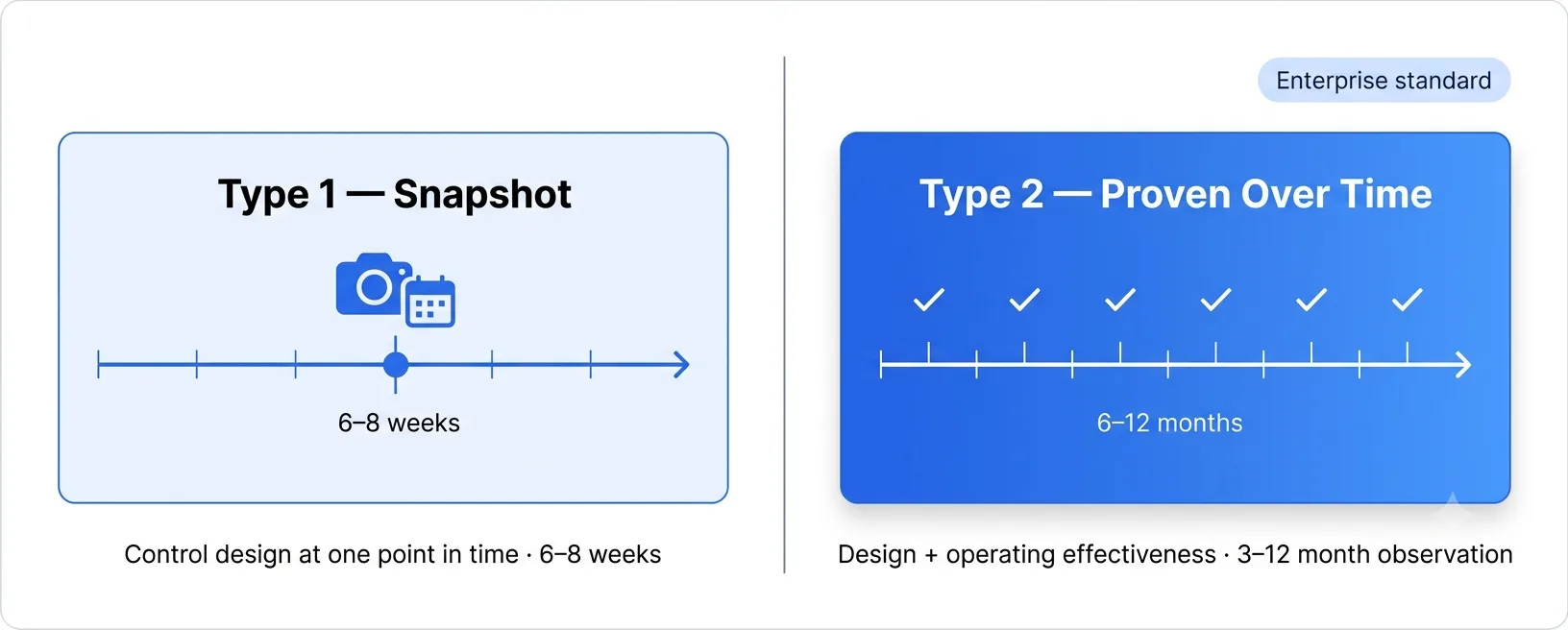
SOC 2 Type 1 validates that controls are properly designed at a specific point in time, while SOC 2 Type 2 evaluates whether those controls operate effectively over an observation period. Most enterprise customers and procurement teams in Australia eventually expect Type 2 reporting maturity.
| Audit Stage | SOC 2 Type 1 | SOC 2 Type 2 | Key Focus |
|---|---|---|---|
| Readiness assessment | Required | Required | Scope, gaps, remediation planning |
| Control implementation | Moderate implementation period | Extensive operational maturity required | Policies, controls, evidence systems |
| Observation period | Not required | Required over time | Continuous control operation evidence |
| Auditor validation | Point-in-time review | Operational effectiveness testing | Audit evidence validation |
| Enterprise customer readiness | Early-stage trust signal | Mature enterprise expectation | Procurement and vendor assurance |
What influences SOC 2 implementation costs for Australian SaaS companies
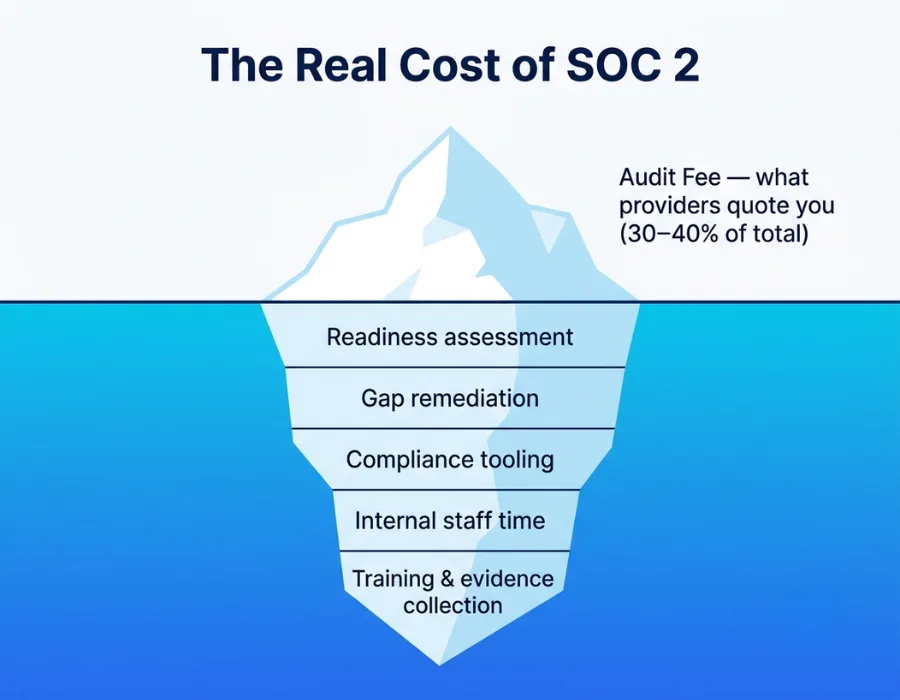
SOC 2 implementation costs in Australia vary significantly depending on infrastructure complexity, organisational maturity, audit scope, internal resources, and the operational readiness of the SaaS environment. There is no fixed certification cost because each organisation enters the process with different technical and governance conditions.
For Australian SaaS startups and cloud providers, the largest cost drivers are usually remediation effort, evidence management, security tooling maturity, and the operational time required from engineering and leadership teams during implementation and audit preparation.
Cloud infrastructure complexity
Multi-cloud environments, distributed architectures, container platforms, microservices, and complex DevOps pipelines generally increase implementation effort and evidence collection requirements during SOC 2 preparation.
Existing security maturity
Organisations with mature governance processes, documented policies, structured access management, and existing monitoring controls usually move through remediation faster than startups building compliance processes from scratch.
Internal compliance ownership
SaaS companies with dedicated compliance stakeholders typically experience smoother implementation cycles. Lack of internal ownership often increases project delays and remediation overhead.
| Cost Driver | Impact on Implementation | Operational Effect |
|---|---|---|
| Cloud architecture complexity | Higher evidence and control mapping requirements | Increased implementation coordination |
| Security tooling maturity | Reduced remediation workload | Faster audit readiness |
| Internal compliance ownership | Better remediation coordination | Lower operational delays |
| Vendor ecosystem size | Additional third-party reviews and evidence | Extended compliance administration |
SOC 2 implementation support for SaaS companies across Australia
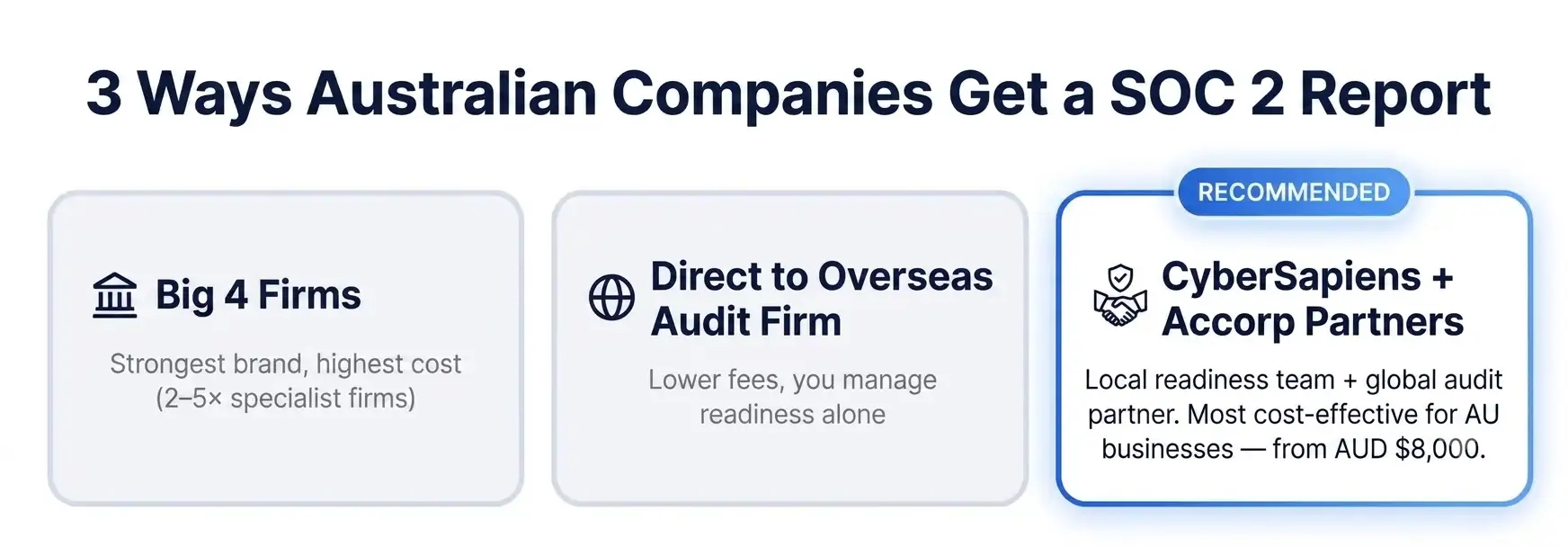
CyberSapiens supports Australian SaaS companies through every phase of the SOC 2 certification process, including readiness assessments, remediation planning, implementation support, evidence management, and auditor coordination. Engagements are structured around operational maturity, cloud infrastructure complexity, and enterprise customer expectations.
Whether the organisation is preparing for its first SOC 2 Type 1 audit or progressing toward Type 2 operational maturity, CyberSapiens provides structured compliance guidance for SaaS startups, fintech companies, and cloud providers throughout Australia.
Sydney
SOC 2 readiness and audit support for enterprise-focused SaaS companies and investor-backed technology startups.
Melbourne
SOC 2 implementation strategy for fintech, SaaS, and cloud-native businesses scaling toward enterprise contracts.
Brisbane
Structured SOC 2 remediation and governance support for growing Australian SaaS operations.
Perth
Compliance roadmap development for SaaS startups and cloud service providers expanding enterprise security maturity.
Adelaide
SOC 2 audit readiness and governance alignment for technology companies handling enterprise customer data.
Frequently asked questions about SOC 2 certification in Australia
Australian SaaS companies evaluating SOC 2 certification often have questions around implementation timelines, Type 1 versus Type 2 reporting, operational requirements, and audit readiness expectations. The answers below address the most common questions raised by founders, CTOs, and compliance teams preparing for enterprise security reviews.
How long does SOC 2 certification take for Australian SaaS companies?
The SOC 2 timeline depends on organisational maturity, implementation readiness, and whether the company is pursuing Type 1 or Type 2 reporting. SaaS companies with mature security processes generally move faster through readiness and remediation phases than businesses building governance structures for the first time.
What is the difference between SOC 2 Type 1 and Type 2?
SOC 2 Type 1 validates that controls are designed appropriately at a point in time, while SOC 2 Type 2 evaluates whether those controls operate effectively over a defined observation period. Enterprise customers in Australia typically prefer Type 2 reporting because it demonstrates sustained operational maturity.
Do startups in Australia need SOC 2 certification?
Many Australian SaaS startups pursue SOC 2 certification to satisfy enterprise procurement requirements, improve investor confidence, and accelerate security due diligence during sales cycles. Early compliance readiness often becomes a competitive advantage for B2B SaaS providers.
What are the biggest SOC 2 compliance risks for SaaS companies?
Common risks include incomplete access governance, inconsistent evidence retention, weak vendor management processes, fragmented cloud logging, missing incident response workflows, and unclear ownership of remediation activities across teams.
Why do Australian SaaS companies work with SOC 2 readiness consultants?
SOC 2 readiness consultants help organisations reduce implementation delays, align controls with audit expectations, standardise evidence collection, coordinate remediation activities, and prepare teams for external auditor reviews more efficiently.