

Ensuring Compliance with SOC Services Navigating Regulations Made Easy
In today’s digital-first world, cybersecurity isn’t just about protecting your data—it’s about staying compliant with ever-evolving regulations. Enterprises operate under a microscope, with legal and industry standards-setting the bar for how sensitive data must be handled, stored, and protected.
Failing to meet these compliance requirements can lead to hefty fines, loss of customer trust, and even operational shutdowns. That’s where Security Operations Centers (SOCs) come into play. They don’t just monitor for cyber threats; they also ensure businesses remain compliant with regulatory mandates, giving you peace of mind while navigating the complex world of compliance.
Let’s begin with the blog titled “Ensuring Compliance with SOC Services Navigating Regulations Made Easy“
Why Compliance is a Critical Business Priority?
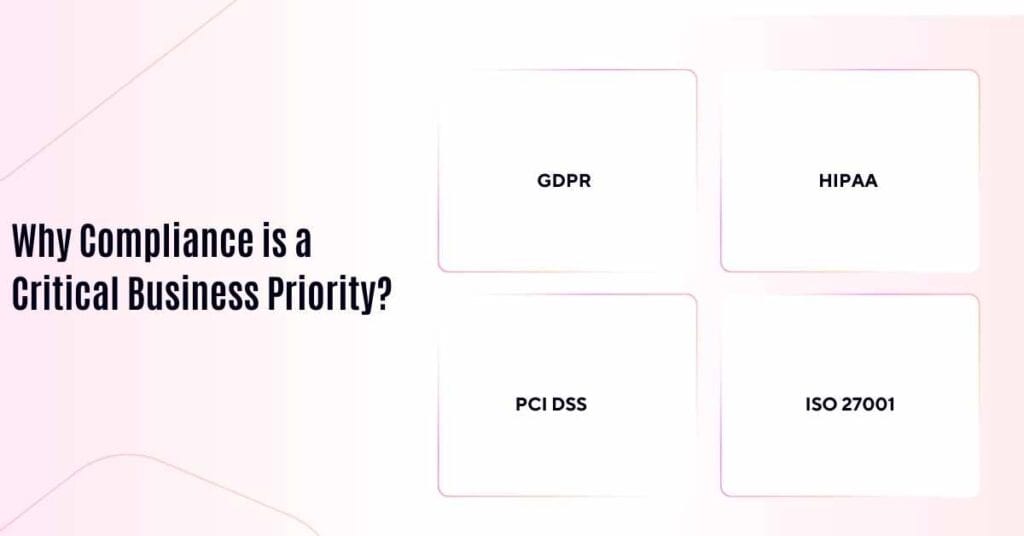
Compliance isn’t optional—it’s mandatory. Whether it’s protecting customer data or maintaining industry standards, regulations set the framework for responsible business operations. Some of the most common frameworks include:
- GDPR (General Data Protection Regulation)
- HIPAA (Health Insurance Portability and Accountability Act)
- PCI DSS (Payment Card Industry Data Security Standard)
- ISO 27001 (Information Security Management Systems)
Failure to comply with these regulations can have serious consequences:
- Financial Penalties: Fines for non-compliance can reach millions of dollars.
- Legal Consequences: Non-compliance can result in lawsuits and regulatory action.
- Reputational Damage: Customers are less likely to trust businesses that fail to protect their data.
But here’s the good news: A well-implemented SOC can make compliance simpler and more effective.
The Role of SOCs in Ensuring Compliance
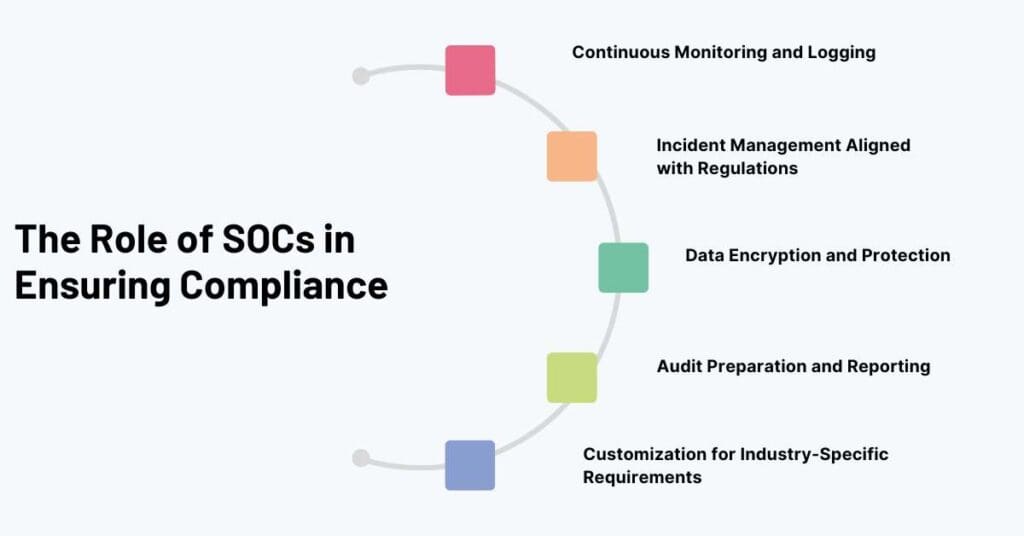
A SOC does more than detect cyber threats; it acts as a compliance ally, ensuring that your business operations align with regulatory requirements. Here’s how SOC services directly contribute to compliance:
1. Continuous Monitoring and Logging
Many compliance frameworks require constant monitoring of systems, networks, and applications. SOCs achieve this by:
- Tracking user activity and system logs.
- Identifying suspicious patterns that could lead to data breaches.
- Providing detailed logs that are critical for audits and investigations.
For instance, GDPR mandates the ability to detect and report breaches within 72 hours. With a SOC in place, businesses can quickly identify incidents and respond in a timely manner, meeting compliance deadlines.
2. Incident Management Aligned with Regulations
SOCs create incident response playbooks tailored to regulatory requirements. When an incident occurs:
- They follow specific steps to contain the breach and minimize data loss.
- They document every action taken, ensuring transparency for audits.
- They guide businesses on mandatory breach reporting, ensuring compliance with laws like GDPR or HIPAA.
3. Data Encryption and Protection
Regulations like PCI DSS require data encryption during transmission and storage. SOCs monitor encryption policies and flag vulnerabilities, ensuring sensitive data is always protected.
For example, if a business processes credit card payments, the SOC ensures that encryption protocols meet PCI DSS standards.
4. Audit Preparation and Reporting
Audits are a cornerstone of compliance, and preparing for them can be daunting. SOCs simplify the process by:
- Maintaining a centralized repository of security logs and event data.
- Generating detailed compliance reports with actionable insights.
- Assisting in risk assessments and identifying gaps in security controls.
With a SOC, you’re always audit-ready, reducing the stress of last-minute preparations.
5. Customization for Industry-Specific Requirements
Not all regulations are created equal—different industries have unique compliance needs. A SOC tailors its services to match these requirements.
- Healthcare: HIPAA compliance requires strict access controls and patient data protection.
- Financial Services: SOCs help meet requirements for SOX and GLBA, which focus on financial data integrity.
- Retail: PCI DSS mandates that payment data is secured, a task made easier with SOC monitoring.
Real-Life Example: SOC Compliance in Action
Imagine this: A retail business experiences a data breach where customer credit card information is compromised. Without a SOC, they scramble to contain the breach and prepare a compliance report for regulators—a process that can take weeks.
With a SOC, the incident is detected immediately. The SOC’s playbook guides the response team to isolate the breach, recover lost data, and generate a detailed report for regulators. The business not only avoids hefty fines but also retains customer trust by demonstrating a robust security posture.
How SOCs Navigate Compliance Challenges?
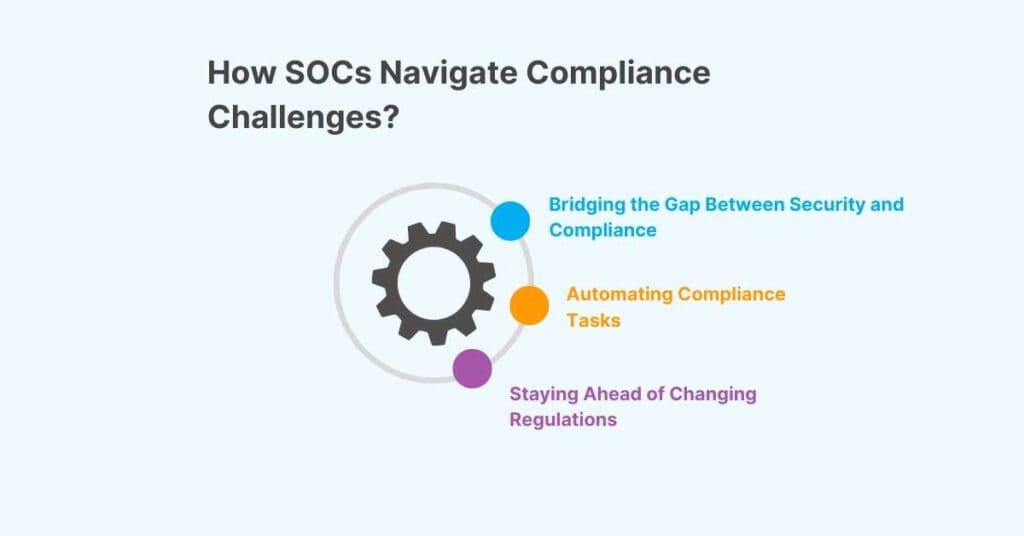
SOCs go beyond ticking boxes on a compliance checklist—they simplify complex regulations, enabling businesses to focus on growth. Here’s how:
1. Bridging the Gap Between Security and Compliance
Many businesses struggle to align their security operations with compliance mandates. SOCs bridge this gap by integrating compliance into daily operations.
2. Automating Compliance Tasks
Manual compliance processes are time-consuming and prone to error. SOCs use automation tools to streamline tasks like log analysis, vulnerability assessments, and report generation.
3. Staying Ahead of Changing Regulations
Compliance requirements evolve, and staying updated can be overwhelming. SOC providers continuously update their processes to ensure businesses remain compliant with new regulations.
The Business Benefits of Compliance with SOC Services
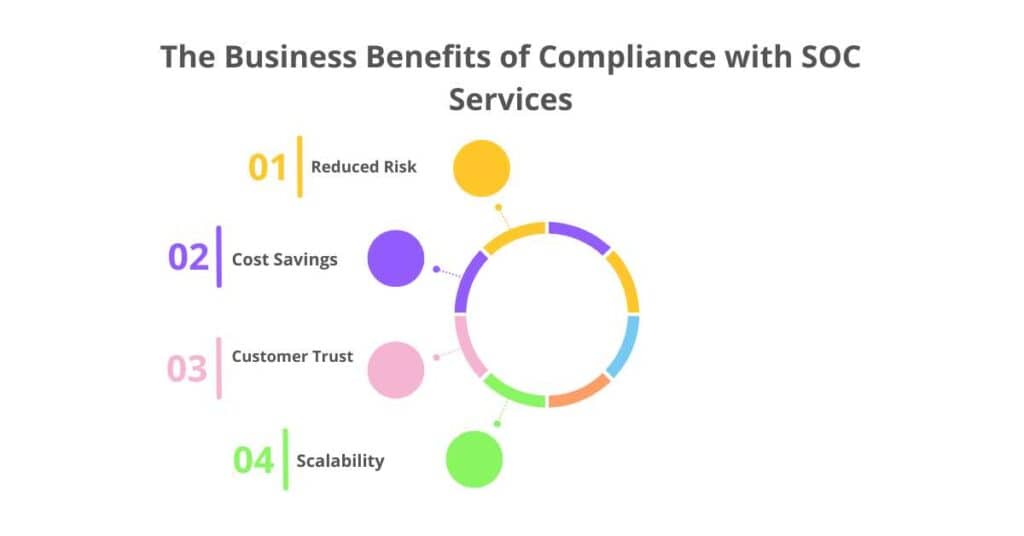
Investing in SOC services doesn’t just ensure compliance—it delivers measurable business benefits:
1. Reduced Risk
Proactive monitoring prevents breaches, reducing the risk of non-compliance.
2. Cost Savings
Avoid fines and legal fees while improving operational efficiency.
3. Customer Trust
Demonstrating compliance builds confidence among customers and partners.
4. Scalability
SOCs adapt as your business grows, ensuring compliance at every stage.
Explore More in Our SOC Series
Strengthen your business’s cybersecurity with our SOC blog series, covering essential insights on Security Operations Centers (SOCs) and their role in protecting digital assets. Dive into expert guidance on SOC implementation, management, and the latest trends.
- Why Every Business Needs a SOC: Protecting Your Digital Assets
- Key Challenges in Cybersecurity for Enterprises and How SOCs Solve Them
- Customizing SOC Services for Enterprises: Aligning Security with Business Goals
- In-House vs. Managed SOC: Making the Right Choice for Your Business
- SOC-as-a-Service: Scalable Security for Growing Businesses
- How to Choose the Right SOC Partner for Your Business
- Measuring the ROI of SOCs: The Business Case for Cybersecurity
- Integrating SOC Services with Business Applications and Workflows: A Seamless Approach to Security
- Incident Response for Enterprises: SOC Playbooks in Action
- Ensuring Compliance with SOC Services Navigating Regulations Made Easy
- Third-Party Risk Management: Strengthening Your Supply Chain with SOCs
- Addressing Advanced Persistent Threats (APTs) with SOC Expertise
- The Role of Automation in SOC: Enhancing Detection and Response
- The Future of SOCs: Trends and Innovations for B2B Cybersecurity
Conclusion: Compliance Made Easy with SOCs
Navigating the maze of regulations can feel overwhelming, but it doesn’t have to be. SOC services act as a trusted partner, ensuring your business not only meets compliance requirements but also builds a robust cybersecurity foundation. By integrating compliance into their daily operations, SOCs enable businesses to focus on what they do best—serving their customers and driving growth. Whether you’re a small business or a large enterprise, a SOC is the key to turning compliance from a challenge into an opportunity.
So, the next time you think about compliance, remember: With the right SOC partner, navigating regulations becomes effortless. Protect your business, build trust, and stay ahead of the curve with SOC services tailored to your needs.
