

Measuring the ROI of SOCs: The Business Case for Cybersecurity
In today’s digital-first world, cybersecurity isn’t just an IT problem—it’s a business imperative. Enterprises face a rapidly growing threat landscape, with attacks becoming more frequent, sophisticated, and damaging. For many businesses, the question is no longer “Should we invest in cybersecurity?” but rather, “What’s the return on investment (ROI) for a Security Operations Center (SOC)?”
This blog dives into the tangible and intangible benefits of a SOC, showing how a well-implemented SOC is not just a cost but an essential business asset that protects your bottom line, reputation, and future growth.
The True Cost of Cybersecurity Risks
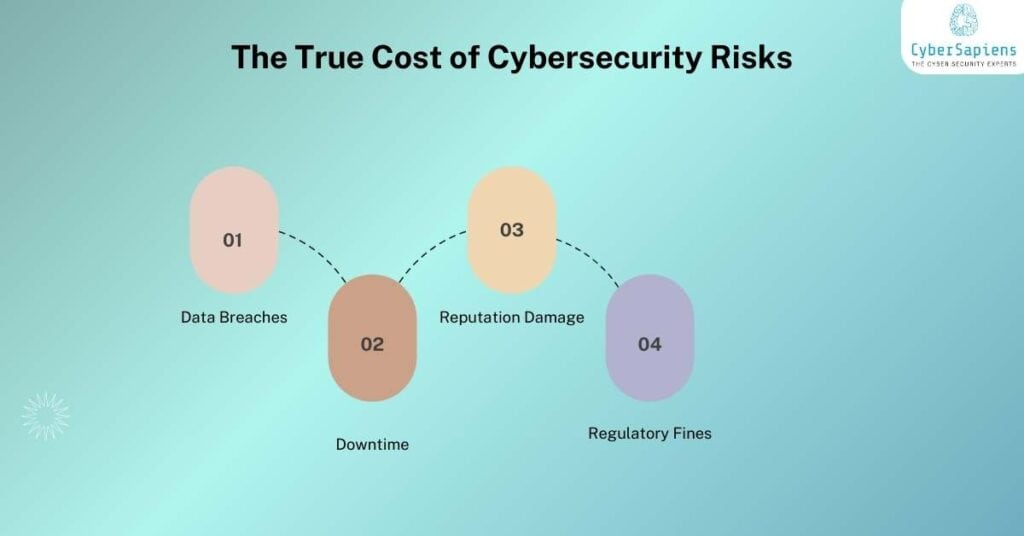
Before we discuss the ROI of a SOC, it’s crucial to understand what’s at stake without one:
1. Data Breaches
The average cost of a data breach in 2024 was over $4 million, according to industry reports.
2. Downtime
Cyber incidents often cause operational disruptions, leading to lost revenue and productivity.
3. Reputation Damage
A single breach can erode customer trust, impacting long-term brand loyalty.
4. Regulatory Fines
Non-compliance with frameworks like GDPR or HIPAA can result in hefty penalties.
The risks are clear, but mitigating them requires more than just installing antivirus software. This is where a SOC becomes invaluable.
What Does a SOC Do for Your Business?
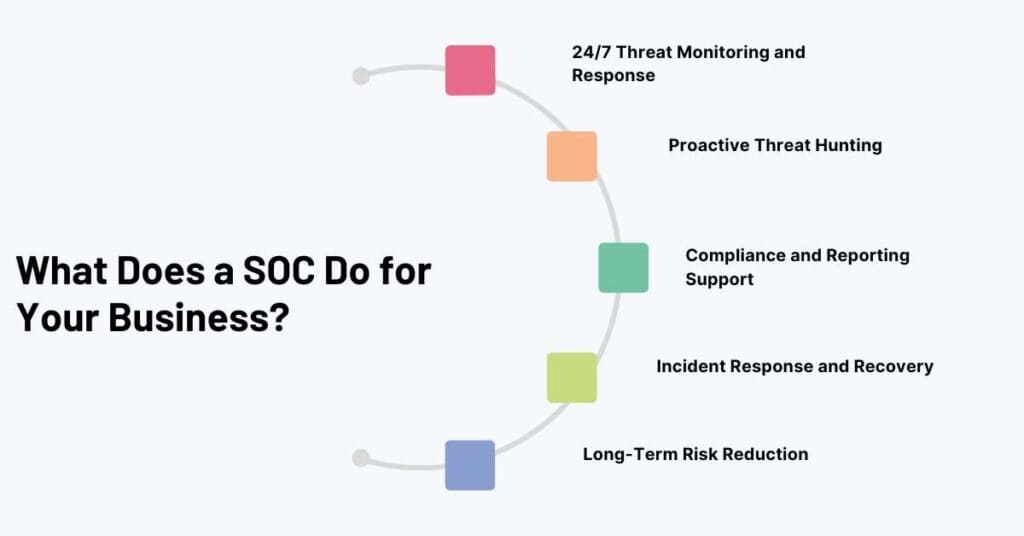
A Security Operations Center acts as the nerve center of your cybersecurity strategy. It goes beyond reactive defenses to provide proactive monitoring, threat hunting, and incident response. Here’s how a SOC delivers measurable value:
1. 24/7 Threat Monitoring and Response
Cyberattacks don’t follow a 9-to-5 schedule. A SOC provides around-the-clock vigilance, ensuring threats are identified and mitigated before they escalate.
2. Proactive Threat Hunting
A SOC doesn’t wait for threats to appear—it actively searches for vulnerabilities and potential risks, addressing them before they’re exploited.
3. Compliance and Reporting Support
Meeting industry regulations can be complex. SOCs simplify compliance by continuously monitoring systems, generating audit-ready reports, and ensuring you meet standards like ISO 27001 or PCI-DSS.
4. Incident Response and Recovery
When an attack occurs, a SOC provides immediate action to contain the breach, minimize damage, and restore operations quickly.
5. Long-Term Risk Reduction
By analyzing trends and patterns, SOCs help businesses build a stronger security posture, reducing the likelihood of future incidents.
Measuring ROI: How a SOC Justifies Its Costs?
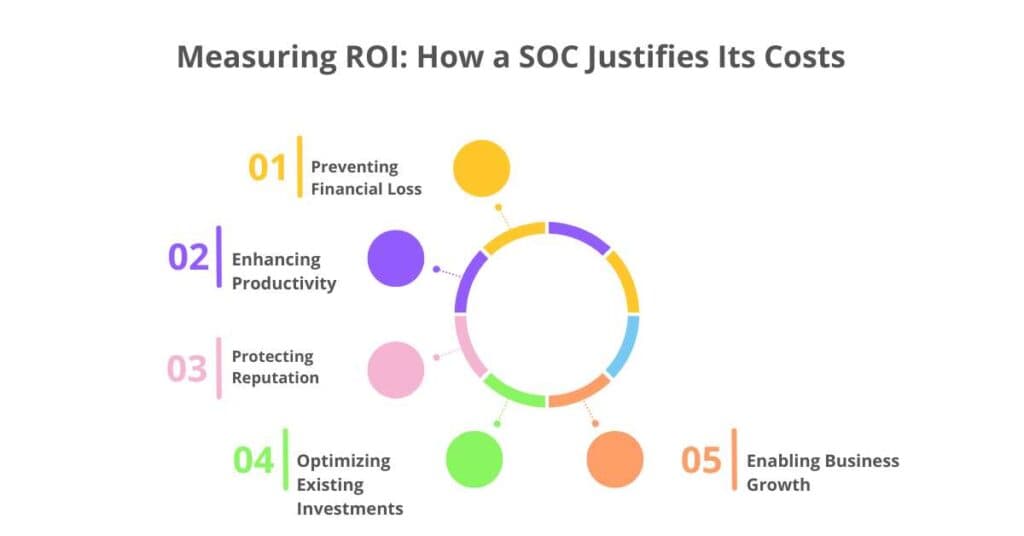
1. Preventing Financial Loss
The most direct way a SOC delivers ROI is by preventing the financial fallout of cyber incidents. Consider the costs avoided:
- Breach Costs: Avoiding a single major data breach can save millions.
- Downtime Avoidance: Maintaining uptime ensures steady revenue streams.
- Legal and Compliance Costs: Avoid penalties and lawsuits through continuous monitoring.
2. Enhancing Productivity
Cyberattacks often distract internal teams, pulling them away from their primary roles. A SOC allows your staff to focus on strategic goals instead of firefighting security incidents.
3. Protecting Reputation
Trust is hard to earn but easy to lose. A SOC ensures your customers’ data is secure, helping you maintain a positive brand image in a competitive market.
4. Optimizing Existing Investments
SOCs integrate with your current tools and technologies, maximizing the ROI of your previous cybersecurity investments.
5. Enabling Business Growth
A secure foundation allows businesses to confidently expand into new markets, adopt emerging technologies, and pursue digital transformation without fear of cyber risks.
Benefits of a SOC
Some of the benefits a SOC provides are harder to quantify but are no less critical:
1. Peace of Mind
Knowing your business is protected 24/7 allows leadership to focus on growth, not worry about the “what ifs” of cybersecurity.
2. Competitive Advantage
Strong cybersecurity practices can become a selling point for your business, especially in industries where customers demand data security.
3. Employee Confidence
A SOC ensures your team can work without interruptions, boosting morale and confidence in the company’s stability.
How to Evaluate the ROI of Your SOC?
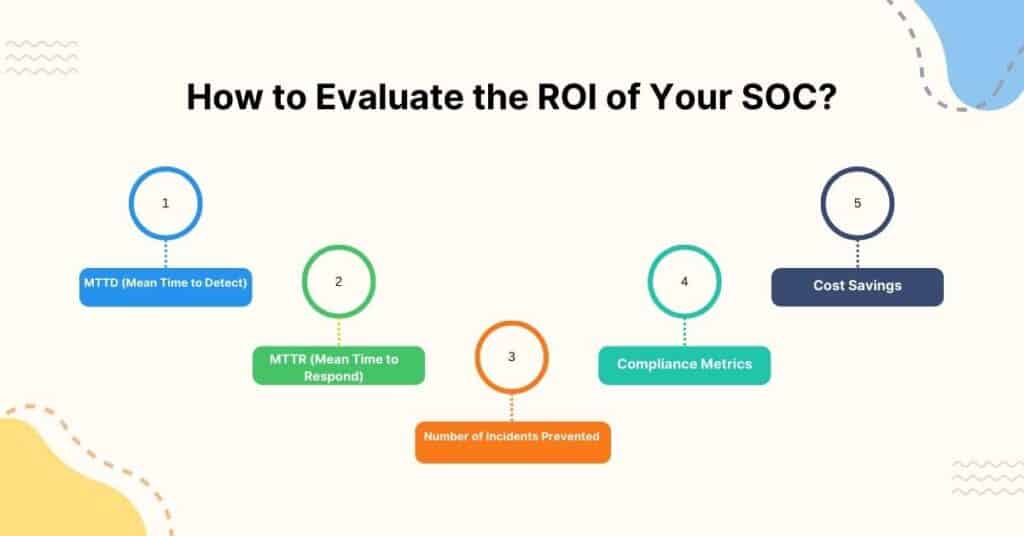
To measure the effectiveness of a SOC, businesses should track metrics like:
1. MTTD (Mean Time to Detect)
How quickly threats are identified.
2. MTTR (Mean Time to Respond)
How fast incidents are mitigated.
3. Number of Incidents Prevented
Quantify the potential losses avoided.
4. Compliance Metrics
Demonstrate adherence to industry standards.
5. Cost Savings
Calculate the financial impact of avoiding downtime, breaches, and fines.
SOC-as-a-Service: The Cost-Effective Solution
For many businesses, building an in-house SOC isn’t feasible due to the high costs of infrastructure, tools, and talent. This is where SOC-as-a-Service comes in.
Outsourcing your SOC delivers the same benefits without the overhead. You gain access to:
- Expert teams and advanced tools.
- Flexible pricing models that scale with your business.
- Faster deployment and immediate ROI.
Making the Business Case for a SOC
Investing in a SOC isn’t just about avoiding risks—it’s about enabling your business to thrive in the digital age. By providing round-the-clock protection, optimizing existing resources, and reducing long-term risks, a SOC becomes a strategic asset that drives growth and innovation.
When you evaluate the ROI of a SOC, the numbers speak for themselves:
- Significant cost savings from preventing breaches.
- Increased productivity across teams.
- A secure foundation for achieving your business goals.
Explore More in Our SOC Series
Strengthen your business’s cybersecurity with our SOC blog series, covering essential insights on Security Operations Centers (SOCs) and their role in protecting digital assets. Dive into expert guidance on SOC implementation, management, and the latest trends.
- Why Every Business Needs a SOC: Protecting Your Digital Assets
- Key Challenges in Cybersecurity for Enterprises and How SOCs Solve Them
- Customizing SOC Services for Enterprises: Aligning Security with Business Goals
- In-House vs. Managed SOC: Making the Right Choice for Your Business
- SOC-as-a-Service: Scalable Security for Growing Businesses
- How to Choose the Right SOC Partner for Your Business
- Measuring the ROI of SOCs: The Business Case for Cybersecurity
- Integrating SOC Services with Business Applications and Workflows: A Seamless Approach to Security
- Incident Response for Enterprises: SOC Playbooks in Action
- Ensuring Compliance with SOC Services Navigating Regulations Made Easy
- Third-Party Risk Management: Strengthening Your Supply Chain with SOCs
- Addressing Advanced Persistent Threats (APTs) with SOC Expertise
- The Role of Automation in SOC: Enhancing Detection and Response
- The Future of SOCs: Trends and Innovations for B2B Cybersecurity
Conclusion: Cybersecurity as a Growth Enabler
In today’s interconnected world, cybersecurity isn’t a cost center—it’s a business enabler. A well-implemented SOC doesn’t just protect your business; it empowers it to grow, innovate, and compete confidently. If you’re ready to make the case for a SOC in your organization, remember: The question isn’t whether you can afford a SOC—it’s whether you can afford not to have one.
Let’s work together to secure your business’s future. Explore tailored SOC solutions today and take the first step toward measurable cybersecurity ROI.
