

The Future of SOCs: Trends and Innovations for B2B Cybersecurity
In an age where digital transformation drives businesses forward, cybersecurity has become a cornerstone of success. For B2B enterprises, safeguarding sensitive data and maintaining trust with partners and clients are non-negotiable. The Security Operations Center (SOC), the nerve center of a business’s cybersecurity efforts, is evolving rapidly to meet these challenges.
As threats grow more sophisticated and the demand for efficiency skyrockets, SOCs are embracing cutting-edge technologies and strategies to stay ahead. In this blog, we’ll explore the trends and innovations shaping the future of SOCs, and how businesses can leverage these advancements to fortify their defenses.
Here in this article we are going to discuss about The Future of SOCs: Trends and Innovations for B2B Cybersecurity
Why SOC Evolution Matters for B2B Enterprises?

Before diving into the future, let’s pause to reflect on why SOCs are so critical for B2B enterprises:
1. Complex Threat Landscape
Advanced Persistent Threats (APTs), ransomware, and supply chain attacks are becoming increasingly common.
2. Regulatory Pressure
Industries like finance, healthcare, and manufacturing face stringent compliance requirements that demand robust security measures.
3. Business Continuity
A cyber incident doesn’t just compromise data—it disrupts operations and damages trust, leading to potential revenue loss and reputational harm.
To address these challenges, SOCs must not only keep pace but also anticipate the next wave of cyber risks.
The Future of SOCs: Key Trends and Innovations

Here are the major trends shaping the future of SOCs, particularly for B2B cybersecurity:
1. Automation: Doing More with Less
Automation is already transforming SOCs by handling repetitive tasks like log analysis and alert triage. The next step? More sophisticated automation that predicts, prevents, and responds to threats with minimal human intervention.
- How it helps:
SOCs will increasingly leverage AI-powered tools to detect anomalies, correlate data across systems, and respond in real-time.- Example: Automating phishing email analysis to flag and isolate malicious links instantly.
- Future outlook:
Advanced automation will reduce alert fatigue, enabling analysts to focus on high-priority incidents and proactive threat hunting.
2. AI-Driven Threat Detection and Response
Artificial Intelligence (AI) will play a pivotal role in the next generation of SOCs. Machine learning algorithms will be used to predict attack patterns, identify vulnerabilities, and prioritize responses.
- How it helps:
- AI can process massive datasets faster than human analysts, identifying subtle indicators of compromise (IoCs) that might otherwise go unnoticed.
- Predictive analytics will allow SOCs to anticipate attacks before they happen.
- Future outlook:
Expect AI systems to work in tandem with human analysts, acting as a virtual assistant to enhance decision-making and speed up investigations.
3. Zero Trust Security Models
As B2B enterprises move to hybrid and cloud-based environments, the Zero Trust model is becoming a cornerstone of cybersecurity strategies. SOCs are evolving to enforce this model at every layer.
- How it helps:
- Continuous verification ensures that no user or device is trusted by default, even within the network perimeter.
- SOCs can integrate Zero Trust principles into their monitoring and incident response workflows, reducing the risk of lateral movement during breaches.
- Future outlook:
SOCs will adopt tools that automate Zero Trust enforcement, such as identity analytics and micro-segmentation technologies.
4. Focus on Supply Chain Security
Supply chain attacks, like the SolarWinds breach, have highlighted vulnerabilities in third-party relationships. SOCs are increasingly tasked with monitoring the extended ecosystem of vendors, partners, and suppliers.
- How it helps:
- SOCs will use threat intelligence platforms to assess the security posture of third parties.
- Automation will play a key role in identifying risks across the supply chain and ensuring compliance.
- Future outlook:
Expect SOCs to become proactive in auditing and securing supply chain networks, offering customized solutions to manage third-party risks.
5. Cloud-Native SOCs
With the shift to the cloud, traditional on-premises SOCs are being replaced or augmented by cloud-native solutions. These SOCs are designed to monitor and secure cloud infrastructures in real time.
- How it helps:
- Cloud-native SOCs provide seamless scalability, making them ideal for growing businesses.
- They enable continuous monitoring of cloud environments, ensuring that no configuration drift or misconfigured resources go unnoticed.
- Future outlook:
Integration with cloud service provider tools (like AWS GuardDuty, Azure Sentinel) will be a hallmark of future SOCs.
6. Threat Intelligence Collaboration
As cybercriminals become more coordinated, businesses need to counter with collective defense mechanisms. SOCs will increasingly integrate with global threat intelligence platforms to share and receive real-time threat data.
- How it helps:
- Collaborative platforms provide insights into the latest attack techniques, enabling SOCs to adapt quickly.
- Automation can integrate these insights directly into detection and response workflows.
- Future outlook:
Community-driven threat intelligence will become a key component of SOC strategies, fostering a more unified approach to cybersecurity.
How B2B Enterprises Can Prepare for the Future of SOCs
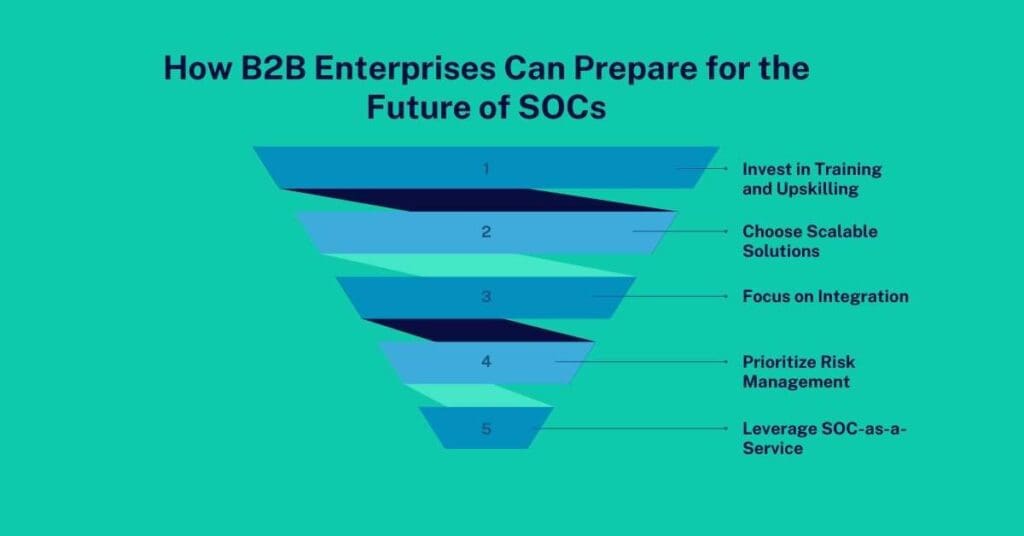
Adopting these innovations isn’t just about implementing new tools; it’s about aligning security strategies with business goals. Here’s how B2B enterprises can prepare:
1. Invest in Training and Upskilling
Equip your SOC analysts with the skills needed to work alongside AI and automation tools.
2. Choose Scalable Solutions
As your business grows, your security needs will too. Opt for SOC solutions that can scale seamlessly with your operations.
3. Focus on Integration
Ensure your SOC integrates with existing business applications and workflows for smoother operations.
4. Prioritize Risk Management
Conduct regular risk assessments to identify vulnerabilities in your supply chain, cloud infrastructure, and internal systems.
5. Leverage SOC-as-a-Service
For businesses lacking the resources to build in-house SOCs, managed SOC services offer a cost-effective, scalable alternative.
Explore More in Our SOC Series
Strengthen your business’s cybersecurity with our SOC blog series, covering essential insights on Security Operations Centers (SOCs) and their role in protecting digital assets. Dive into expert guidance on SOC implementation, management, and the latest trends.
- Why Every Business Needs a SOC: Protecting Your Digital Assets
- Key Challenges in Cybersecurity for Enterprises and How SOCs Solve Them
- Customizing SOC Services for Enterprises: Aligning Security with Business Goals
- In-House vs. Managed SOC: Making the Right Choice for Your Business
- SOC-as-a-Service: Scalable Security for Growing Businesses
- How to Choose the Right SOC Partner for Your Business
- Measuring the ROI of SOCs: The Business Case for Cybersecurity
- Integrating SOC Services with Business Applications and Workflows: A Seamless Approach to Security
- Incident Response for Enterprises: SOC Playbooks in Action
- Ensuring Compliance with SOC Services Navigating Regulations Made Easy
- Third-Party Risk Management: Strengthening Your Supply Chain with SOCs
- Addressing Advanced Persistent Threats (APTs) with SOC Expertise
- The Role of Automation in SOC: Enhancing Detection and Response
- The Future of SOCs: Trends and Innovations for B2B Cybersecurity
Conclusion
The future of SOCs isn’t just about better security—it’s about empowering businesses to innovate without fear. By embracing these trends and innovations, SOCs can become strategic enablers, helping enterprises navigate the complexities of cybersecurity with confidence. In the end, the goal is simple: protect what matters most—your business, your partners, and your customers.
With the right SOC strategy, you’re not just keeping up with threats; you’re staying ahead of them.
The future is bright for SOCs—and the businesses that invest in their evolution.
