

In-House vs. Managed SOC: Making the Right Choice for Your Business
In today’s digital-first world, the security of your business isn’t just about safeguarding data—it’s about protecting trust, reputation, and growth. Whether you’re a small startup or a sprawling enterprise, the need for a Security Operations Center (SOC) is clear. But the question that many businesses grapple with is: should we build an in-house SOC or opt for a managed SOC?
This decision isn’t just about costs—it’s about aligning your security strategy with your business goals, resources, and unique challenges. Let’s explore the key considerations and help you decide what’s right for your business.
Understanding the Role of a SOC
Before diving into the decision, it’s crucial to understand what a SOC does.
A SOC serves as the nerve centre of your cybersecurity efforts. Its primary responsibilities include:
- Monitoring your IT infrastructure 24/7.
- Detecting and analyzing threats in real time.
- Responding to security incidents swiftly and effectively.
- Proactively hunting for vulnerabilities and potential risks.
However how you implement a SOC—whether in-house or managed—can significantly impact its effectiveness.
In-House SOC: The DIY Approach

An in-house SOC is built, managed, and operated entirely by your organization.Advantages of an In-House SOC
1. Complete Control
With an in-house SOC, you have full control over your security operations, from tools and technologies to team composition.
2. Tailored to Your Business
You can design processes, playbooks, and workflows that align perfectly with your business’s unique needs and industry requirements.
3. Deeper Integration
An in-house SOC can seamlessly integrate with your organization’s existing IT infrastructure and business workflows.
4. Proprietary Data Security
Keeping everything in-house means your sensitive data never leaves your organization’s environment.
Challenges of an In-House SOC
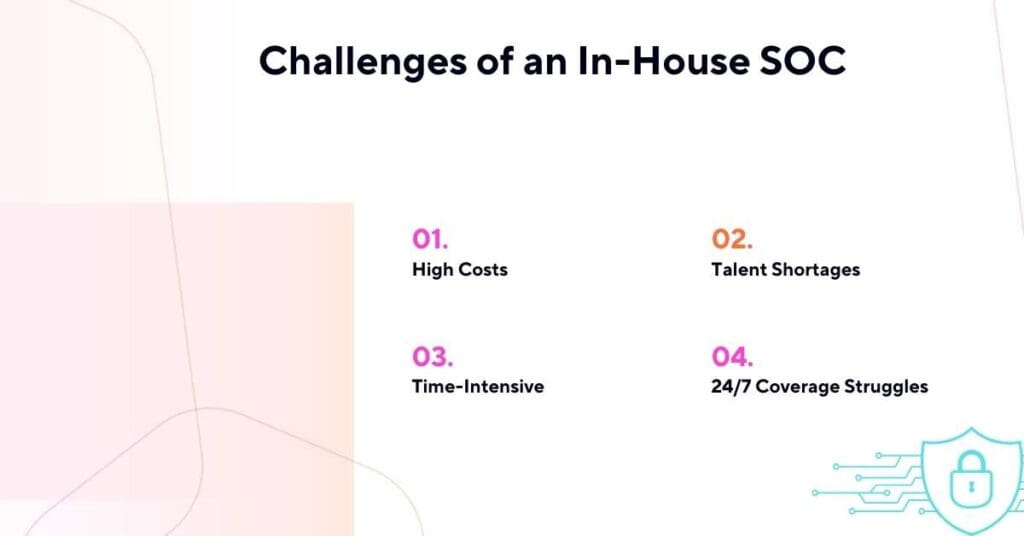
1. High Costs
Building a SOC from scratch involves significant investments in technology, infrastructure, and talent. Maintaining it adds to ongoing costs.
2. Talent Shortages
The global cybersecurity skills gap makes hiring and retaining skilled SOC analysts, threat hunters, and incident responders a daunting task.
3. Time-Intensive
Building a functional SOC isn’t an overnight process. It requires months (or even years) of planning, implementation, and optimization.
4. 24/7 Coverage Struggles
Ensuring round-the-clock monitoring and response often means staffing multiple shifts, which can strain budgets and resources.
Managed SOC: The Outsourced Solution
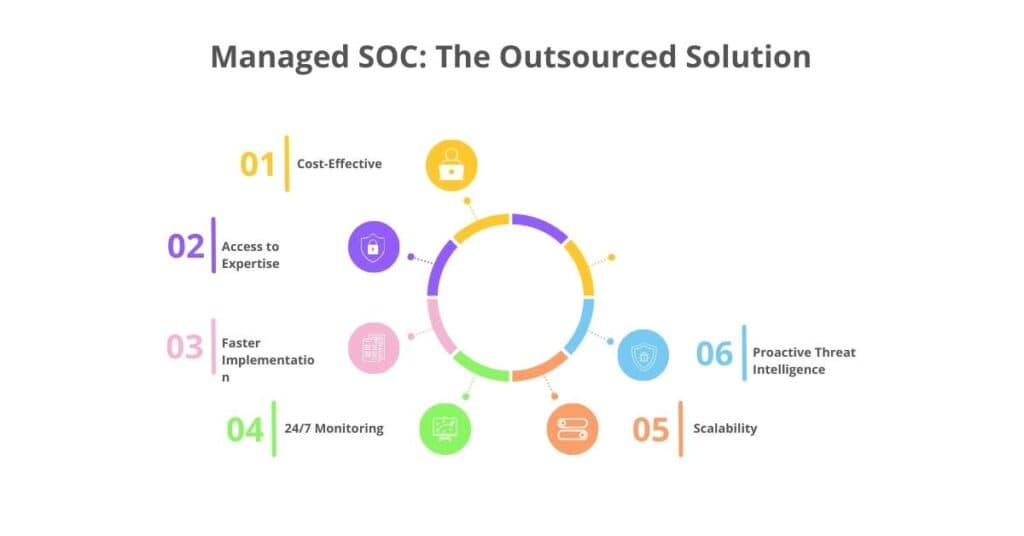
A managed SOC, also known as SOC-as-a-Service, is an outsourced solution where a third-party provider handles your security operations.
1. Cost-Effective
Managed SOCs operate on a subscription-based model, eliminating the need for hefty upfront investments.
2. Access to Expertise
Reputable providers bring a team of seasoned cybersecurity professionals with experience across various industries.
3. Faster Implementation
Unlike building an in-house SOC, managed solutions can be deployed quickly, often within weeks.
4. 24/7 Monitoring
Providers guarantee round-the-clock coverage, ensuring no threat goes unnoticed.
5. Scalability
Managed SOCs can scale services up or down based on your evolving business needs.
6. Proactive Threat Intelligence
Providers leverage global threat intelligence to stay ahead of emerging risks, something that might be challenging for a standalone in-house team.
Challenges of a Managed SOC

1. Less Direct Control
With a managed SOC, you may have less direct control over day-to-day operations and processes.
2. Potential Data Sensitivity Concerns
Sharing data with a third party can raise concerns about privacy and confidentiality, especially for businesses handling highly sensitive information.
3. Dependency on the Provider
Your security operations are heavily reliant on the provider’s reliability, expertise, and availability.
Key Factors to Consider When Choosing SOC Providers
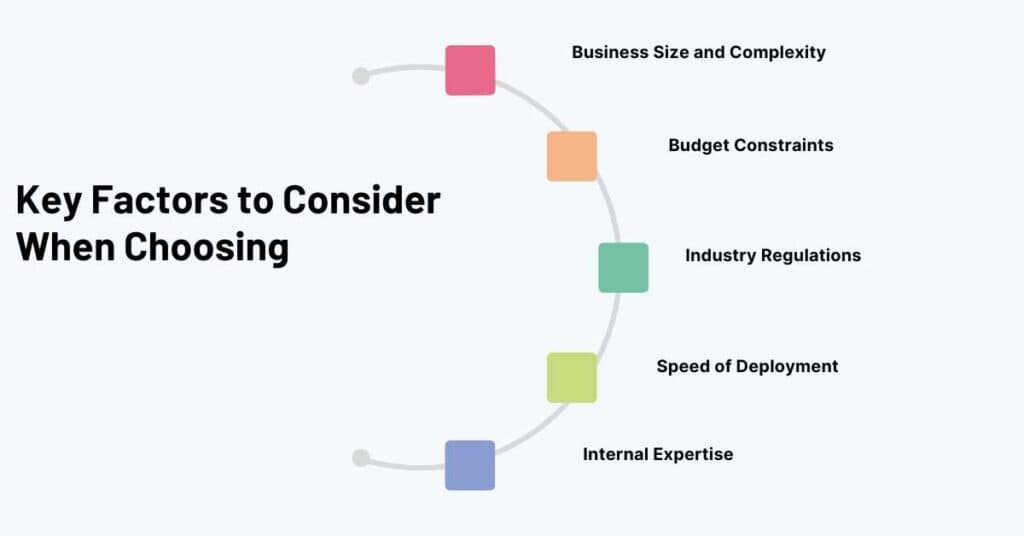
1. Business Size and Complexity
- In-House SOC: Ideal for large enterprises with complex IT environments and substantial budgets.
- Managed SOC: A great choice for small to medium-sized businesses that need enterprise-grade security without the high costs.
2. Budget Constraints
- Building an in-house SOC requires significant capital investment, whereas managed SOCs offer predictable operating expenses.
3. Industry Regulations
- Certain industries (e.g., healthcare, finance) may prefer an in-house SOC to maintain stricter control over sensitive data.
4. Speed of Deployment
- Managed SOCs are quicker to implement, making them suitable for businesses needing immediate protection.
5. Internal Expertise
- If your organization lacks cybersecurity expertise, a managed SOC can provide the skills you need without hiring additional staff.
How SOCs Adapt to Diverse B2B Requirements
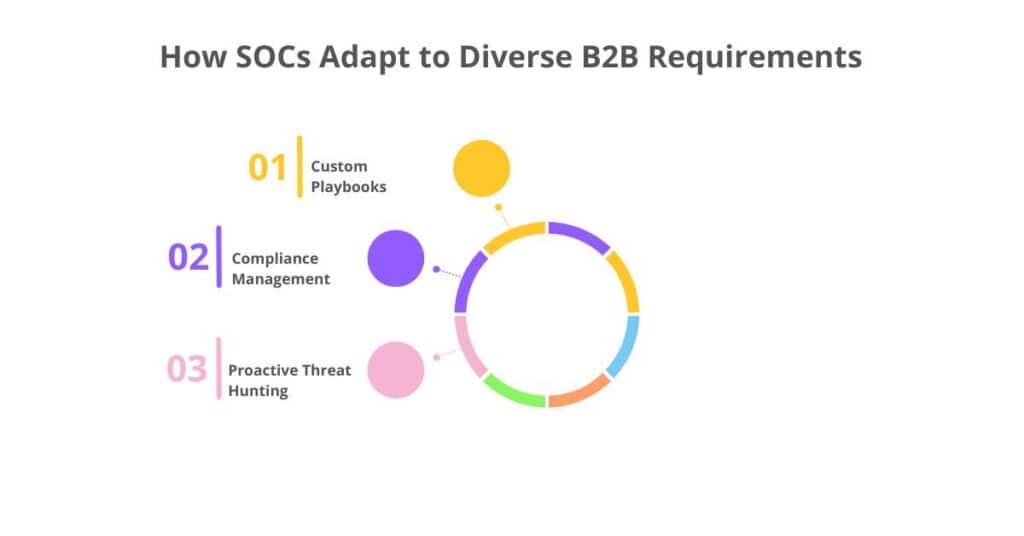
Whether in-house or managed, SOCs must align with your business’s unique requirements. Here’s how they adapt:
1. Custom Playbooks
Tailored incident response plans for specific industries.
2. Compliance Management
Ensuring adherence to regulatory frameworks like GDPR, HIPAA, and PCI DSS.
3. Proactive Threat Hunting
Identifying risks specific to your sector, such as phishing attacks targeting retail or ransomware in healthcare.
Making the Right Choice: In-House vs. Managed SOC
| Factor | In-House SOC | Managed SOC |
| Cost | High upfront and ongoing costs | Subscription-based, cost-effective |
| Expertise | Requires skilled internal team | Access to global cybersecurity experts |
| Implementation Time | Long | Quick |
| 24/7 Monitoring | Challenging to maintain | Guaranteed |
| Scalability | Limited by internal resources | Highly scalable |
| Control | Full control | Shared control |
| Integration | Fully integrated | Integration depends on provider |
The Hybrid Approach: Best of Both Worlds
For businesses torn between the two options, a hybrid approach can offer a middle ground.
- Maintain an internal team for core operations.
- Leverage a managed SOC for specialized services like threat intelligence or incident response.
Explore More in Our SOC Series
Strengthen your business’s cybersecurity with our SOC blog series, covering essential insights on Security Operations Centers (SOCs) and their role in protecting digital assets. Dive into expert guidance on SOC implementation, management, and the latest trends.
- Why Every Business Needs a SOC: Protecting Your Digital Assets
- Key Challenges in Cybersecurity for Enterprises and How SOCs Solve Them
- Customizing SOC Services for Enterprises: Aligning Security with Business Goals
- In-House vs. Managed SOC: Making the Right Choice for Your Business
- SOC-as-a-Service: Scalable Security for Growing Businesses
- How to Choose the Right SOC Partner for Your Business
- Measuring the ROI of SOCs: The Business Case for Cybersecurity
- Integrating SOC Services with Business Applications and Workflows: A Seamless Approach to Security
- Incident Response for Enterprises: SOC Playbooks in Action
- Ensuring Compliance with SOC Services Navigating Regulations Made Easy
- Third-Party Risk Management: Strengthening Your Supply Chain with SOCs
- Addressing Advanced Persistent Threats (APTs) with SOC Expertise
- The Role of Automation in SOC: Enhancing Detection and Response
- The Future of SOCs: Trends and Innovations for B2B Cybersecurity
Conclusion: In-House vs. Managed SOC: Making the Right Choice for Your Business
Choosing between an in-house and a managed SOC isn’t a one-size-fits-all decision—it’s about understanding your business’s needs, resources, and goals.
- For enterprises with the resources and expertise to manage their security, an in-house SOC offers control and integration.
- For businesses seeking cost-effective, expert-driven solutions, a managed SOC provides the flexibility and scalability needed in today’s fast-paced digital landscape.
Ultimately, the right choice is the one that aligns your cybersecurity efforts with your broader business objectives. Security isn’t just a defense mechanism—it’s a strategic enabler of growth and trust. Let your SOC strategy reflect that.
