

Integrating SOC Services with Business Applications and Workflows: A Seamless Approach to Security
In the digital age, businesses run on interconnected applications and workflows. From customer relationship management (CRM) tools to enterprise resource planning (ERP) systems, these tools streamline operations and drive growth. However, this interconnectedness also opens doors for cyber threats.
This is where Security Operations Center (SOC) services come into play. While SOCs are often viewed as standalone security units, their true potential is unlocked when integrated with business applications and workflows. This blog explores how businesses can seamlessly incorporate SOC services into their operational fabric and why it’s essential for robust security and productivity.
Why Integrating SOC Services Matters?
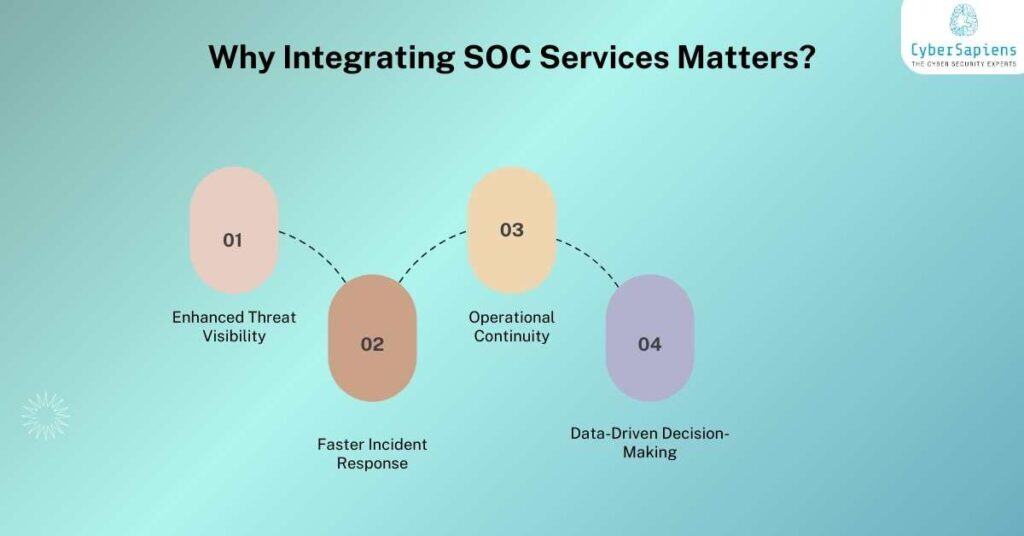
Most businesses face the same question: How can we make cybersecurity an enabler, not an obstacle? The answer lies in embedding security operations directly into the workflows that power your organization. Here’s why integration is crucial:
1. Enhanced Threat Visibility
SOCs gain a clearer understanding of the operational context by monitoring business applications and workflows.
2. Faster Incident Response
When SOC services are tied to workflows, threats are detected and mitigated faster, reducing downtime.
3. Operational Continuity
Security measures become a natural part of business processes, ensuring operations run smoothly without disruption.
4. Data-Driven Decision-Making
Integrated systems provide actionable insights into security metrics and operational risks.
How SOCs Complement Business Applications?
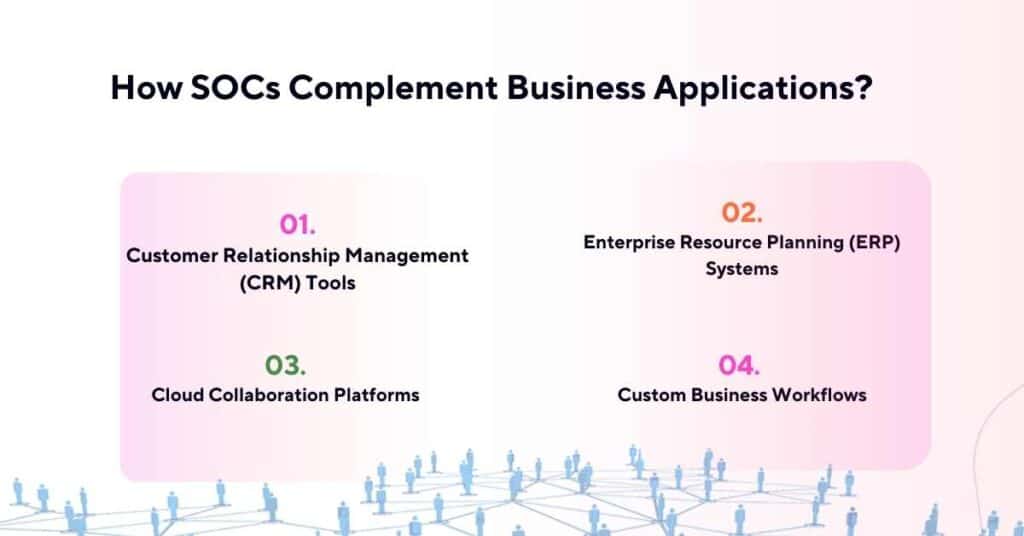
Let’s explore how SOC services integrate with common business applications:
1. Customer Relationship Management (CRM) Tools
CRM platforms like Salesforce store sensitive customer data, making them prime targets for cyberattacks. Integrating a SOC allows:
- Proactive Monitoring: SOCs track login attempts, data access patterns, and unusual activities.
- Data Protection: Encrypted transmissions and alerts on unauthorized access protect customer information.
- Compliance: SOCs ensure data handling meets GDPR, CCPA, or other regulatory standards.
2. Enterprise Resource Planning (ERP) Systems
ERPs like SAP or Oracle are the backbone of business operations, from finance to supply chain management. SOC integration provides:
- End-to-End Visibility: SOCs monitor all ERP modules, ensuring no system is overlooked.
- Threat Correlation: Logs from ERP systems are analyzed alongside other infrastructure logs for holistic threat detection.
- Incident Management: Real-time alerts are sent to the appropriate teams for swift action.
3. Cloud Collaboration Platforms
Tools like Microsoft 365 and Google Workspace are essential for remote work but are also common entry points for attackers. A SOC can:
- Identify Phishing Attempts: SOCs analyze email traffic for suspicious links or attachments.
- Enforce Access Controls: SOCs ensure only authorized users access specific resources.
- Secure File Sharing: Monitoring for unauthorized downloads or sharing prevents data leaks.
4. Custom Business Workflows
Every business has unique workflows tailored to its operations. SOCs can adapt to:
- Bespoke Monitoring: SOCs customize alerting rules to match your specific workflow risks.
- Automation Integration: With APIs, SOCs automate security actions directly within your workflows (e.g., disabling compromised accounts).
Steps to Seamlessly Integrate SOC Services
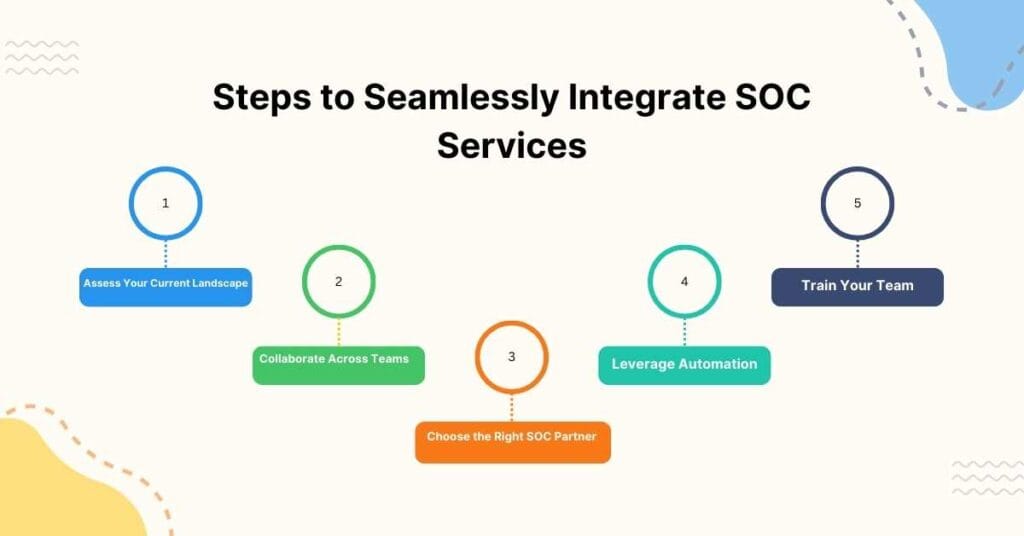
Integrating SOC services isn’t just about technology—it’s about aligning security with your business goals. Here’s a step-by-step guide:
1. Assess Your Current Landscape
- Identify critical business applications and workflows.
- Map out existing security tools and their integration capabilities.
- Understand how data flows within and between systems.
2. Collaborate Across Teams
- Involve both security and operational teams to ensure alignment.
- Encourage open communication to identify pain points and prioritize needs.
3. Choose the Right SOC Partner
- Look for SOC providers with experience in your industry.
- Evaluate their ability to integrate with your existing tools (e.g., SIEM, SOAR).
- Assess their support for APIs and third-party integrations.
4. Leverage Automation
- Implement automated workflows to handle repetitive security tasks (e.g., blocking IPs, revoking access).
- Use orchestration tools to connect SOC services with your operational platforms.
5. Train Your Team
- Educate employees about the changes and how SOC integrations enhance their workflows.
- Provide training on recognizing and reporting potential threats.
Benefits of SOC Integration for Businesses
1. Cost-Efficiency
Integrating SOC services reduces redundant tools and streamlines processes, lowering overall costs.
2. Real-Time Threat Mitigation
By embedding security into workflows, threats are addressed immediately, minimizing damage.
3. Improved Compliance
SOC-integrated workflows ensure regulatory requirements are met seamlessly, reducing audit risks.
4. Better Decision-Making
With unified dashboards and reports, leadership can make informed decisions about security investments.
5. Business Agility
An integrated SOC adapts to evolving threats and business needs, ensuring long-term scalability.
Overcoming Integration Challenges
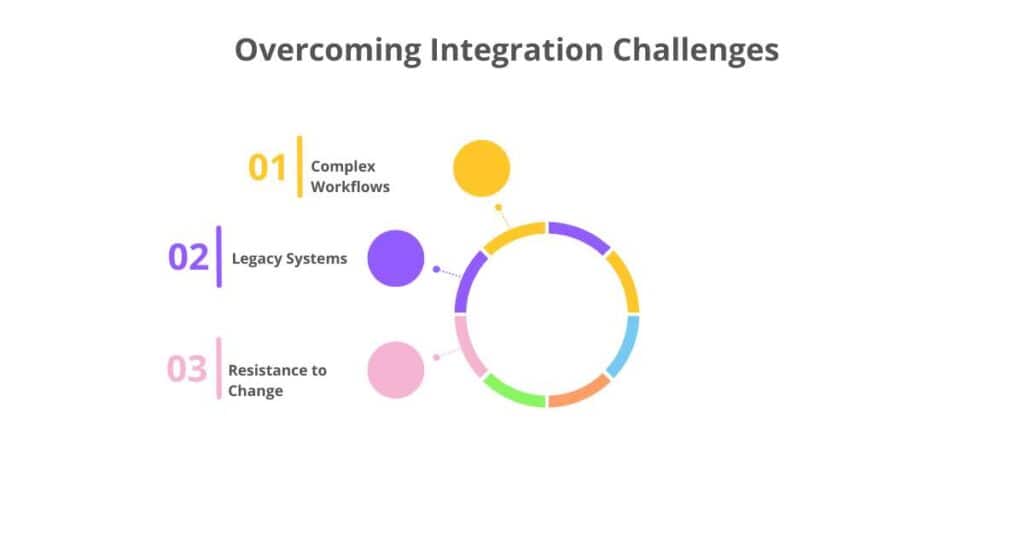
Integrating SOC services isn’t without hurdles. Here’s how to address common challenges:
1. Complex Workflows
Break down workflows into manageable components for phased integration.
2. Legacy Systems
Work with SOC providers that specialize in bridging modern tools with older systems.
3. Resistance to Change
Highlight the benefits to stakeholders and provide ongoing support during the transition.
A Unified Approach to Cybersecurity
In today’s fast-paced business environment, silos are no longer sustainable—especially when it comes to security. Integrating SOC services with business applications and workflows creates a unified, resilient approach to cybersecurity. It ensures security becomes a natural part of operations, protecting your business without slowing it down.
Explore More in Our SOC Series
Strengthen your business’s cybersecurity with our SOC blog series, covering essential insights on Security Operations Centers (SOCs) and their role in protecting digital assets. Dive into expert guidance on SOC implementation, management, and the latest trends.
- Why Every Business Needs a SOC: Protecting Your Digital Assets
- Key Challenges in Cybersecurity for Enterprises and How SOCs Solve Them
- Customizing SOC Services for Enterprises: Aligning Security with Business Goals
- In-House vs. Managed SOC: Making the Right Choice for Your Business
- SOC-as-a-Service: Scalable Security for Growing Businesses
- How to Choose the Right SOC Partner for Your Business
- Measuring the ROI of SOCs: The Business Case for Cybersecurity
- Integrating SOC Services with Business Applications and Workflows: A Seamless Approach to Security
- Incident Response for Enterprises: SOC Playbooks in Action
- Ensuring Compliance with SOC Services Navigating Regulations Made Easy
- Third-Party Risk Management: Strengthening Your Supply Chain with SOCs
- Addressing Advanced Persistent Threats (APTs) with SOC Expertise
- The Role of Automation in SOC: Enhancing Detection and Response
- The Future of SOCs: Trends and Innovations for B2B Cybersecurity
Conclusion: Secure Your Business, Streamline Your Operations
Integrating SOC services isn’t just about adding another layer of security; it’s about embedding cybersecurity into the heart of your business. It’s about making security seamless, efficient, and aligned with your goals. If you’re ready to take the next step, start by evaluating how SOC integration can transform your operations. Whether you’re safeguarding customer data or ensuring operational uptime, a well-integrated SOC ensures you’re always one step ahead of the threats.
Let’s build a security strategy that works for your business—integrated, seamless, and scalable.
