
Why Every Business Needs a SOC: Protecting Your Digital Assets
Imagine this: It’s late at night, your office is quiet, and the lights are off. Somewhere across the globe, a cybercriminal is attempting to hack into your business systems, hunting for vulnerabilities to exploit. You’re unaware, that your team is asleep, and by the time anyone notices, the damage is done. Customer data is stolen, systems are compromised, and your reputation is at stake.
Now imagine if, at that very moment, a dedicated team of experts caught the attack before it could escalate. They identified the threat, neutralized it, and informed you of the incident—all without interrupting your business. That’s the role of a Security Operations Center (SOC), and it’s why every business, regardless of size or industry, needs one.
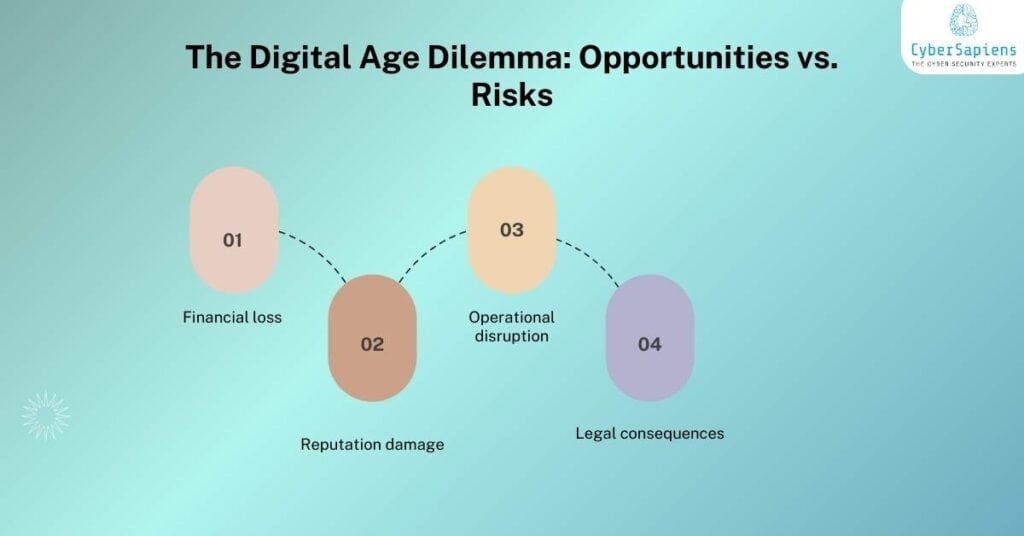
The Digital Age Dilemma: Opportunities vs. Risks
Businesses today are thriving in a digital-first world. From e-commerce platforms and online banking to cloud-based operations and customer data analytics, the opportunities are endless. But with great opportunity comes great responsibility—and significant risk.
Cyberattacks are no longer the stuff of Hollywood thrillers. They’re real, relentless, and increasingly sophisticated. Phishing emails, ransomware attacks, data breaches—they’re happening every day to businesses just like yours.
Here’s the harsh reality: If you’re online, you’re a target. It doesn’t matter whether you’re a small startup or a multinational corporation; cybercriminals don’t discriminate. And the damage they cause? It can be devastating:
1. Financial loss
Ransomware attacks alone cost businesses billions annually.
2. Reputation damage
A breach can erode customer trust faster than you can rebuild it.
3. Operational disruption
Downtime from an attack can paralyze your operations.
4. Legal consequences
Non-compliance with data protection regulations can lead to hefty fines.
This is where a SOC steps in. It’s not just a defense mechanism; it’s your business’s proactive shield, working behind the scenes to keep threats at bay.
What Exactly is a SOC?
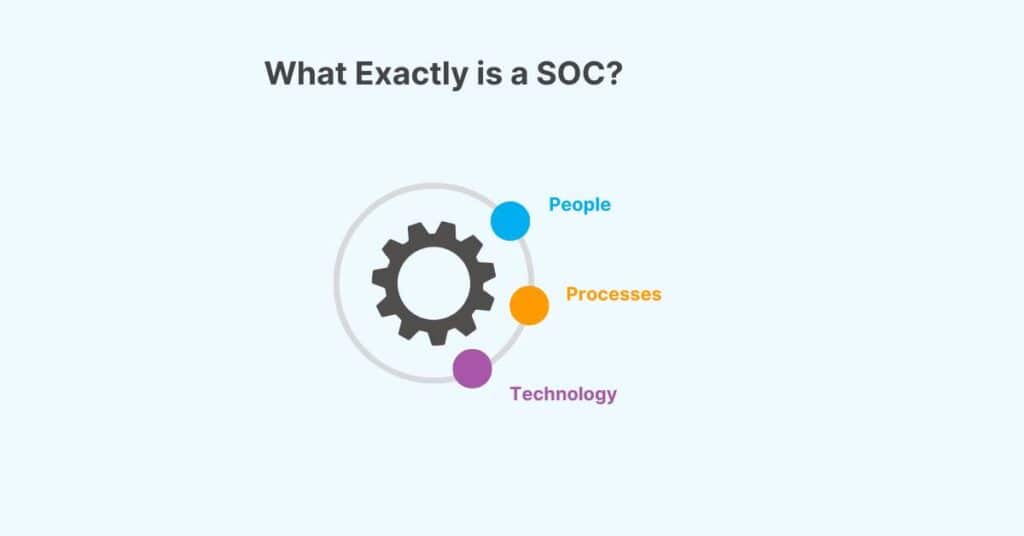
At its core, a Security Operations Center is a centralized unit where cybersecurity experts use advanced tools and real-time data to monitor, detect, and respond to threats.
Think of a SOC as your digital “mission control.” It operates 24/7, ensuring there’s always a watchful eye on your systems, even when your team isn’t. A SOC combines:
1. People
Skilled analysts who know how to spot even the most subtle signs of an attack.
2. Processes
Playbooks and protocols for addressing incidents quickly and efficiently.
3. Technology
Cutting-edge tools like SIEM (Security Information and Event Management) systems to gather and analyze data from across your network.
Life Without a SOC: The Hidden Challenges
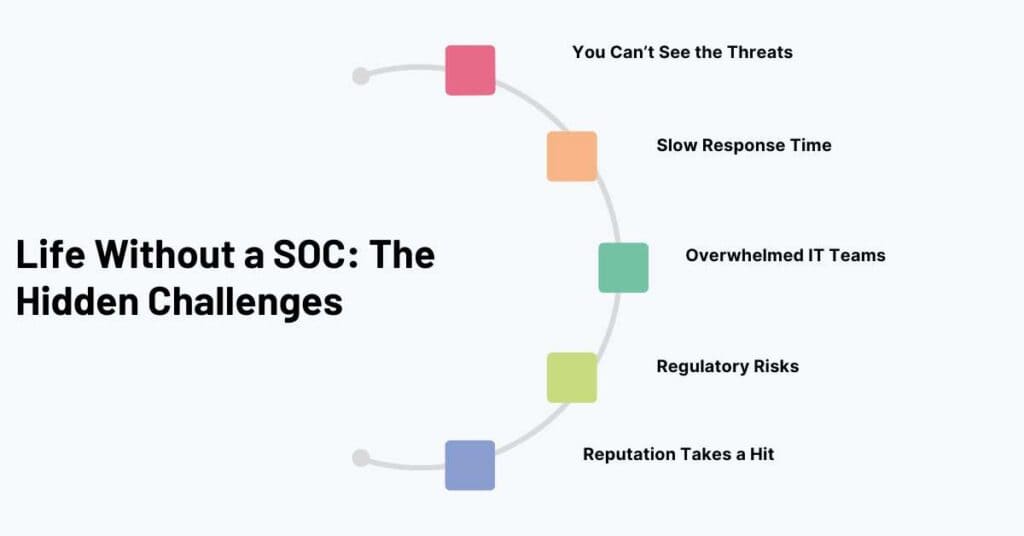
So, what happens when a business doesn’t have a SOC? Let’s break it down:
1. You Can’t See the Threats
Cyberattacks aren’t always obvious. Hackers often use stealthy techniques, infiltrating systems and lying in wait. Without continuous monitoring, these threats can go undetected for weeks—or even months—allowing attackers to steal sensitive data or cause significant damage.
2. Slow Response Time
If an attack occurs, how quickly can your team respond? Without a structured approach, the answer is often “not fast enough.” Delays in containment and mitigation can escalate a small breach into a full-blown crisis.
3. Overwhelmed IT Teams
Your IT staff might already be juggling countless tasks: managing networks, troubleshooting issues, and rolling out new technologies. Expecting them to also handle cybersecurity can lead to burnout, missed threats, and inefficiencies.
4. Regulatory Risks
Compliance with GDPR, HIPAA, and PCI DSS isn’t optional. Without a SOC, staying on top of these requirements can be overwhelming, increasing the risk of non-compliance penalties.
5. Reputation Takes a Hit
A single breach can cause irreparable damage to your brand. Customers may lose trust, stakeholders may pull back, and the market may question your credibility.
How a SOC Protects Your Business?
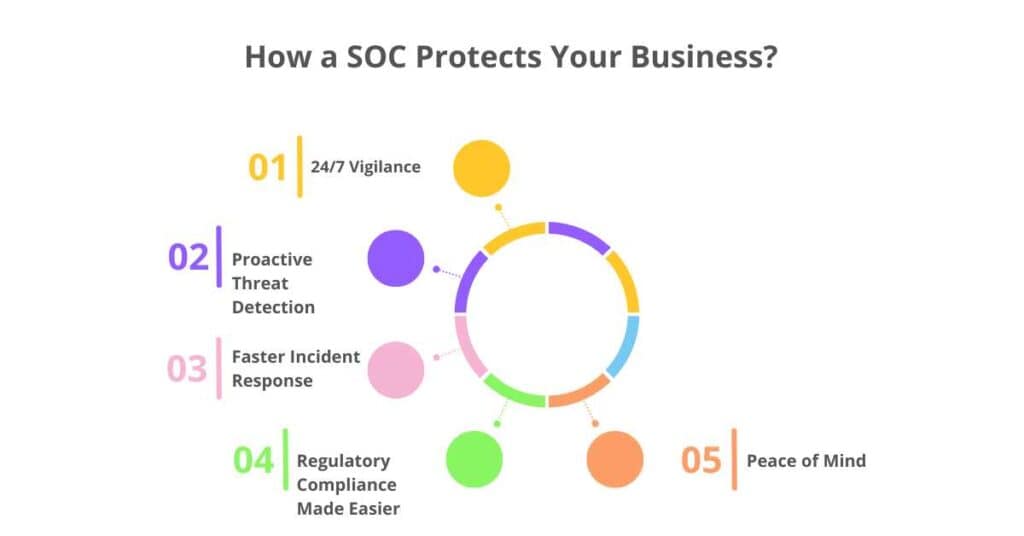
A SOC isn’t just about reacting to threats; it’s about being prepared for anything. Here’s what a SOC can do for your business:
1. 24/7 Vigilance
Cyber threats don’t follow a 9-to-5 schedule, and neither does a SOC. Whether it’s a phishing attempt at 3 a.m. or a ransomware attack during the weekend, a SOC is always on guard.
2. Proactive Threat Detection
Using advanced threat intelligence, a SOC can identify risks before they become problems. This proactive approach ensures your business stays ahead of cybercriminals.
3. Faster Incident Response
When an attack occurs, every second counts. A SOC’s streamlined response processes minimize damage and ensure swift recovery.
4. Regulatory Compliance Made Easier
A SOC maintains detailed logs, reports, and incident records, simplifying the process of meeting legal and industry-specific compliance requirements.
5. Peace of Mind
Perhaps the greatest benefit of all: knowing that your business is protected. With a SOC in place, you can focus on growth and innovation without constantly worrying about cyber threats.
Explore More in Our SOC Series
Strengthen your business’s cybersecurity with our SOC blog series, covering essential insights on Security Operations Centers (SOCs) and their role in protecting digital assets. Dive into expert guidance on SOC implementation, management, and the latest trends.
- Why Every Business Needs a SOC: Protecting Your Digital Assets
- Key Challenges in Cybersecurity for Enterprises and How SOCs Solve Them
- Customizing SOC Services for Enterprises: Aligning Security with Business Goals
- In-House vs. Managed SOC: Making the Right Choice for Your Business
- SOC-as-a-Service: Scalable Security for Growing Businesses
- How to Choose the Right SOC Partner for Your Business
- Measuring the ROI of SOCs: The Business Case for Cybersecurity
- Integrating SOC Services with Business Applications and Workflows: A Seamless Approach to Security
- Incident Response for Enterprises: SOC Playbooks in Action
- Ensuring Compliance with SOC Services Navigating Regulations Made Easy
- Third-Party Risk Management: Strengthening Your Supply Chain with SOCs
- Addressing Advanced Persistent Threats (APTs) with SOC Expertise
- The Role of Automation in SOC: Enhancing Detection and Response
- The Future of SOCs: Trends and Innovations for B2B Cybersecurity
Conclusion: Why Every Business Needs a SOC?
Cybersecurity isn’t a luxury; it’s a necessity. And as cyber threats continue to evolve, the need for a dedicated Security Operations Center has never been greater. A SOC doesn’t just protect your digital assets; it protects your business’s future.
So, here’s the question: Is your business ready to face the digital age with confidence? If not, it’s time to consider a SOC. Because in today’s world, it’s not a matter of if you’ll face a cyberattack—it’s when.
Your digital assets deserve the best defense. Let a SOC provide it.
